Overview
The Alpine area is one of the regions in Europe most affected by rising temperatures. Cities surrounded by mountains face growing risks such as heatwaves, poor air quality, and public health challenges. Yet, public awareness of the actions needed remains low. By involving citizens directly, COMMONAIR aims to foster informed discussions, smarter policies, and stronger adaptation to climate challenges. Through collaboration across regions and countries, COMMONAIR also seeks to facilitate the exchange of best practices, with a view to enhancing climate resilience in the Alps.
Factsheet
- 2021 – 2027
- Cooperatively managed and developed Alpine region
- SO 4.1 - Enhancing institutional capacity of public authorities and stakeholders to implement macro-regional strategies and sea-basin strategies, as well as other territorial strategies
-
- AG8 Risk governance
- 01/2025
- 12/2026
- 634.575 EUR
- 404.531 EUR
Description
The Alpine region is the most affected in Europe by rising temperatures, and cities, especially those surrounded by mountains, are facing increased heat-related risks to public health in the built environment. In addition, air quality is a challenge in this region as pollution remains captured by the mountains' outline. The impacts of global warming are well known, but public awareness of the needed everyday individual and collective actions is still lacking. COMMONAIR promotes new governance models based on a bottom-up “citizen science” approach to monitor cities' microclimate at the local scale with and by citizens. COMMONAIR seeks to bridge the gap between science-based methods, involvement of the public and policy implementation by local governments. Temperature, public open spaces comfort and air quality measurements made by citizen target groups, including students, NGOs, with experts' support, are the starting point of informed local debate and appropriate policy making. This approach significantly innovates governance, both vertically and horizontally, involving all levels of decision-making, government, stakeholders and local actors. It also provides, through meetings and communication tools, a regional and transnational share of good practices and results among stakeholders who face similar challenges in the Alps, enhancing adaptation capacity.
The previous experience cooperative work among the four country teams, tested in Grenoble and Turin, will be shared and discussed. The EUSALP AG 8 “Risk Governance” will be involved to foster the transferability of the tools and processes developed in the project. The project will follow the European Commission's greening recommendations as well as the EUSALP priority for a carbon-neutral Alpine Region.
Partners
- Lead partner
- Italy
- Piemonte (ITC1)
- TORINO
- Riccardo Pollo
- riccardo.pollo@polito.it
- Italy
- Piemonte (ITC1)
- Torino
- Riccardo Saraco
- riccardo.saraco@comune.torino.it
- Austria
- Wien (AT13)
- Wien
- Florian Teichmann
- florian.teichmann@tuwien.ac.at
- Switzerland
- Zürich (CH04)
- Winterthur
- Stephan Brenneisen
- bres@zhaw.ch
- France
- Rhône-Alpes (FRK2)
- Grenoble
- Xavier Perrin
- xavier.perrin@grenoble.fr
- 45.0542017500000047.686955115929997
- 45.07310537.6810397
- 48.1985396516.369861676286614
- 47.49992068.7204505
- 45.18623875.7350717
Outcomes
-
Pilot action
In the first year of the project (period 1 and part of period 2), based on the skills and experiences of the partners in the research field as well as in the participatory practice, citizen science experiments will be developed. Pilot actions by target groups will investigate local climate to increase community knowledge of climate change and the adaptation policies needed. Seven pilots are planned in the four countries. Such experiences will be shared and discussed among all the partners. -
Cooperation pacts - Community Climate Sentinel
Cooperation pacts or similar agreements will be developed as a joint solution to be applied in the project areas to strengthen participation in the adaptation planning and policies by the public institutions. Through the Community Climate Sentinel pacts, the on-site measurements and discussion activities will continue, both as an important source of scientific knowledge and as a way of community empowerment to tackle extreme heat risks. -
Involvement of Organisations at different levels increasing their institutional capacity
On a transnational level, EUSALP AG8 will be involved, participating in the 06/2025 and semiannual 2026 meetings. The Alpine Convention will be informed about the results of the project. The practices and results of Commonair will be shared by the partners in local and international initiatives, creating synergies. The project will join the labelling process that will be set up as part of the 100 climate neutral cities initiative. At the local level, many organisations will be actively involved.
Pilots
-
Torino
The Polytechnic of Turin and the Municipality of Turin are deeply committed to counteracting the effects of climate change through various actions and policy initiatives. The project will involve the Torino District Council 6, in particular the community hub “Casa del Quartiere - Bagni di Via Agliè” and San Carlo High School in the Turin pilot, where participants will engage in measurements, citizen engagement, and the co-design of strategies. The city has a history of successful co-design and co-implementation activities with citizens and stakeholders through a living lab approach.
-
Torre Pellice & Avigliana
These two municipalities are designated as pilot areas within the project. Local authorities in Avigliana and the Valdese High School in Torre Pellice will actively contribute to data collection, citizen engagement initiatives, and the collaborative design of climate adaptation strategies.
-
Vienna
The Vienna University of Technology (TU Wien) will lead the pilot activities in Vienna. This includes carrying out microclimate simulations for the designated pilot area and organising citizen science activities within it. The City of Vienna and the Institute for Material Technology, Building Physics and Building Ecology will act as observers, collaborating with TU Wien in the Westbahnhof area, engaging with target groups and the district council. TU Wien will also discuss simulation results and citizen measurements with the City of Vienna to improve the citizen science approach for future city applications.
-
Basel
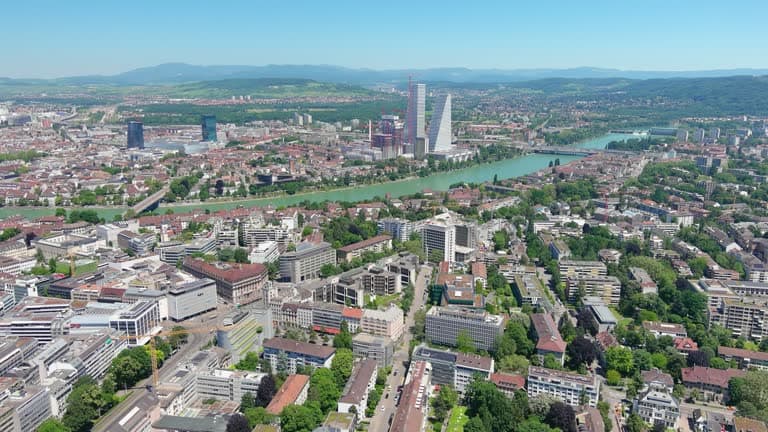
The Zurich University of Applied Sciences (ZHAW) is a partner, and a pilot project will be carried out and monitored in Basel. This project aims to sensitise older people to urban heat islands, involving measurements and the implementation of potential countermeasures. The City of Basel, acting as an observer, already has a comprehensive programme for climate adaptation with various pilot projects focused on urban greenery and its effects, where citizen science plays a significant role.
-
Grenoble
The City of Grenoble, the 2022 European Green Capital, is experiencing increasingly frequent heatwaves and is implementing ambitious mitigation and adaptation policies. Grenoble leads experiments and conducts temperature and air quality measurements. The City of Grenoble will work in close collaboration with the other partners on pilot activities, demonstrating a transnational approach to addressing shared challenges. It emphasises the importance of citizen, university, and specialist association commitment to new governance models.
Project calendar