
Overview
Coarse wool, which is the rough, lower-quality wool typically not suited for fine textile production, is often discarded illegally or disposed of at high costs. WOOLSHED addresses this critical challenge by promoting innovation and cooperation among diverse stakeholders to transform this waste into a valuable resource. The project focuses on affordable, open-source, and user-friendly technologies to help small-scale wool processors and other businesses engage in the wool industry. Additionally, its focus on networking and design validates new economic opportunities for the Alpine region.
Factsheet
- 2021 – 2027
- Innovation and digitalisation supporting a green Alpine region
- SO 3.1 - Developing and enhancing research and innovation capacities and the uptake of advanced technologies
-
- AG2 Economic development
- AG3 Labour market, education and training
- AG6 Natural resources
- 09/2024
- 08/2027
- 1.787.875 EUR
- 1.265.906 EUR
Partners
- Lead partner
- Italy
- Veneto (ITH3)
- Venice
- Gabriele Monti
- gabriele.monti@iuav.it
- Switzerland
- Région lémanique (CH01)
- Geneva
- Cristina Olivotto
- cristina@onlfait.ch
- Switzerland
- Espace Mittelland (CH02)
- Cernier
- Aurelie Sarrio
- info@lainesdici.ch
- Italy
- Veneto (ITH3)
- Belluno
- Michele Talo
- michele.talo@centroconsorzi.it
- Slovenia
- Zahodna Slovenija (SI04)
- Nova Gorica
- Lucija White
- lucija.white@go.kgzs.si
- Slovenia
- Zahodna Slovenija (SI04)
- Koper
- Jakub Sandak
- jakub.sandak@Innorenew.eu
- France
- Rhône-Alpes (FRK2)
- LYON
- PAULINE GAMORE
- contact@letextilelab.com
- Austria
- Wien (AT13)
- Wien
- Alexander Diesenreiter
- alexander.diesenreiter@impacthub.net
- 45.437190812.3345898
- 46.20971956.1172762
- 47.05838686.9080521
- 46.111067312.1344657
- 45.960918713.658593087279861
- 45.530237513.6571696
- 45.77008514.8350292
- 48.199764316.345726
Outcomes
-
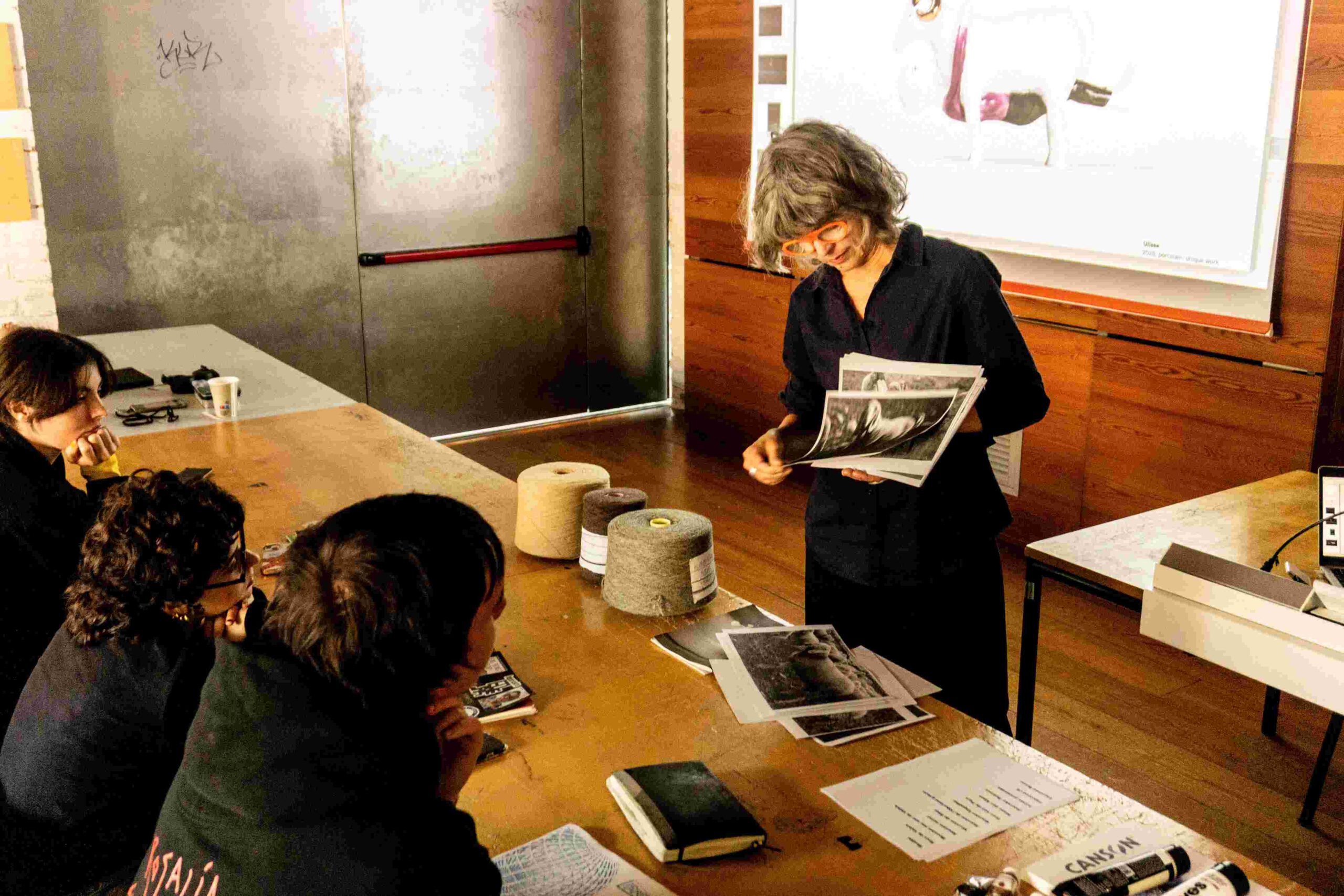
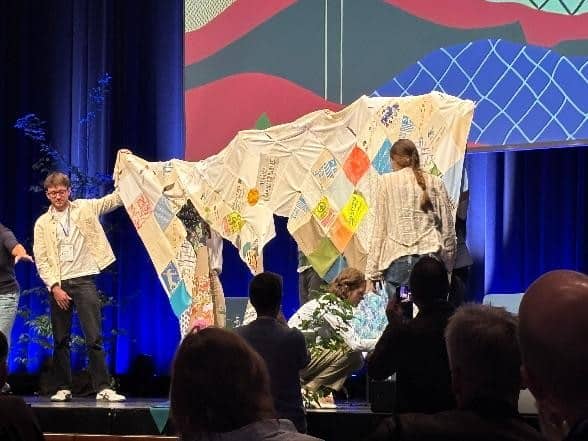
Design Marathons to conceive and create concepts and prototypes of new products using wool materials.
5 Pilot areas: Veneto (IT); Zahodna Slovenija (SI); Rhône-Alpes (FR); Styria (AT), Genève/Neuchâtel (CH). The Design Marathons will focus on specific challenges, such as developing sustainable or innovative wool products for a particular sector or market. The results of the Design Marathons will be prototyped and tested to create a showcase innovative wool-based products and test results and evaluations of the prototypes, ensuring their practicality and viability for market entry. -
New wool-based materials and products
The project will support the development of new wool-based materials or products that are more sustainable and marketable. These products will be taken up or up-scaled by a variety of organisations, including fashion brands, home goods retailers, and construction companies. -
Upgraded Pilot Processing Centres
5 Pilot areas: Veneto (IT); Zahodna Slovenija (SI); Rhône-Alpes (FR); Styria (AT), Genève/Neuchâtel (CH). Adapted and enhanced pilot processing centres that will test the capabilities of new machinery and identified processing methods. The goal is to demonstrate the feasibility of these technologies and to provide training to businesses, designers, and entrepreneurs. These facility will also host a round of the Design Marathon aimed at prototyping new materials or products. -
Innovative Products Pilot Supporting Programme
5 Pilot areas: Veneto (IT); Zahodna Slovenija (SI); Rhône-Alpes (FR); Styria (AT), Genève/Neuchâtel (CH). O.1 establishes a collaborative knowledge platform for circular business models in the Alpine wool industry. Companies and professionals, selected through a transparent public call, directly contribute to the solution's development. Their collaboration results in refined standardised toolkits and training programs that will be disseminated to relevant stakeholders for wider adoption.
Pilots
-
Veneto Region (Italy)
Pilot Partner: Centro Consorzi (PP4)
Centro Consorzi will implement a pilot intervention in the Belluno province (Veneto region), aimed at reactivating and strengthening the local wool value chain, particularly in connection with rustic Alpine sheep breeds. The pilot will be based on mapping and co-design activities, involving various territorial stakeholders with whom the organisation already maintains active relationships. Centro Consorzi is expected to contribute across all four phases of the project, making use of its existing local and international networks. The pilot’s main result is the initiation of an experimental territorial chain, grounded in accessible innovation and collaborative processes for coarse wool valorisation. -
Rhône-Alpes Region (France)
Pilot Partner: Le Textile Lab (PP7)
Le Textile Lab acts as the French pilot coordinator and leads Work Package 3 (MAKE). The pilot will be carried out in the Rhône-Alpes region with a bioregional and transdisciplinary design approach. It will engage a wide range of local actors, including farmers, wool craftsmen, textile companies, and both vocational and higher education institutions. Le Textile Lab is responsible for the creation of the Woolshed Factory Catalogue and for running a mentoring programme that will incubate three innovative wool-based projects. This pilot focuses on experimenting with rustic wool and integrating it into responsible and circular textile micro-factories.
-
Styria (Austria)
Pilot Partner: Impact Hub Vienna (PP8)
Impact Hub Vienna will implement the Austrian pilot in collaboration with FarmLab.at, a fabrication laboratory and farm located in rural Styria. The pilot will test wool-based entrepreneurial ideas and prototypes. Activities include the development of a curriculum on circular business modelling and the production of user-friendly toolkits for trainers. Impact Hub Vienna will also organise train-the-trainer programmes and support programme implementation. The goal is to support early-stage wool innovation and ensure replicable impact models across the Alpine Space. -
Western Slovenia (Slovenia)
Pilot Partners: KGZS Zavod GO (PP5) and InnoRenew CoE (PP6)
This joint Slovenian pilot brings together the regional agricultural institute KGZS Zavod GO and the research centre InnoRenew CoE. KGZS will lead actions related to the mapping and valorisation of sheep breeds, wool quality assessment, and the cataloguing of wool-related cultural heritage. InnoRenew CoE will focus on the development of innovative TRL4 (Technology Readiness Level) products made from low-quality wool residuals, as well as the modelling and optimisation of the value chain. The pilot combines heritage and technological innovation to unlock the regional potential of underutilised wool. -
Neuchâtel (Switzerland)
Pilot Partner: Laines d’ici (PP3)
Laines d’ici operates the Centre régional de la laine in Cernier (Canton of Neuchâtel), and contributes to the project by sharing its expertise in medium-scale mechanised spinning and coarse wool processing. The pilot will address the challenge of wool sorting and cleaning, one of the critical bottlenecks identified in the coarse wool value chain. Activities include the testing and demonstration of processing techniques already in use at their site, with a focus on improving fibre quality and supporting small-scale processors and designers. The main result is the optimisation of wool preparation techniques within a rural context.
Downloads
-
Download
Mapping Alpine wool heritage and contemporary initiatives as a foundation for innovation
This deliverable presents a structured analysis of Alpine wool-related cultural heritage and current wool initiatives across the project territories. It combines historical, ethnographic and socio-economic perspectives to document how sheep farming, wool production and textile practices have shaped Alpine landscapes, identities and livelihoods over centuries. The report is organised by country and region, showcasing selected tangible and intangible heritage elements, and is complemented by a systematic overview of European sheep and wool projects, both past and ongoing. An Alpine sheep and wool calendar further situates wool-related activities within seasonal and territorial rhythms.
The primary objective of this deliverable is to build a shared knowledge base on Alpine wool heritage and existing innovation trajectories. By reconnecting historical practices with contemporary initiatives, it provides cultural and contextual grounding for the Woolshed project’s innovation activities. The deliverable supports awareness-raising, cross-regional comparison and strategic reflection, helping partners and stakeholders understand what has existed, what still persists, and where there is room for renewal and transformation within Alpine wool value chains.
This document is particularly relevant for researchers, cultural institutions, policymakers, regional developers, educators, designers and practitioners working at the intersection of heritage, rural development, circular economy and sustainable materials. It offers concrete references and comparative insights that can inform policy design, educational activities, innovation processes and community engagement. By making Alpine wool heritage visible and legible, the deliverable also supports dialogue between tradition and innovation, providing inspiration for future pilot actions and design-led experimentation.
-
Download
An open, visual and data-driven map of Alpine wool ecosystems
The Woolshed Digital Alpine Wool Atlas is an interactive and narrative-driven tool that maps wool-related ecosystems across the Alpine Space. It brings together geographical data, value-chain information and qualitative insights to visualise where wool is produced, processed, transformed and valorised, and how actors, infrastructures and territories are connected. The Atlas combines cartographic layers with descriptive content, enabling users to explore wool value chains across regions, scales and sectors, while highlighting patterns, gaps and opportunities within Alpine wool systems.
The main objective of this deliverable is to make Alpine wool ecosystems visible, legible and comparable across territories. By translating complex datasets into an accessible digital atlas, it supports knowledge sharing, strategic reflection and cross-territorial learning. The Atlas also provides a common reference framework for subsequent project activities, including pilot actions, Design Marathons and policy-oriented discussions, helping to ground them in a shared spatial and systemic understanding.
This deliverable is particularly useful for policymakers, regional and local authorities, researchers, educators, designers, innovation intermediaries and development agencies working on circular economy, bio-based materials and mountain territories. It allows them to identify existing capacities, understand territorial specificities and explore potential connections between actors and regions. The Atlas is also a valuable communication and educational tool, supporting dissemination, training activities and informed dialogue with stakeholders and the wider public.
-
Download
Exploring the Untapped Potential of Alpine Wool
This catalogue provides a structured overview of raw wool resources and semi-processed wool forms found across Alpine contexts. It compiles technical descriptors and classification logic to describe wool inputs and how they evolve through key transformation steps. The document is designed around a modular representation of the wool value chain, using “blocks” to describe raw materials, processes (e.g., sorting, scouring, carding, combing, nonwoven production), semi-products and final product pathways. It also includes a cross-sector application matrix, sustainability and circularity considerations, and appendices specifying common raw wool materials and semi-processed forms.
The core purpose is to create a robust, comparable dataset that can feed the WP2 resource-matching optimisation model, enabling better decision-making and more efficient allocation of wool resources across the value chain. In practical terms, the catalogue standardises how materials are described so that the optimisation tool can connect available wool batches to suitable processes and end-use opportunities, while considering constraints and sustainability parameters.
This document is valuable for wool processors, SMEs, designers, material researchers, sustainability experts and value-chain analysts who need a common reference for understanding wool variability, semi-product formats and processing implications. It is also relevant for stakeholders contributing data to the optimisation tool, because it clarifies the information needed to describe resources consistently and make them usable in a decision-support environment.
-
Download
Connecting Wool Resources with New Market Opportunities
This portfolio presents a structured view of the demand side: it documents performance requirements and specification needs for wool-derived end products across multiple sectors. It defines representative “final product blocks” and clarifies which wool characteristics matter for different applications, including apparel, footwear, sports, architecture and interior textiles, manufacturing and industry, medical uses, agriculture and environmental applications, and smart textiles. It also includes elements of quantitative demand analysis (including seasonality), and a gap and compatibility assessment to help interpret mismatches between material availability and market requirements. The portfolio additionally references innovation frameworks that can support translation from demand signals to product development pathways.
The main objective is to provide the demand-side counterpart to D.2.1.1, supplying structured requirements that can be integrated into the WP2 matching logic. By codifying product expectations (quality thresholds, technical specifications, certifications and other constraints), the portfolio supports more accurate alignment between wool resources, processing pathways and viable end-use markets within the optimisation approach.
This deliverable is especially useful for SMEs, processors, designers, innovation intermediaries and policymakers who want a clear picture of where wool can realistically compete and what conditions must be met for different applications. It is also practical for partners and stakeholders contributing to the resource-matching tool, because it clarifies how “demand” needs to be described to be actionable (rather than generic) when linking products to material and processing options.
-
Download
Brief and Matrix of technologies and infrastructures from lab to industrial scales
This document introduces and frames the Woolshed Factory concept within WP3 MAKE. It situates the idea in relation to distributed manufacturing, local capacity-building and regenerative approaches, and clarifies the role of Woolshed Factories as a network of spaces, tools and know-how supporting local wool processing and experimentation. The deliverable then moves into the practical groundwork for a future open catalogue by describing the creation of a technology matrix (developed as an Excel database) and the first designs for a Woolshed Factory Catalogue. It outlines what information the catalogue should capture for each tool or machine (e.g., description, scale, openness/licensing, users, TRL, low-tech criteria, resource use, and “stories of use”), and it notes the intention to link the catalogue with cartography and other open documentation practices.
The objective is to establish a shared definition, vision and operational starting point for Woolshed Factories, and to initiate the technical backbone needed for a living, open and reusable catalogue of technologies and infrastructures for wool processing. This deliverable effectively sets the conceptual and organisational basis for the next iterations of the Factory Catalogue, including governance considerations and connections to existing open-source platforms.
This deliverable is relevant for makerspaces, textile labs, pilot processing centres, SMEs, training providers and local development actors who need a clear and replicable way to think about “what a Woolshed Factory is” and what it requires in terms of tools, skills and documentation. It is also useful internally for partners, because it provides a common framework for populating the matrix and for converging towards a transnational catalogue that is comparable across territories and scalable from lab to industrial settings.
More
Project calendar