Overview
Depopulation is a concerning trend with social and cultural implications, as well as impacts on territorial competitiveness. To address this issue in the Alpine region, APOLLO employs new approaches to enhance workers' well-being and work-life balance. The project also improves tools that supported work during the pandemic, like remote working, considering the needs arising from demographic changes. By working within a territorial network, APOLLO creates synergies to promote community well-being and stimulate economic development in the region.
Factsheet
- 2021 – 2027
- Innovation and digitalisation supporting a green Alpine region
- SO 3.2 - Reaping the benefits of digitisation for citizens, companies, research organisations and public authorities
-
- AG3 Labour market, education and training
- AG5 Connectivity & accessibility
- 09/2024
- 08/2027
- 2.473.000 EUR
- 1.854.750 EUR
Partners
- Lead partner
- Italy
- Piemonte (ITC1)
- Saluzzo
- Emilio Sidoli
- progettazione@comune.saluzzo.cn.it
- Italy
- Piemonte (ITC1)
- Turin
- Raffaella Motta
- raffaella.motta@linksfoundation.com
- Italy
- Piemonte (ITC1)
- Turin
- Federico Gerbaudi
- federico.gerbaudi@regione.piemonte.it
- Slovenia
- Vzhodna Slovenija (SI03)
- Novo Mesto
- Karin Zamida
- projektna-pisarna@fos-unm.si
- Austria
- Vorarlberg (AT34)
- Dornbirn
- Florian Maurer
- florian.maurer@fhv.at
- Germany
- Stuttgart (DE11)
- Stuttgart
- Daniel Buhr
- Daniel.buhr@steinbeis-tsti.com
- Slovenia
- Vzhodna Slovenija (SI03)
- Trebnje
- Sabina Tori Selan
- Sabina.tori-selan@ciktrebnje.si
- Germany
- Stuttgart (DE11)
- Stuttgart
- Amanda Breckner
- Amanda.Breckner@sm.bwl.de
- Slovenia
- Vzhodna Slovenija (SI03)
- Novo Mesto
- Peter Geršič
- peter.gersic@novomesto.si
- 44.64600017.4872087
- 45.06501117.6591275
- 45.07020017.5902228
- 45.8063481515.16490454902894
- 47.40578749.7445088
- 48.7116445000000069.203880729733758
- 45.9089618515.007194274738703
- 48.77547139.1814457
- 45.8055051515.163220143893847
Outcomes
-
Implementation of a pilot action
Implementation of a pilot action with two main activities: capacity building and sharing of services -
GearingUP Toolkit
The GearingUP toolkit is an operative model on how to implement public-private agreement(s) aimed at providing territorial welfare practises in the Alpine Space area. It will take in count the deliverable produced in WP2 and the activities implemented in the pilot action. -
Policy recommendations
The policy recommendations report will be drawn up starting from the lessons learned as part of the APOLLO project and will contain useful indications for inserting targeted territorial welfare actions into the respective legislative and regulatory contexts. It will be intended for PAs and will have the aim of providing a useful tool for influencing local (at least 8) and regional policies (at least 8). -
Creation of a network of stakeholder (APOLLO network)
A memorandum of understanding will be shared between the project partners and signed by the main stakeholders (constituting the APOLLO network) on the topic of TW , in order to define the framework of the APOLLO international network that will remain after the conclusion of the APOLLO project and formulate new proposals and implement new actions to consolidate the results of APOLLO in the territories.
Pilots
-
Call for Service Providers - support the Pilots: collaborate, co-create and innovate
We would like to invite you to join the APOLLO project. We actively seeking for Service Providers that augment the pilots with services, knowledge, and expertise. Register at our APOLLO Joint Service Database and list your service offering (or your service request (!)): start your Alpine-wide collaboration and co-creation as well as help to launch transnational inventions and innovation. Publish your service offerings and service requests on our Joint Database for social Service Providers - go to: https://apollo.labs.fhv.at/call-for-service-provider/
Register for Apollo's newsletter - stay informed about the project progress and its implementation: http:/eepurl.com/i43rZ2 -
Welfare Services in Remote Work & Digital Welfare Services
The internet has transformed how organizations collaborate and cooperate with internal and external stakeholders. For example, the advancements have brought stakeholders closer together and, by the use of web-based applications, technologies, and services, opened smart and efficient forms of (inter-) organizational collaboration. In addition, innovative working models such as remote work, hybrid arrangements, and the rise of digital nomadism have been enabled. Remote work has become part of organizational culture across many industries. However, municipalities and public administrations often lag in adopting these changes and implementing them in their organizational culture.
This project pilot aims to investigate the challenges municipalities and public administrations face in implementing remote working practices. The project addresses the research questions about “What are the key enablers for implementing remote work in municipalities from political, economic, social, and technological perspectives and how can remote work in municipalities be implemented?”. In addition, the project investigates “Which welfare services have the potential to foster the culture of remote working?”.
Building on the findings of the AlpSatellites project, the research and innovation focuses on exploring community services at both the state level and federal level as well as the local level. It includes a comprehensive analysis of existing community services, stakeholder requirements, and welfare needs, supported by a PEST analysis to assess its potential for remote work. The project also seeks to identify existing models and best practices while considering innovative approaches that could help municipalities not only adapt to but benefit from the emergence of remote working. -
Digital Literacy: Training Programme
The Municipality of Novo Mesto is taking meaningful steps to enhance digital literacy within its administration. By investing in the skills of its employees and the accessibility of digital services, the municipality aims to create a more responsive and inclusive public sector. The goal? To ensure that both staff and citizens are equipped to navigate the demands of an increasingly digital society. As part of this initiative, Novo Mesto is developing a next-generation digital platform to streamline the management of citizen-related processes. Alongside this, comprehensive training and support programmes will be introduced, ensuring that residents — regardless of age or digital skills — can confidently access and benefit from new digital services.
This pilot project has a clear mission:
! Faster processing times for administrative procedures
! Stronger communication between citizens and the municipality
! Greater efficiency in public service delivery
! Reduced operational costs through smarter digital solutions
By embracing digital tools and upskilling both employees and citizens, the municipality hopes to deliver a smoother, more accessible public service experience for all.
The expected outcomes of the pilot on Digital Literacy are a fully integrated digital system for managing citizen interactions, tailored training for employees, addressing different life scenarios and demographic needs and a targeted awareness campaign to encourage citizens to adopt digital communication channels. This initiative has been carefully designed with inclusivity in mind. Special attention will be given to groups that often face barriers to digital adoption - especially older adults. Solutions will be transparent, context-aware, and user-friendly, ensuring that everyone feels confident and supported in the transition.
By strengthening digital skills on both sides of the counter — employees and citizens — Novo mesto is building a more connected, efficient, and responsive local government. -
Digital Health Services: Telecare Night Shift Pilot in Rural Outpatient Care
Rooted in the concrete needs of outpatient care, this pilot responds to one amongst the most urgent challenges of the sector: ensuring safe and sustainable night-time care in rural areas. The overarching goal is to improve safety, reduce stress, and enhance working conditions for care professionals during night shifts by integrating remote support technologies. Night duty is a persistent pressure point - particularly in rural regions, where long travel distances, staff shortages, and the complexity of assessing emergencies in the dark significantly burden care teams. By introducing structured telecare decision-making, the pilot aims to reduce unnecessary call-outs, support clinical clarity, and enable a more balanced and resilient care system - for patients and staff alike. In partnership with two rural care providers (see our call for participants), we will co-develop and test a traffic-light-based telecare decision tool. This tool should help determine when digital support is sufficient (green light), when further assessment is needed (yellow light), and when an in-person visit is essential (red light). It should support clinical decision-making, reduce unnecessary night travel, and strengthen psychological safety for nursing staff. The pilot is designed to be iterative - refinable along the way - and includes documentation for broader scaling and policy uptake. It should also explore future reimbursement models for telecare and provide participating providers with training, digital tools, and evaluation support. With this pilot, we take an important step toward relieving care personnel, improving working conditions, and building resilient digital care models for the future.
-
Digital Animator: Action on Young Workers’ Wellbeing
This pilot action will focus on digital welfare services in relation to young/early career workers. This category is too often underestimated when it comes to discussion related to wellbeing and welfare. Indeed, early career workers may face uncertainty, precariousness and difficulties during the transition phase between education and work. Pivotal periods of change, such the formal entry into adulthood, may be the cause of increased levels of stress, and anxiety – in a world constantly changing and day-by-day more competitive. For this reason, the pilot will implement digital and in person tools to explore the connection between work-related transitions and mental health. Activities will have a participatory approach and will concretely contribute to raise awareness on the wellbeing of this category, involving both young workers and/or late career students and relevant institutions (enterprise, universities). Finally, the aim is to promote inclusive, community-based wellbeing practices and to raise awareness among employers and policymakers on the specific needs of this often-overlooked group.
In this pilot, we are looking for organizations, NGOs, associations, and third sector entities working on digital corporate welfare, young workers’ protagonism and wellbeing, and career coaching.
As part of the European project APOLLO, LINKS Foundation will implement a pilot action focused on early-career workers – a group often overlooked in public debates on mental health and welfare. Young people at the beginning of their professional path frequently face uncertainty, precariousness, and stress linked to transitions from education to work, especially in an increasingly fast-paced and competitive world. These challenges impact not only individual wellbeing, but also long-term engagement in the workforce and civic life.
The pilot will implement participatory methodology, to foster online and in person peer-to-peer exchanges, and co-design digital formats, aimed at exploring everyday experiences of stress and resilience, and at promoting inclusive, community-based approaches to mental health. We are seeking providers with experience in youth work, coaching, welfare innovation or participatory facilitation, and digital welfare services who can contribute to the design and delivery of the activities. The selected provider will support the LINKS team in tailoring tools, running sessions, and evaluating the outcomes. If your organization is committed to youth empowerment and interested in testing innovative ways to foster wellbeing at work, we would love to hear from you.
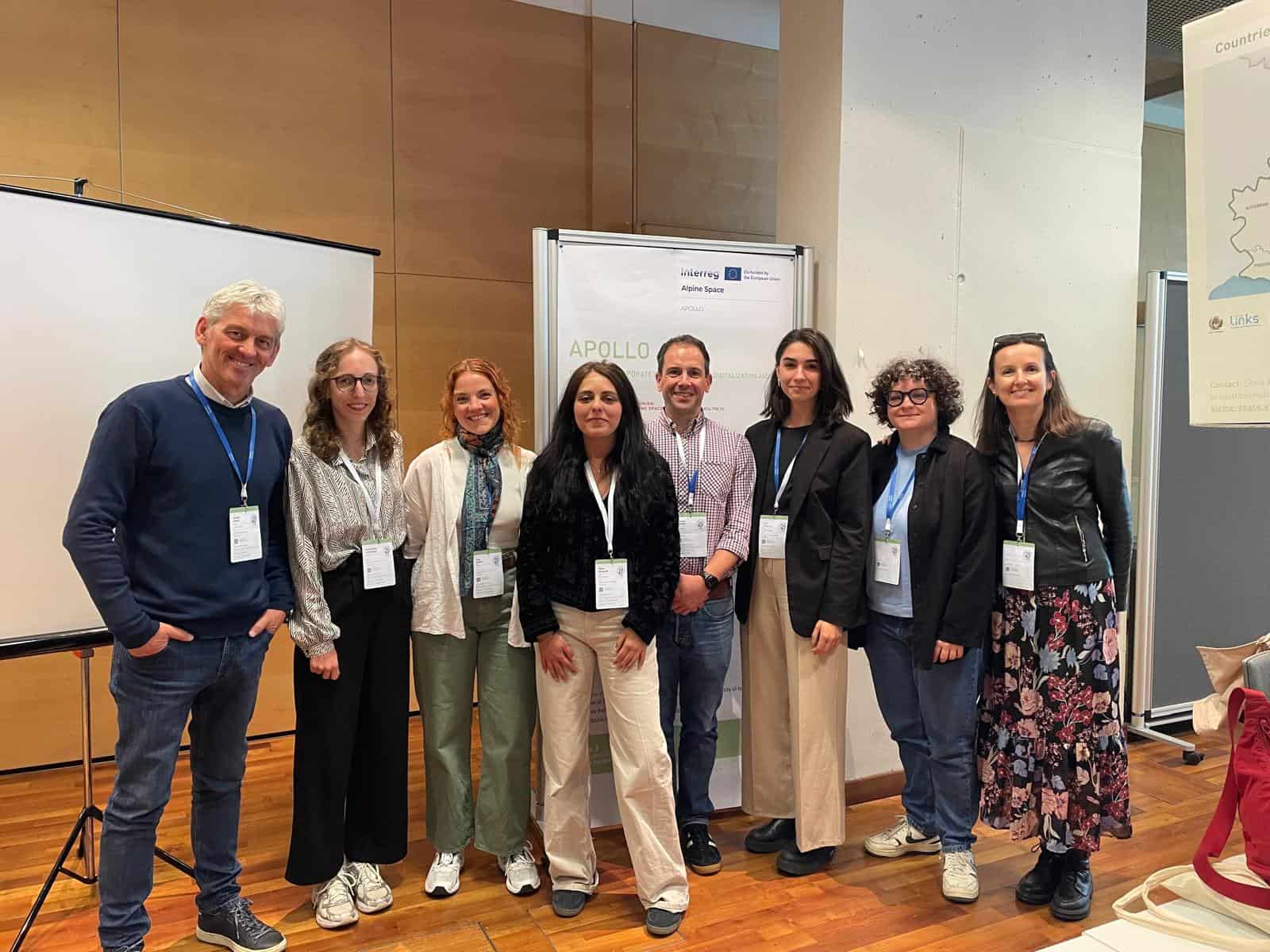
Gallery
Downloads
-
This document outlines the common methodological framework for all APOLLO partners implementing pilot actions under Work Package 2. While the content of each pilot may vary according to local context, this framework ensures coherence, comparability, and shared quality standards across the partnership.Download
-
Download
Deliverable D1.2.1: Operational framework definition compounds four separate contributions: (1) Mapping and analysis of best practices at European, national, and regional levels. (2) APOLLO needs analysis through surveys and focus groups (200+ workers and 40 SMEs). (3) Capacity-building workshops for public administrations and SMEs. (4) Call for service providers. Each of these contributions is the culmination of the APOLLO project partners’ activities in Work Package 1: Operational framework definition. The contributions, thus, can be read as a balanced combination of theoretical knowledge and practical instructions derived from hands-on experience.