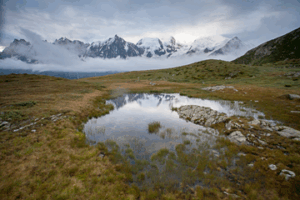

Mountain ecosystems are on the front line of climate change, particularly aquatic environments and wetlands, which are often unknown and serving as habitats to a wide range of rare, endangered, and endemic species.
Significant changes in hydrological dynamics are expected in headwaters with glaciers melting, reduction in snow cover, and increased rainfall in winter and periods of drought in summer. These changes will have a major impact on environments already weakened by intense anthropogenic pressures.
That is the whole challenge of the Cimae research project led by France Nature Environnement Haute-Savoie: to better understand climate change impacts on alpine ponds. The work carried out highlights key results:
-️ the reduction in the hydro-period (increase in the number of summer dry spells);
️ – the loss of connectivity between environments;
Both are essential factors to take into account, as they lead to a greater reduction in the probability of species presence than the increase in temperatures. These findings are consistent with the results of other studies that recognize the strong negative effect of increased intermittency on the taxonomic diversity of streams.
Alpine specialized species, which require very specific conditions and have limited potential for relocation, are more severely impacted than generalist species.
Being able to anticipate these changes is one of the key objectives of the Waterwise project. The goal: to integrate ecosystem needs into headwaters quantitative water management and to adapt ecosystem management, for example, by promoting connectivity between environments.