Overview
The built environment accounts for at least 40% of anthropogenic greenhouse gas emissions, according to the European Commission. For the Alps, the critical challenge is to use local resources effectively while ensuring the consistent application of EU rules and encouraging the adoption of common standards across the building value chain. BAUHALPS addresses these challenges by developing and testing a model that combines New European Bauhaus concepts with sustainability measurements and indicators in an innovative way. With the support of the local communities, the projects reunites sustainable, aesthetic and cultural aspects in the Alpine building sector.
Factsheet
- 2021 – 2027
- Carbon neutral and resource sensitive Alpine region
- SO 2.2 - Promoting the transition to a circular and resource efficient economy
-
- AG6 Natural resources
- 09/2024
- 08/2027
- 2.739.188 EUR
- 1.919.390 EUR
Partners
- Lead partner
- Italy
- Veneto (ITH3)
- Venezia
- Fabrizio Panozzo
- fondazione.cafoscari@unive.it
- France
- Rhône-Alpes (FRK2)
- SAINT ETIENNE
- Denis Cocconcelli
- denis.cocconcelli@ciridd.org
- Italy
- Provincia Autonoma di Trento (ITH2)
- Rovereto
- Marcello Curci
- marcello.curci@dttn.it
- Austria
- Salzburg (AT32)
- Salzburg
- Bernhard Lehofer
- bernhard.lehofer@innovation-salzburg.at
- Austria
- Wien (AT13)
- Wien
- Wolfgang Fischer
- wolfgang.fischer@digitalfindetstadt.at
- Germany
- Mittelfranken (DE25)
- Nürnberg
- Oliver Wittmann
- kontakt@bayern-kreativ.de
- Germany
- Schwaben (DE27)
- Immenstadt
- Maike Breitfeld
- info@holzforum-allgaeu.de
- Germany
- Oberbayern (DE21)
- Rosenheim
- Andreas Heinzmann
- andreas.heinzmann@th-rosenheim.de
- Slovenia
- Zahodna Slovenija (SI04)
- Ljubljana
- Majda Potokar
- majda.potokar@tp-lj.si
- Slovenia
- Zahodna Slovenija (SI04)
- Ljubljana
- Anja Zorko
- anja.zorko@mao.si
- Italy
- Veneto (ITH3)
- Padova
- Andrea Galeota
- progetti@pd.camcom.it
- Switzerland
- Zentralschweiz (CH06)
- Horw
- Sonja Geier
- sonja.geier@hslu.ch
- France
- Rhône-Alpes (FRK2)
- Grenoble
- Pauline BONINO
- pauline.bonino@tenerrdis.fr
- 45.437190812.3345898
- 45.44014674.3873058
- 45.883886811.021216
- 47.801325113.0185319
- 48.192908416.3785012
- 49.450126111.1021933
- 47.562112810.224999045194549
- 47.867467812.1072215
- 46.049382114.4607368
- 46.050570614.5637132
- 45.407717211.8734455
- 47.013323358.305830254870276
- 45.20484815.7038237
Outcomes
-
BAUHALPS Model
DownloadThe BAUHALPS Model is a conceptual framework that supports circular building in the Alpine region by integrating New European Bauhaus values, regional identity, innovation, and stakeholder collaboration into a practical approach for sustainable construction.The BAUHALPS Model defines the conceptual backbone of the BAUHALPS project and provides a common framework for developing, testing and evaluating circular building approaches across the Alpine region. It integrates the values and working principles of the New European Bauhaus with regional knowledge, innovation and collaboration to support the transition towards a more sustainable built environment.
The model is structured around seven interconnected layers, placing circular building at its core while linking it to NEB values, participatory processes, regional identity (Genius Loci), innovation domains and Communities of Inquiry. It also connects these concepts to the building lifecycle—from design and construction to use, redevelopment and material reuse—ensuring that circularity is translated into practical action.
Designed as a publicly accessible framework, the BAUHALPS Model helps policymakers, practitioners, researchers and local communities collaborate on creating resilient, resource-efficient and context-sensitive building solutions for the Alpine region.
-
Assessing the circularity performance of buildings with the toolkit
The pilot action is addressed to the toolkit that includes the 3 dimensions of NEB (circularity, beauty, community) jointly with the circularity indicators. PPs will test the tools with 3 categories of buildings (educational purpose, public services and residential) and will produce data and technical reports to assess their performance on one side and populate them of contents/data from the other for the project follow up. -
BAUHALPS toolkit
The toolkit is the solution to enhance the green transformation of the building sector according to the NEB principles. The toolkit, jointly with the 5 executive plans as showcases will be validated and up take by PPs and the building ecosystem (architects, engineering, building association, etc) with the signature of LoI. -
Action Plan for the green transformation of the building sector
The action plan implement the BAUHALPS strategy focusing on: a) NEB-based CV for building managers, vocational trainings, etc addressed to Labor agencies, Regional actors, Academic institutions, architects, building workers' association for the implementation; b) a set of criteria combining DNSH and NEB for green investment in building sector for regional authorities. Regional authorities, local building community will sign LoI for the uptake
Pilots
-
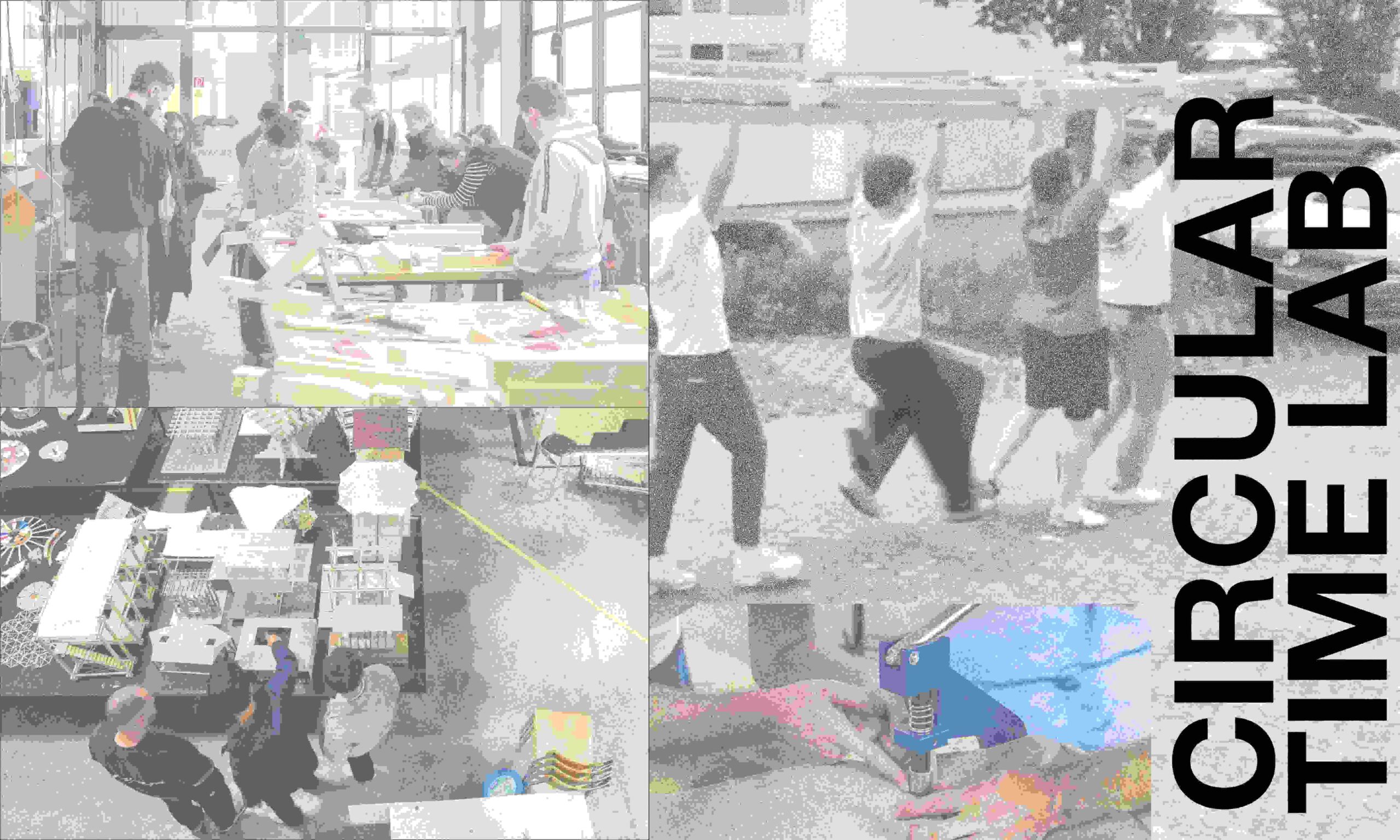
Circular Time Lab – experimental timber structures, Switzerland
In the heart of Lucerne, among its parks and urban nooks, something remarkable is taking shape—structures that appear, evolve, and then disappear, only to re-emerge in a new form. This is Circular Time Lab, a three-year experiment in designing, building, and re-building temporary wooden pavilions across the city. What looks like simple timber architecture is, in fact, a dynamic living lab where students, apprentices, and local craftsmen rethink how we build and unbuild our urban environments.
Led by the Lucerne University of Applied Sciences and Arts, the project invites architecture students and young carpenters to collaborate in imagining structures that serve the public—shaded gathering spots, open-air classrooms, or simply spaces for pause and reflection. Each construction is temporary, yet meaningful, designed with circularity at its core: using reclaimed timber, steel, and textiles, all chosen with care and local insight. After each season, the buildings are taken apart, reworked, and built anew—offering not just a physical transformation, but also a pedagogical and social one.
These interventions are not just technically clever—they’re beautiful in how they blend traditional woodcraft with bold, contemporary forms that echo Lucerne’s architectural identity. And above all, they’re open. Open to the public, open to change, and open to participation. Children play in them, neighbors rest in their shade, and builders learn by doing.
Circular Time Lab doesn’t just teach how to build. It shows how buildings can be part of a city’s rhythm—temporary yet impactful, sustainable yet expressive, and always shared.
-
Urban Revitalisation Pilot – Saint Romain Le Puy, France
In the heart of the Auvergne-Rhône-Alpes region, Saint Romain Le Puy, a small French town nestled between a Xth century old Roman priory, the Forez canal, and a regional railway line, the old town centre is undergoing a quiet but profound transformation. What was once a fragmented and underused urban core—marked by aging buildings, narrow pedestrian routes, traffic jam, and public spaces in decline—is now becoming a model of how heritage, sustainability, and community can shape the future of small towns.
Supported by CIRIDD, an international centre of resources and innovation for sustainable innovation based in Auvergne-Rhône-Alpes, the pilot project is reimagining over 5,000 square metres of residential, commercial, and public space. But this is not a renovation in the traditional sense. It’s a circular urban renewal, where old materials are reused, buildings are designed to be climate change adaptable, and every intervention considers both past and future. Brick by brick, a new town centre is emerging—one that respects its history while addressing today’s environmental and social challenges.
The transformation is as much about people as it is about space. Local residents and schools are directly involved, voicing their needs and expectations, and selecting solutions. Affordable housing is a key component—half of the new homes are reserved for those who need them most. Streets and services are designed to be welcoming for all generations, especially the elderly.
Through careful design, the project brings clarity and beauty back to the town centre, ensuring that new buildings speak the language of the old, while opening space for life to flourish again. Saint Romain Le Puy is not just being renovated—it’s being reconnected, reimagined, and reinhabited.
Selective deconstruction, building materials re-use, partial demolition, and soil depollution phases terminated in May 2026. Pending the beginning of the upcoming construction phase (expected for 2028), communication activities and participatory activities with local communities are now realised to inform them on the project status and determine with them the temporary use of the vacant sites.
-
Fužine Castle, Slovenia
Fužine Castle, perched on the left bank of the Ljubljanica River, is the only Renaissance castle in the Slovenian capital. Built in the 16th century, it has long since lost its original industrial function, but never its significance. Today, it houses the Museum of Architecture and Design (MAO), the central national institution for architecture, urbanism, design, and photography. Yet, despite preserving precious history within its walls, the building itself has never undergone a full transformation to meet the needs of a contemporary museum.
One of the most overlooked parts of the castle is its attic – once an occasional exhibition venue, now an unusable space left to deteriorate under extreme temperatures and outdated infrastructure. This very attic is now becoming the focus of a pilot project that explores new, sustainable ways of renovating cultural heritage. The interventions are small but targeted: replacing deteriorated windows, improving insulation, adding temporary closures, and creating new space for exhibitions, storage, and community use.
But this is not just a technical upgrade. It’s a cultural shift, where local craftsmanship, knowledge, and experience come together. Designers, builders, artists, residents, and museum visitors are actively involved. Through this, MAO is embracing the three core values of the New European Bauhaus: reducing energy loss and prolonging the building’s life (sustainability), enhancing the spatial quality of the castle (beauty), and opening it up to wider participation (inclusion).
The attic of Fužine Castle is becoming a living lab for change – a place where heritage and the future meet in a shared vision.
-
Station for Transformation, Italy
Rovereto’s railway station area in Italy is undergoing an extensive renovation as part of the EUI-funded project Station for Transformation (S4T). The initiative promotes sustainable and inclusive urban regeneration, with the goal of transforming the station and its surroundings into a dynamic and accessible public space. Particular emphasis is placed on the creation of new areas designed to host cultural, social, and sustainability-oriented activities.
Grounded in the principles of the New European Bauhaus (NEB), namely sustainability, inclusion, and aesthetics, the project translates these values into concrete actions within the urban environment. It fosters dialogue and collaboration among local communities, institutions, enterprises, and creative organizations, ensuring a shared and participatory transformation process.
Within this framework, the BAUHALPS pilot focuses on a specific building located in the S4T regeneration area, the former café Bar Iris. The building is being transformed into a Climate Canteen, a space dedicated to promoting sustainable agri-food practices, food innovation, and educational and training activities.
Alongside the physical transformation, S4T actively engages a broad network of citizens, schools, and local associations through educational programmes, participatory initiatives, cultural activities, and workshops. This approach reinforces the social dimension of the project and supports long-term community involvement.
The project also aims to establish a strong connection between S4T and BAUHALPS by testing the BAUHALPS toolkit within the Climate Canteen, sharing the knowledge and expertise developed through the project, and contributing to the success of both initiatives. This is achieved through the active involvement of the local community, guided by a New European Bauhaus-inspired approach.
-
Chamber of Commerce, Italy
The property is situated within "La Cittadella," one of the main business districts in Padua. Its location provides excellent connectivity to the city center, the university and the exhibition center.
In recent years, the local administration has focused on urban renewal to counteract socioeconomic decline. Key redevelopment projects include the establishment of a public park, the construction of new university facilities, and the expansion of the exhibition center. Furthermore, road infrastructure upgrades have significantly improved transit between the university district, the ring road, and the Padova Est junction. Indeed, infrastructure for a new tram line is currently under construction.
The property's internal facilities are designed for corporate use, featuring: a large conference room with 204 seats; two smaller convention rooms (53 and 24 seats); a dedicated meeting room, a control room, a reception area.
The renovation project includes the complete replacement of the multimedia systems (audio-video, microphones, remote connections) and the electrical system, alongside a rejuvenation of the building’s internal aesthetics.
-
Micro-Neigbourhood, Germany
In the district of Dickenreishausen, on the outskirts of Memmingen, a small but ambitious housing project is taking shape. Conceived as a pilot for circular, climate-responsive, and socially sustainable living, the micro-neighbourhood rethinks how housing can respond to today’s environmental challenges while remaining affordable, adaptable, and rooted in its local context. On a compact site of approximately 1,500 square metres, a multi-generational settlement is emerging—one that demonstrates how high-quality living can be achieved with minimal resource use.
Rather than following the logic of conventional housing development, the project is designed as a real, inhabited living laboratory. At least four residential units are planned, each capable of adapting to different life phases and household structures over time. All buildings are conceived according to a strict design-for-disassembly approach: they are fully demountable, reusable, and can be removed without permanently sealing the land. In this way, the project directly addresses the tension between climate protection, land consumption, construction costs, and long-term residential quality.
Circularity lies at the heart of the concept. The buildings rely predominantly on renewable and recycled materials, combined with highly prefabricated, simple, and robust construction systems. Regional value creation and material efficiency guide every design decision. Thanks to a very low primary energy demand and the integration of on-site renewable energy generation, the residential units aim for a high degree of energy autonomy while maintaining a high level of comfort.
What sets the micro-neighbourhood apart is its strong focus on monitoring and continuous learning. The inhabited prototypes are evaluated over the long term, with particular attention to energy performance, indoor comfort, and user behaviour. This process generates reliable real-world data, providing a solid basis for improving circular housing concepts and supporting their replication at a larger scale.
Through this combination of technological innovation and social responsibility, the micro-neighbourhood in Dickenreishausen contributes concretely to the sustainable transformation of residential construction. Small in scale but rich in insight, it shows how context-sensitive, circular developments can serve as transferable blueprints for a future-oriented building culture.
-
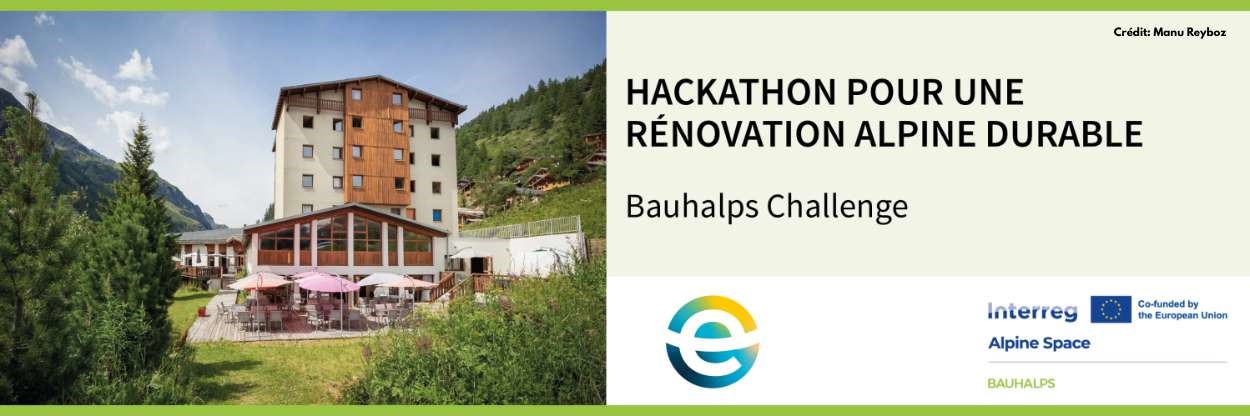
Alpine Hospitality – Tignes-Les Brévières, France
At the foot of the Tignes ski resort, where the valley opens beneath the vast Alpine peaks and the imposing Chevril dam, a different kind of transformation is beginning. In Les Brévières, a hotel built for a past era of mountain tourism is now becoming a testing ground for how Alpine hospitality can adapt to a changing climate and a changing society.
Constructed in the late 1980s, the five-storey residence has long been part of the region’s tourism infrastructure—welcoming guests through winter and summer seasons alike. Yet behind its stone, timber, and concrete façade lies a growing challenge. Rising energy demands, evolving regulations, and the uncertain future of snow-based tourism are calling for a new approach—one that goes beyond renovation and rethinks the very role of such buildings in mountain territories.
This pilot, developed within the BAUHALPS project, explores how a large privately owned hotel can transition towards circularity while remaining economically viable and socially relevant. Rather than proposing a single fixed solution, the project works through scenarios—testing different levels of intervention, from targeted upgrades to more ambitious transformations. Each option carefully balances environmental impact, financial feasibility, and long-term value, acknowledging that sustainable change must also be realistic.
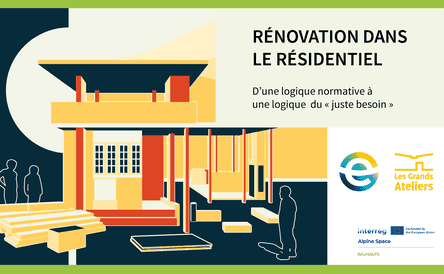
But the transformation is not only technical. It is deeply collaborative. Financial institutions, local authorities, tourism actors, researchers, and designers are brought together to define what is called the “fair need”—a shared understanding of what level of intervention is truly necessary and meaningful. Workshops, participatory sessions, and public discussions create space for dialogue, ensuring that decisions are not made in isolation but shaped collectively.
The surrounding landscape plays a crucial role in this story. The nearby dam, once responsible for the disappearance of the original village, remains a powerful symbol of energy production and territorial change. Today, it becomes part of a new narrative—one that connects local energy systems, building renovation, and climate resilience. Through design exploration and student-led hackathons, the project reimagines how architecture can reveal and engage with these invisible infrastructures.
Circularity here is not an abstract concept, but a practical strategy. The building is approached as a flexible system—one that can adapt to new uses, extend its lifespan, and reduce its environmental footprint. From life-cycle thinking to material reuse and modular design, the pilot investigates how existing structures can evolve rather than be replaced. Even operational questions—such as extending the hotel’s seasonal use—are reconsidered as part of a broader circular approach.
At its core, the Tignes pilot is about transition. It reflects a moment where Alpine regions must rethink their economic models, their buildings, and their relationship with the environment. This is not just a renovation project—it is a living process of negotiation between past and future, between local identity and global challenges.
The hotel in Les Brévières is no longer just a place to stay. It is becoming a space to question, to test, and to imagine how mountain architecture can remain resilient, relevant, and shared in the decades to come.
-
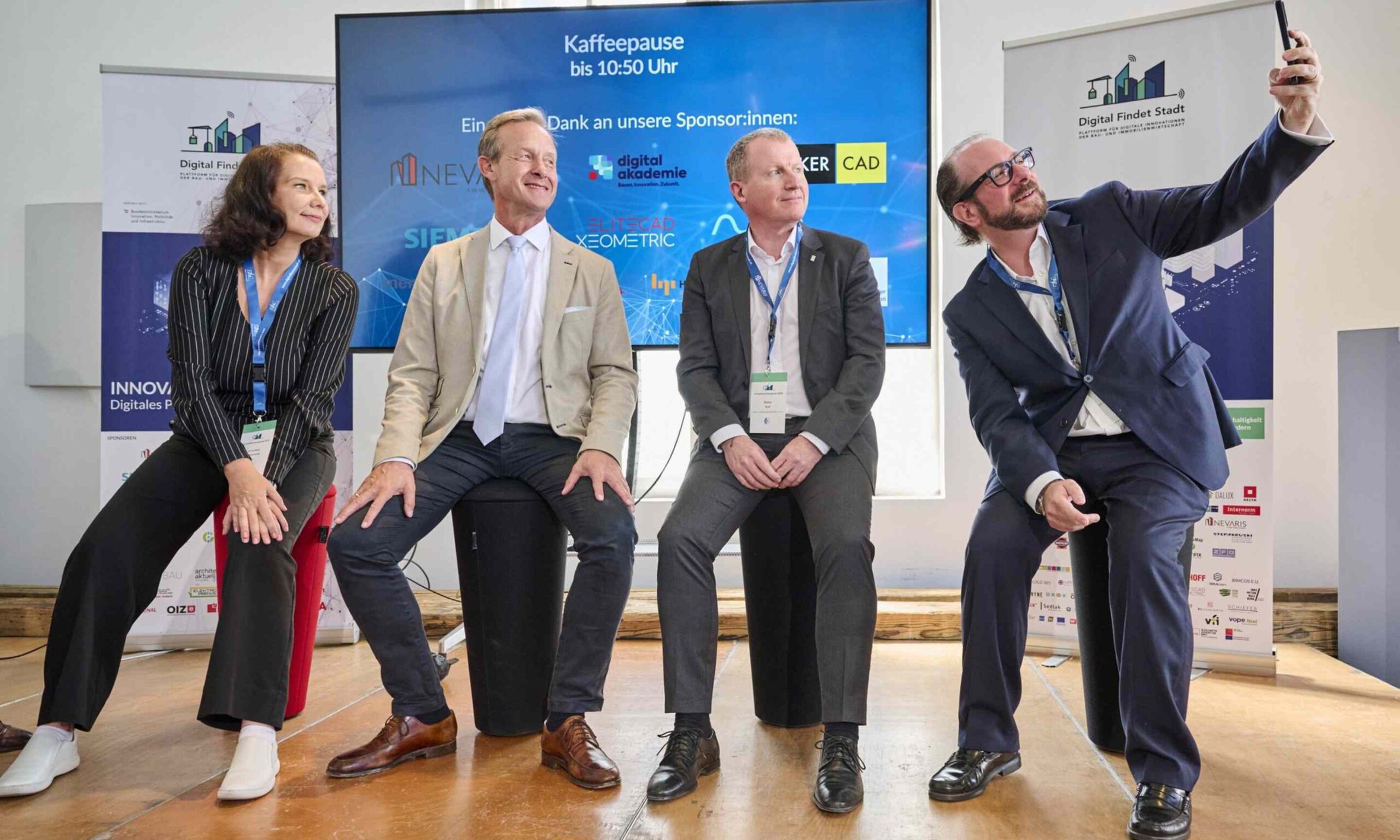
Weiterbauen – Keep on building, Austria
Hidden among the rural landscapes of Salzburg stands the Wiesberghof, a timber farmhouse that has witnessed nearly five centuries of Alpine life. Soon, this remarkable building will begin a new chapter as it is carefully relocated to the Salzburg Open-Air Museum in Großgmain. But rather than simply preserving the house as a monument to the past, the project asks a much bigger question: how can historic timber buildings continue to serve the needs of the future?
Traditionally, open-air museums focus on conserving buildings in their original state, allowing visitors to experience history as it once was. Through the BAUHALPS project, however, Wiesberghof becomes something more. The team is exploring how the farmhouse could be sensitively modernised to support contemporary living and working while respecting its traditional structure, creating a bridge between heritage preservation and future possibilities.
Using state-of-the-art digital technologies, the project is developing a series of virtual renovation scenarios tailored to different audiences. The result will be a virtual model house—not only documenting the building's history, but also demonstrating practical approaches for its sustainable adaptation. Rather than offering a single solution, it serves as a prototype and learning platform, showing how historic timber architecture can remain relevant in the twenty-first century.
This virtual house is designed as a public resource. Through consultations, discussions, guidance materials, and digital documentation, it supports municipalities, regional authorities, planners, architects, developers, construction companies, researchers, and private owners who are seeking sustainable ways to reuse traditional timber buildings. In collaboration with the Salzburg Open-Air Museum, these services are intended to continue beyond the lifetime of the BAUHALPS project, ensuring that the knowledge generated today will inspire future generations of restoration and design.
The Wiesberghof is therefore becoming more than a preserved farmhouse. It is evolving into a living prototype—where centuries-old craftsmanship meets digital innovation, and where Alpine heritage becomes a practical guide for building a more sustainable future.
Downloads
-
A four-phase participatory approach enabling Alpine communities to engage in circular building transformation—from awareness and co-design to implementation and evaluation—strengthening local capacity and supporting sustainable, inclusive, and aesthetically aligned development in line with New European Bauhaus principles.Download
-
An interactive transnational mapping of traditional Alpine building skills, techniques, materials, and knowledge systems, forming a living archive that supports circular and place-sensitive construction while informing pilot projects, education, and policy development. Access the Treasure Map that we developed.Download
-
A technical and conceptual framework for a GIS-based digital repository that documents and structures traditional Alpine building knowledge, skills, techniques, and materials, ensuring long-term visibility, standardised data, and professional access to support circular, heritage-informed construction across the Alpine Space. Access the Genius Loci that we developed.Download
-
The BAUHALPS Model provides a comprehensive framework for assessing circularity in the building sector. It brings together circular economy principles, the New European Bauhaus values, international standards (ISO 59020 and UNI/TS 11820), and the DNSH principle to evaluate buildings across environmental, social, economic, and cultural dimensions. The model covers sustainable design, efficient use of materials and resources, waste prevention, ecosystem restoration, stakeholder engagement, and the preservation of local identity, creating a common methodology for greener and more resilient construction.Download
-
The BAUHALPS Circularity Maturity Assessment Tool provides a practical methodology for evaluating the circularity performance of building projects. Based on the project's 12 circularity indicators, it enables users to assess buildings through three complementary levels: qualitative, semi-quantitative, and quantitative assessment. The tool supports architects, SMEs, public authorities, and other stakeholders in identifying strengths, improvement opportunities, and progress towards more sustainable and circular construction practices. It will be tested and further refined through the BAUHALPS pilot actions across the Alpine region before becoming part of the final BAUHALPS Toolkit.Download
-
The BAUHALPS Model provides a framework for a more sustainable and circular building sector in the Alpine region by combining circular economy principles with the New European Bauhaus values of sustainability, aesthetics, and inclusion. It promotes resource-efficient construction, preserves local identity and heritage, and integrates modern technologies with local knowledge. Through pilot actions and stakeholder collaboration, the model supports innovative, resilient, and place-based building solutions. The diagram presents the model's key components, including NEB values, genius loci, circularity, and life-cycle thinking.Download
-
The BAUHALPS Toolkit translates the project's conceptual model into a practical framework that supports circular building practices across the Alpine region. It combines three complementary components: a methodology for engaging local communities, a Genius Loci repository that captures local knowledge and resources, and the Circularity Maturity Assessment Tool for evaluating circular performance. Together, these elements help stakeholders plan, implement and replicate circular building solutions that reflect the New European Bauhaus values of sustainability, inclusiveness and aesthetics. The toolkit will be tested and further refined through the BAUHALPS pilot actions before becoming the project's final implementation resource.Download
Project calendar