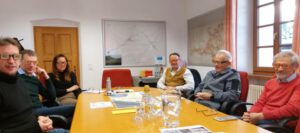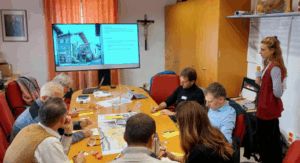
Within the framework of BrokeringSpaces, Local Round Tables were conducted in the municipality of Truden (South Tyrol), contributing to the development of practical approaches for sustainable land-use management and the transition towards No Net Land Take.
The process combined an initial analytical discussion of current land-use dynamics with an in-depth, scenario-based stakeholder workshop, enabling both a shared understanding of challenges and the co-creation of future-oriented solutions.
Participants from municipal, provincial, and expert levels discussed recent developments and confirmed that, after a temporary slowdown, land consumption has begun to rise again. Over the past decade, Truden recorded an increase of approximately 7,000 m² of sealed land, with additional development foreseen primarily for housing purposes.
Despite strong local commitment to sustainable development, several structural challenges were identified, such as high number of vacant and underused buildings, limited municipal administrative capacity, low private investment in renovation, and strict environmental constraints, including Natura 2000 regulations.
At the same time, important strengths were highlighted, such as active vacancy management, municipal advisory services, and strong local identity linked to traditional building structures.
The discussion also revealed diverging perspectives among stakeholders. While the municipality emphasised the need for greater flexibility and support mechanisms, the provincial level stressed the importance of a cultural shift towards reusing existing building stock and reducing dependence on new land development. Experts further pointed to systemic issues such as land consumption driven by single-family housing and parking infrastructure.
Building on these findings, on the next Local Round Table, the objective was to jointly explore pathways for minimizing land consumption while ensuring economic viability, climate adaptation, and quality of life. Using a role-playing approach, participants engaged in two realistic future scenarios addressing key land-use conflicts.
The first scenario focused on the need for a new livestock building to ensure farm succession. This highlighted the tension between maintaining viable agricultural structures and limiting land consumption. The discussion revealed fundamental questions regarding responsibility and fairness, particularly whether compensation for land sealing should be borne by individual actors or addressed collectively at municipal level.
The second scenario addressed the needs of young families seeking housing in Truden. While new construction remains attractive, policy frameworks increasingly favour renovation and the activation of vacant buildings. Participants underlined the importance of maintaining demographic vitality while avoiding further urban sprawl and infrastructure costs.
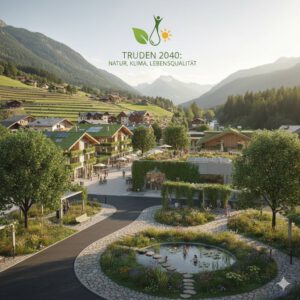
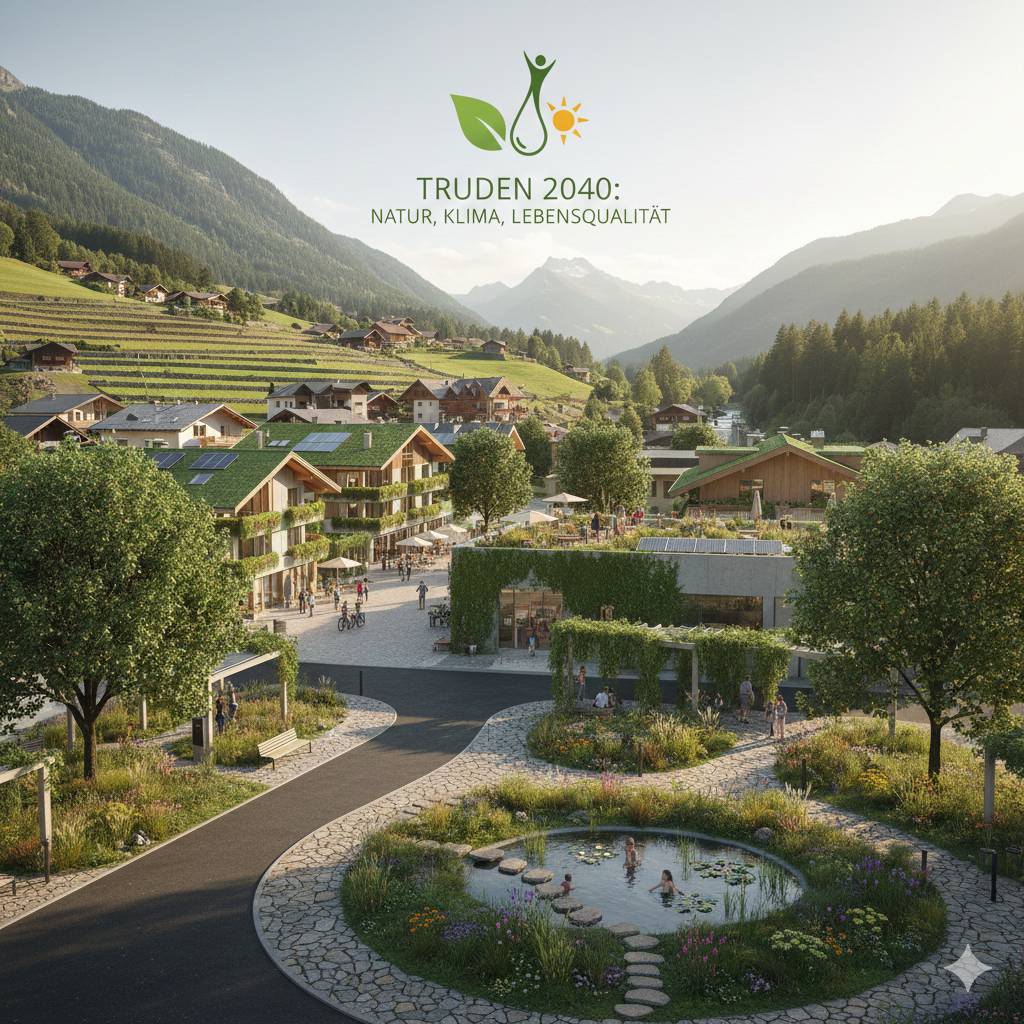
As a key outcome, participants co-created a shared vision for the municipality, formulated as a forward-looking narrative for the year 2040. This vision describes Truden as a municipality that treats land as a limited and valuable resource, where new land sealing is strictly limited and systematically compensated through high-quality de-sealing measures.
The workshops defined concrete next steps for advancing sustainable land-use governance in Truden. Starting with establishing clear criteria and procedures for de-sealing and compensation, developing structured land-use and vacancy management systems, strengthening advisory services and financial support for renovation and improving coordination between municipal and provincial levels.
Importantly, the process highlighted that achieving No Net Land Take requires not only regulatory frameworks but also new forms of cooperation, shared responsibility, and a shift in mindset among all stakeholders.