
HumanFactor Test Workshop Held in Innsbruck
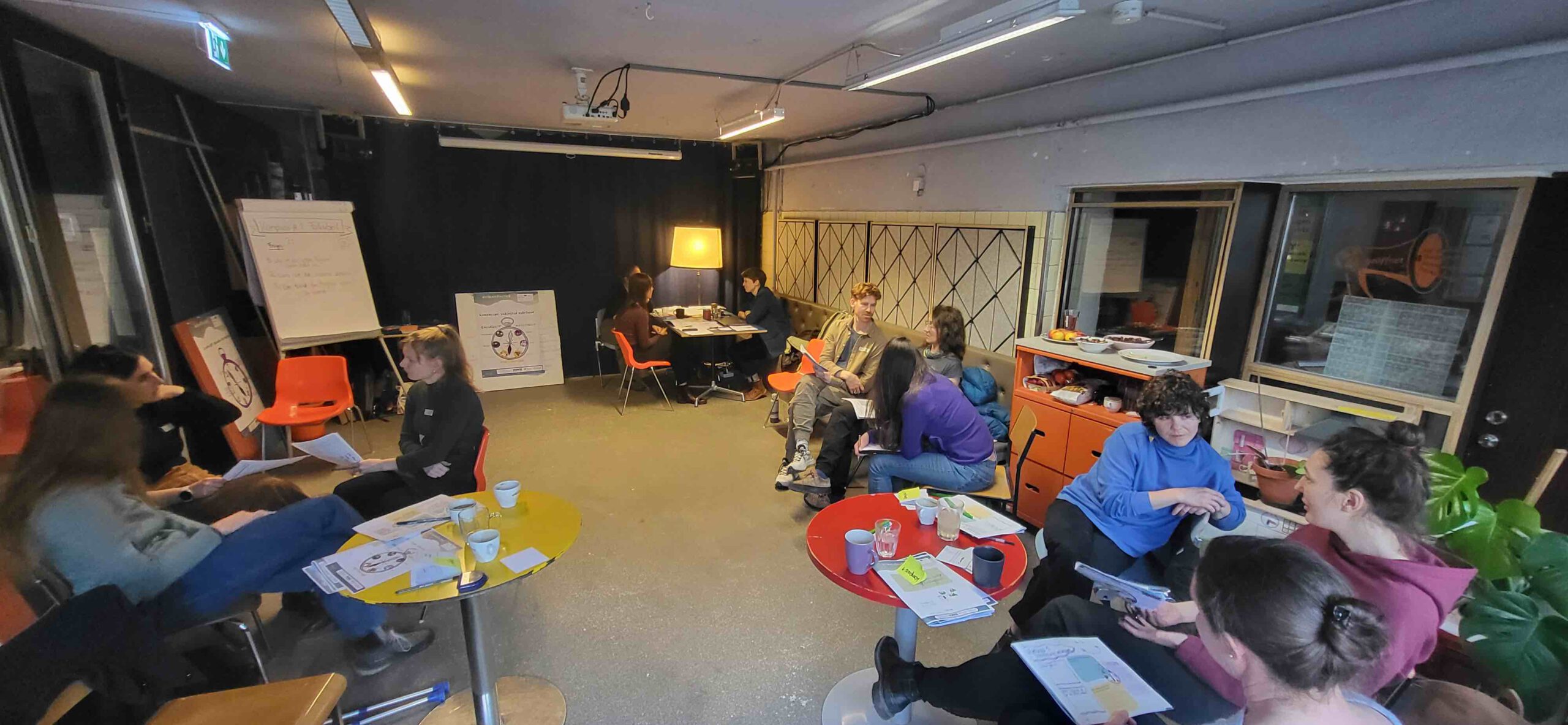
On 19 February 2026, the HumanFactor project team organised a test training workshop in Innsbruck. The session formed part of the ongoing development and testing of the HumanFactor methodological framework and support tools.
The workshop, titled “Closing implementation gaps in the Alpine region: Putting people at the centre of sustainable change”, introduced participants to the HumanFactor Compass, a practical orientation tool designed for multipliers implementing sustainability initiatives across the Alpine region .
Understanding the Implementation Gap
A central focus of the training was the so-called knowledge–action gap: the observation that people often do not act in line with what they consider right or necessary. The workshop explored why knowledge alone is not sufficient to trigger behavioural change. Psychological factors (such as habits, emotions or doubts about one’s own impact), social influences (norms, role models, group identities) and structural conditions (time, infrastructure, rules, incentives) all play a role.
Participants worked with Compass 1 – Understanding Behaviour, based on the Behaviour Change Wheel (Michie, van Stralen & West, 2011). This framework highlights three key conditions for behaviour change:
- Capability (knowledge and skills),
- Opportunity (physical and social environment),
- Motivation (automatic and reflective drivers) .
Through guided questions and practical exercises, participants analysed concrete cases and identified which dimensions represented the main barriers to change.
Designing Human-Centred Processes
The second part of the training focused on Compass 2 – Designing Processes. Here, the emphasis was on how organisations and networks can structure change processes in a way that consistently places people at the centre.
Key dimensions discussed included:
- Developing a shared understanding of the challenge and a common purpose,
- Clarifying team structures and decision-making responsibilities,
- Ensuring stakeholder participation, including disadvantaged groups,
- Providing transparent information about resources and rules,
- Establishing continuous learning and reflection processes,
- Strengthening communication and shared narratives .
Interactive exercises encouraged participants to assess which process dimensions are most affected in specific situations and to identify practical improvements.
Testing and refining the approach
The workshop was characterised by active exchange, collaborative reflection and constructive feedback. While many components proved effective in practice, the session also highlighted areas for further refinement. This iterative testing process is essential to ensure that the final workshop design is robust, practical and adaptable to diverse organisational contexts across the Alpine region.
The HumanFactor project, co-funded by the Interreg Alpine Space programme, investigates why sustainability goals are often not translated into implementation despite widespread awareness and commitment. By combining behavioural insights with process design principles, the project aims to support multipliers in public administrations, organisations and regional networks in strengthening the human dimension of sustainability transitions.
Further HumanFactor workshops are planned in Heilbronn and Penzberg in the coming months, continuing the piloting and refinement phase.