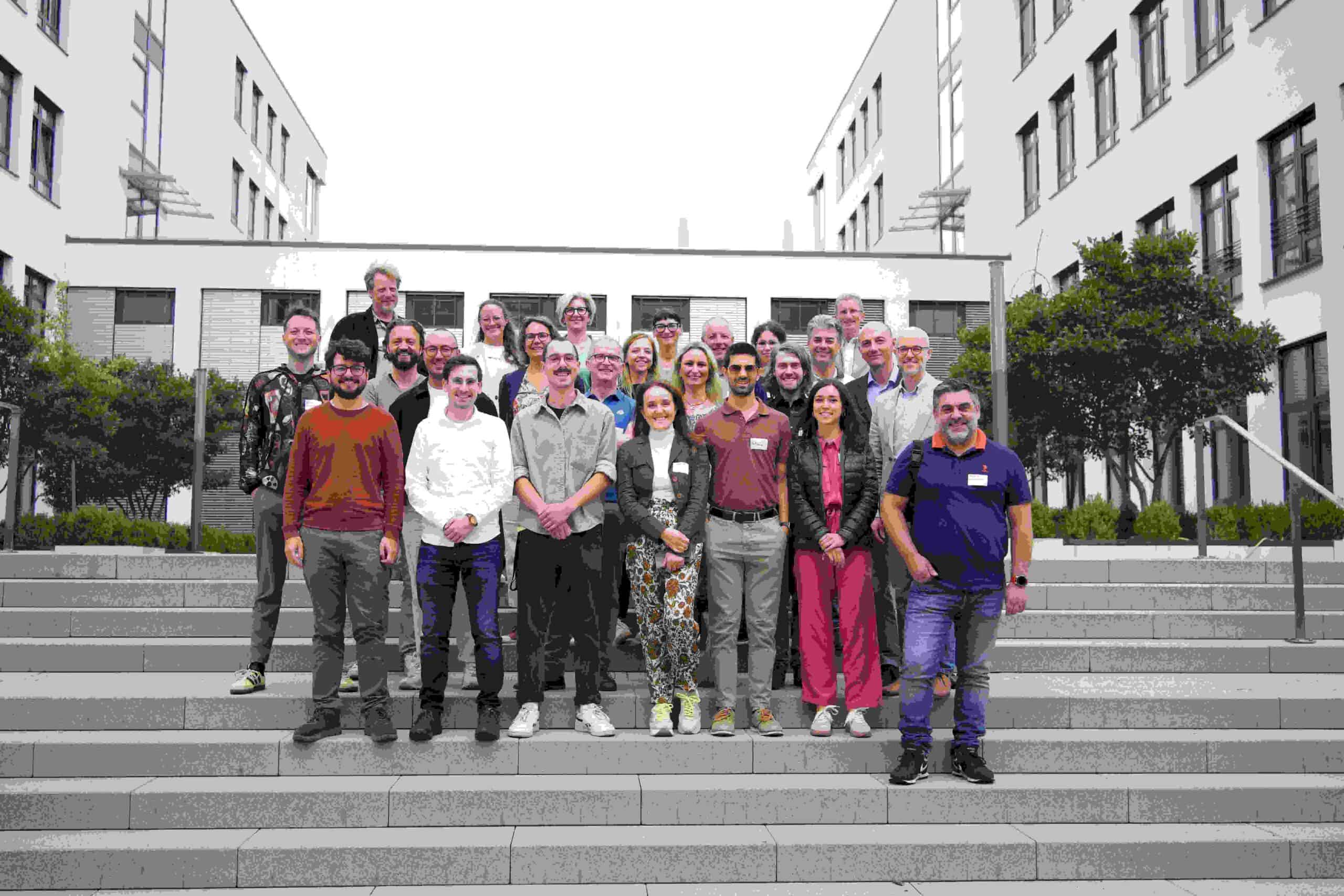
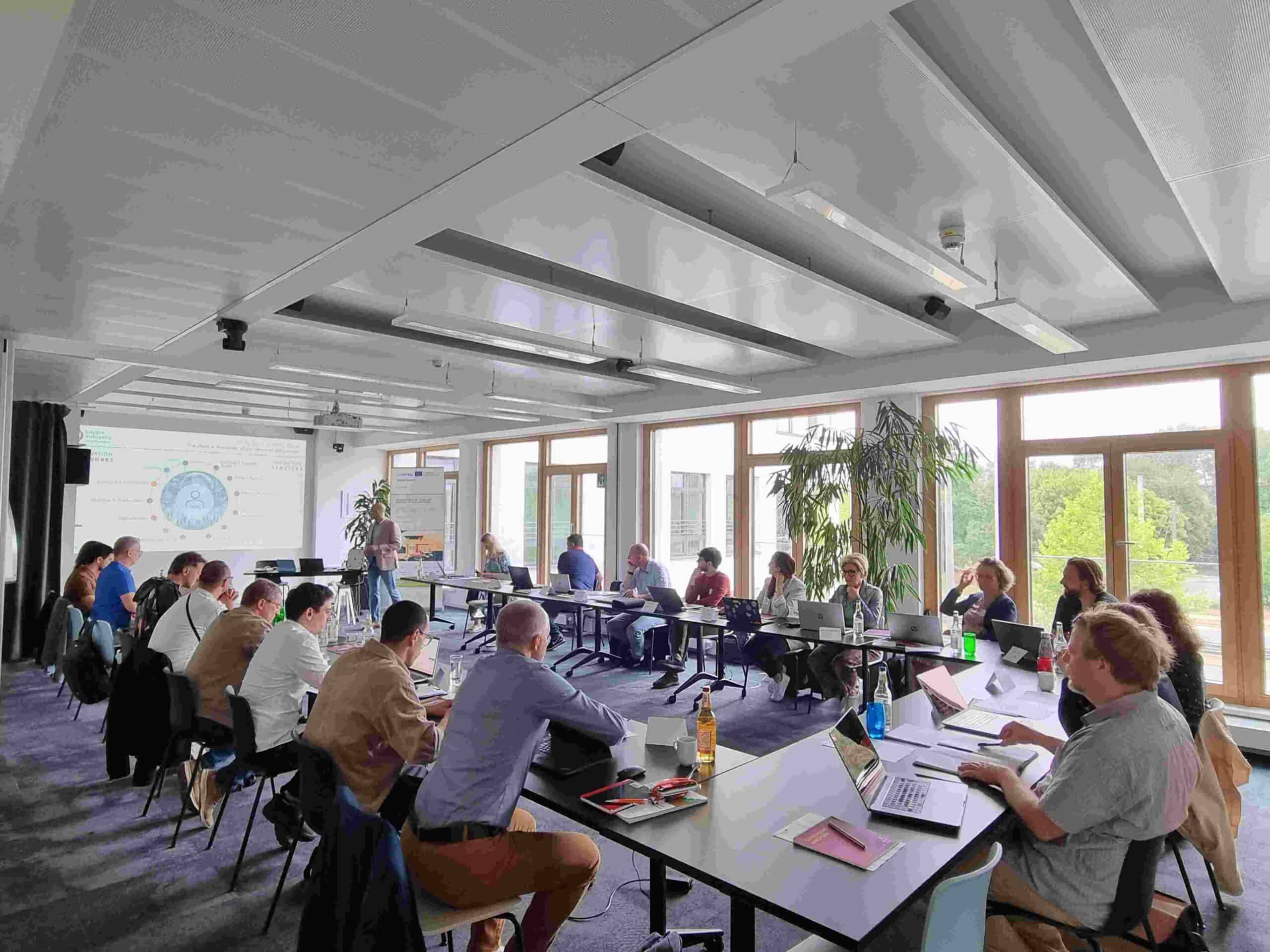
The BAUHALPS project partners gathered in Nuremberg from July 17 to 18, 2025 in a two-day meeting hosted by Bayern Innovativ GmbH at their headquarters in Nuremberg, Germany. The event brought together members of both the Technical and Steering Committees to review the project’s progress and coordinate the next steps toward promoting circular building practices in the Alpine region.
The meeting was co-organized by project partners Fondazione Università Ca’ Foscari (LP01 – FCF) and Bayern Innovativ (PP06 – BAYINNO). Participants discussed key developments within the project’s first work package (WP1), shared results from local workshops, and outlined plans for upcoming pilot actions.
Day 1: Technical Discussions and Pilot Planning
The first day focused on presenting progress made in WP1, including:
- A methodology to engage local communities in building transformation processes,
- The development of the Genius Loci Repository — an online archive of traditional Alpine building techniques and materials,
- A tool for assessing the circular maturity of SMEs in the building sector,
- And the preliminary structure of the BAUHALPS Toolkit, integrating outputs from WP1.
The newly formed Advisory Board, comprised of experts from Austria, Italy, France, Germany, and Slovenia, held its inaugural session to align expectations and define thematic areas of expertise.
In the afternoon, the agenda shifted toward planning future pilot activities within WP2. Two working groups focused on circular renovation in public buildings and residential buildings, respectively. A key pilot discussed was the Micro-Neighbourhood project near Memmingen (Germany), where three new wooden residential units will be constructed using low-tech, modular, and reused materials, promoting community-centered living.
Day 2: Steering Committee and Project Coordination
The second day was dedicated to administrative and strategic planning. The Lead Partner (FCF) presented the current project status, communication activities were reviewed, and upcoming deliverables and financial procedures were outlined for the second reporting period (March–August 2025).
Next Steps and Outlook
Following the meeting, the focus now turns to:
- Organizing local workshops with SMEs across Alpine partner regions to finalize performance indicators for circularity,
- Developing and testing the Online Circularity Maturity Assessment Tool, based on shared European standards,
- And continuing the collaboration between technical partners, local stakeholders, and the Advisory Board to ensure alignment with the New European Bauhaus values: sustainability, aesthetics, and inclusion.
The BAUHALPS partnership remains committed to driving innovation in circular construction, rooted in regional heritage and driven by inclusive participation. Follow us for more on our social channels!
Did you know?
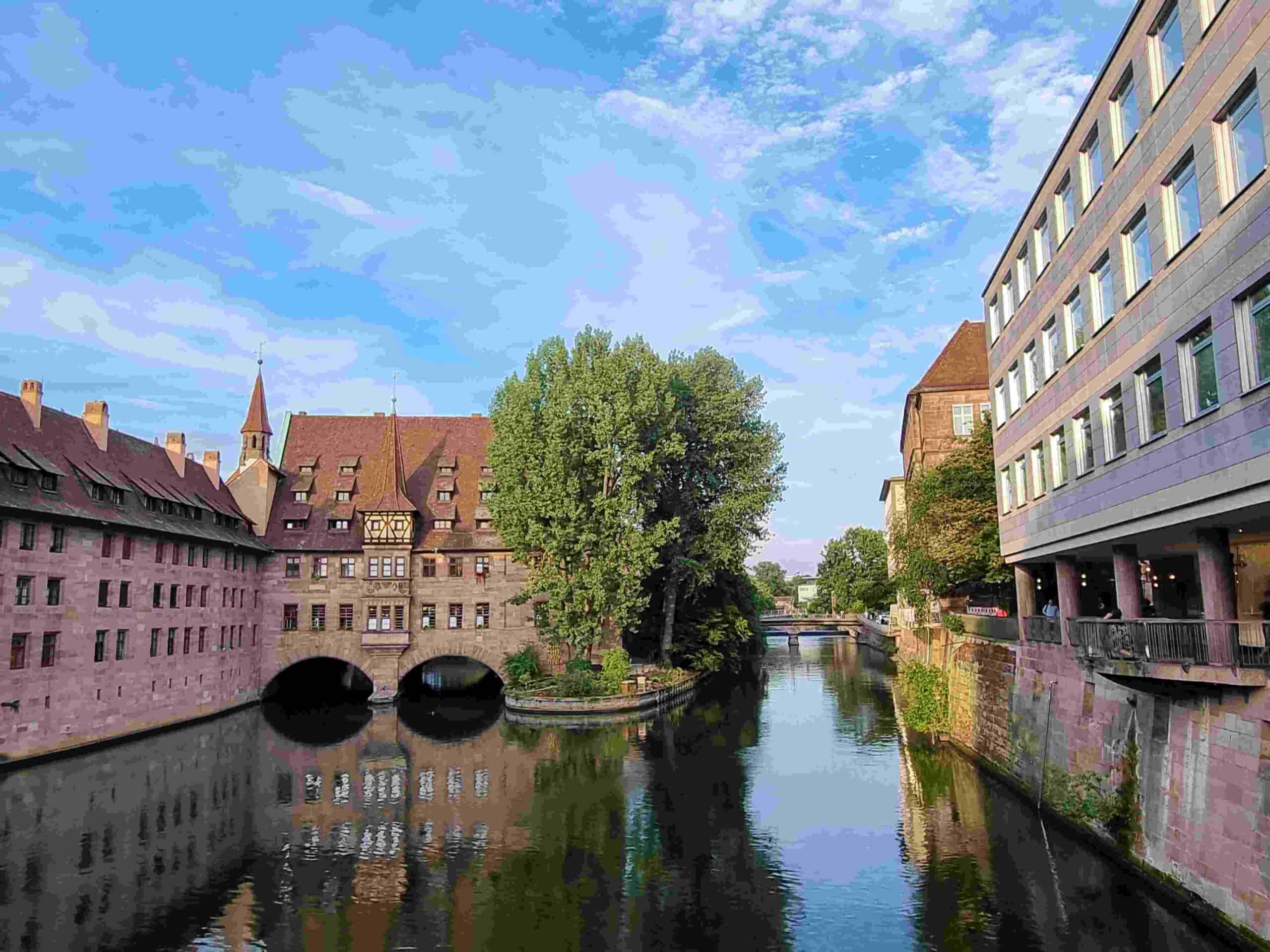
About 90% of Nuremberg’s old town was destroyed during WWII. Its post-war reconstruction carefully restored its medieval character using traditional techniques and materials. Today, it serves as a living example of how historical identity and aesthetics can be preserved through thoughtful regeneration — a key value of the New European Bauhaus.
BAUHALPS continues to promote circular, inclusive, and heritage-based innovation in Alpine construction.
Follow our journey as we connect tradition and transformation.