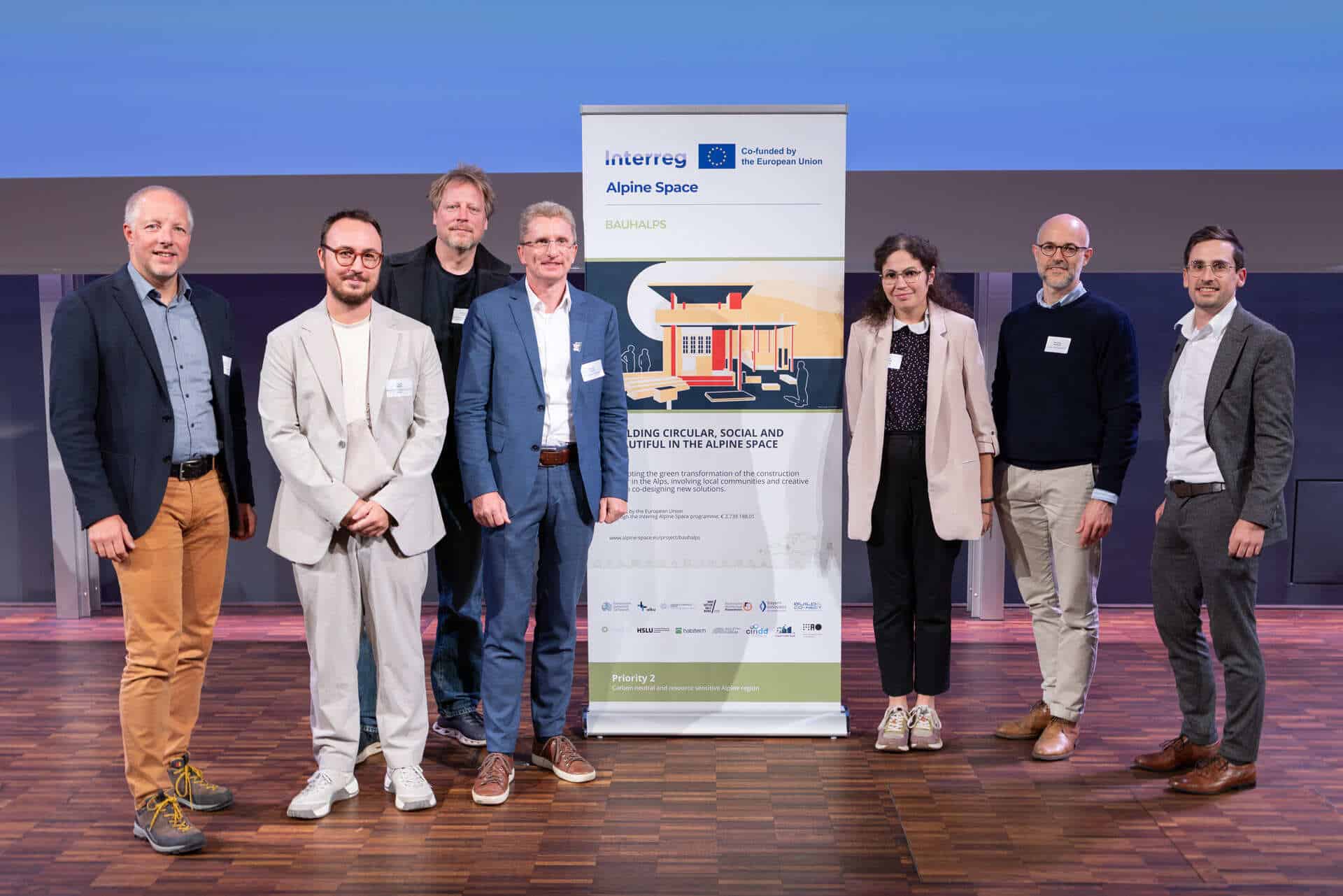
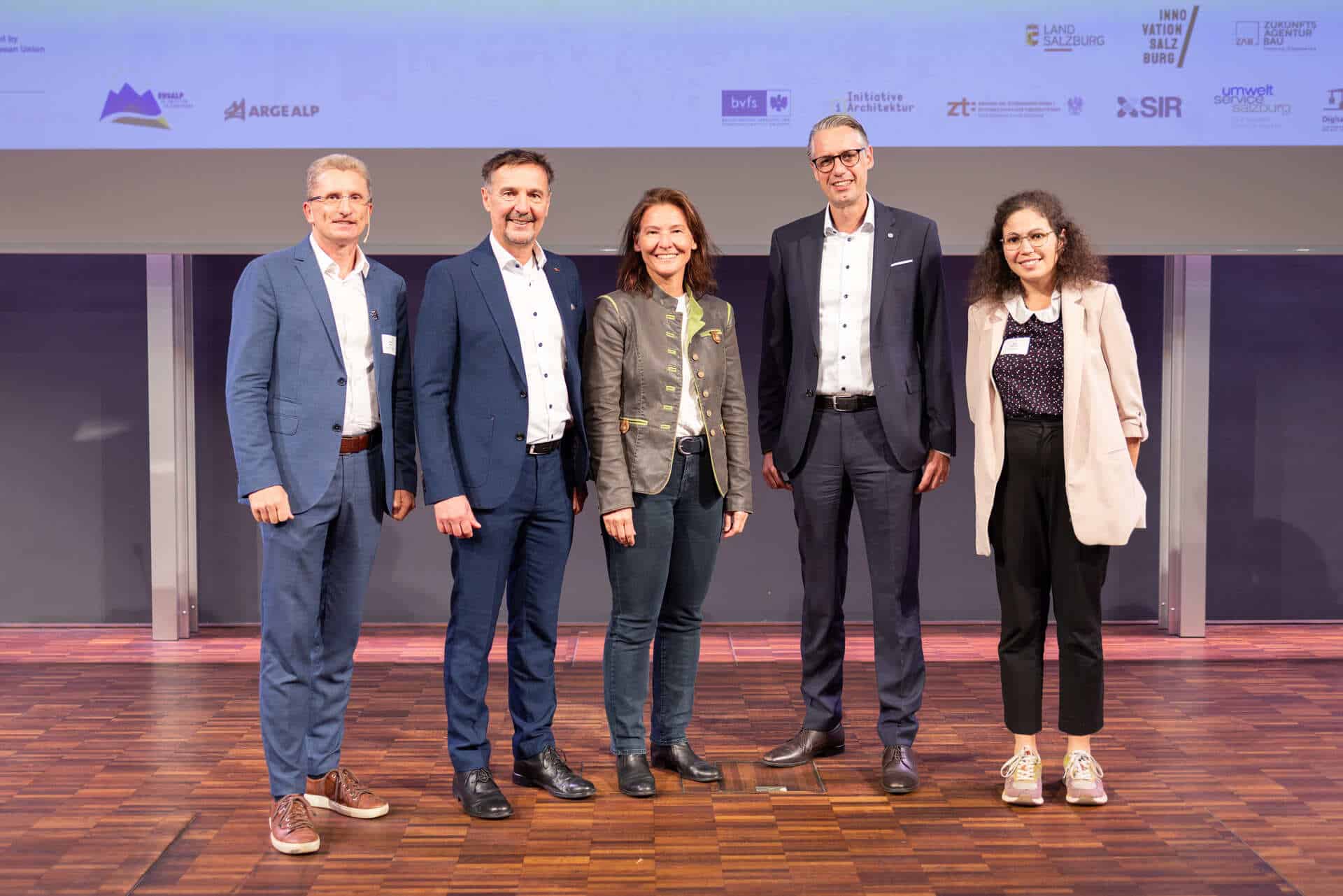
On 22 October 2025, the 12th Symposium “Focus on Alpine Construction” took place at the Salzburg University of Applied Sciences (Urstein Campus) within the framework of the EUSALP Presidency Austria & Liechtenstein 2025. Under the title “Rethinking construction – innovative, circular, digital”, the event brought together experts from research, administration, and industry to explore how innovation, digitalisation, and circular thinking are transforming construction in the Alpine region. The symposium was moderated by Werner Balika (Innovation Salzburg).
Towards a circular and climate-neutral construction industry
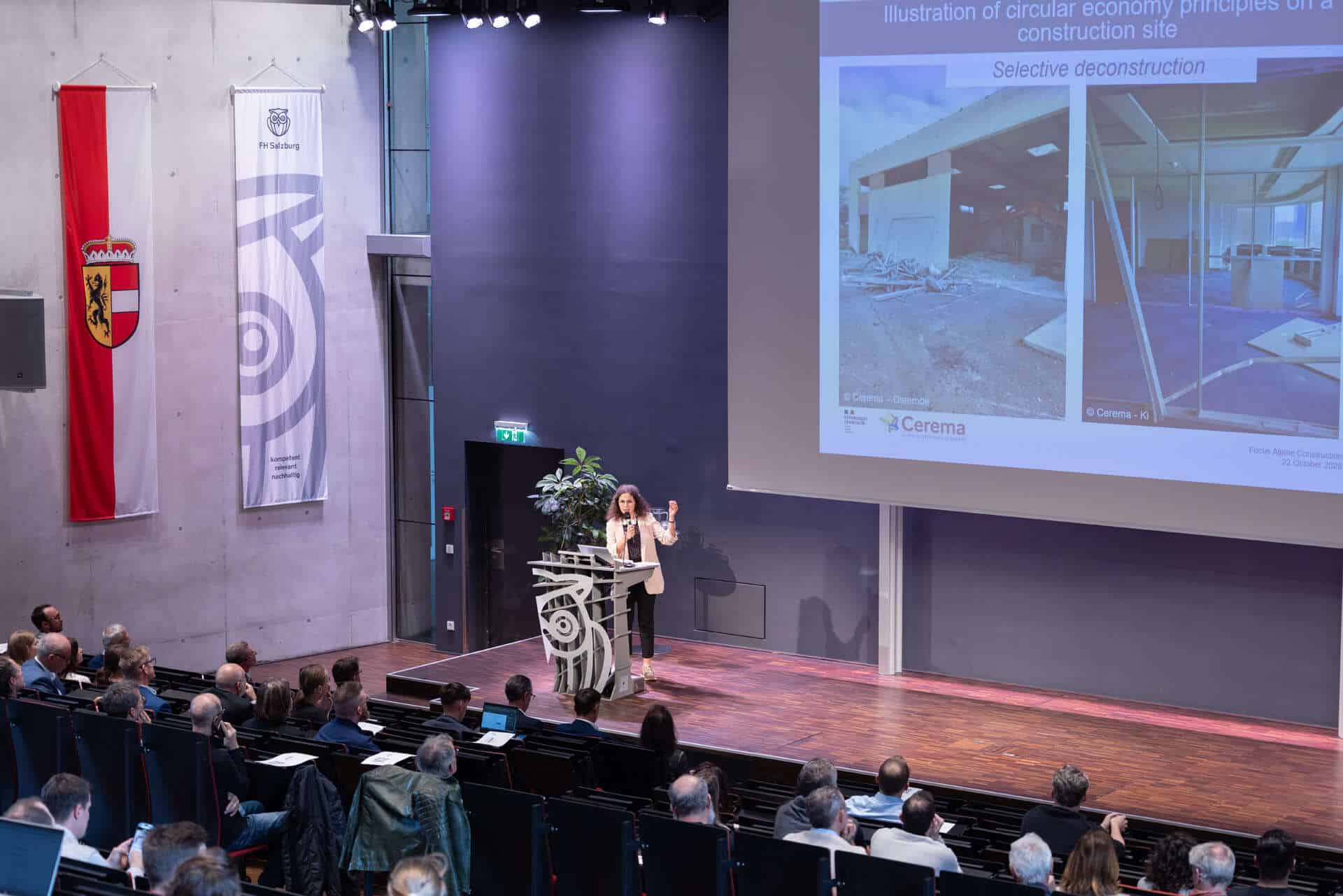
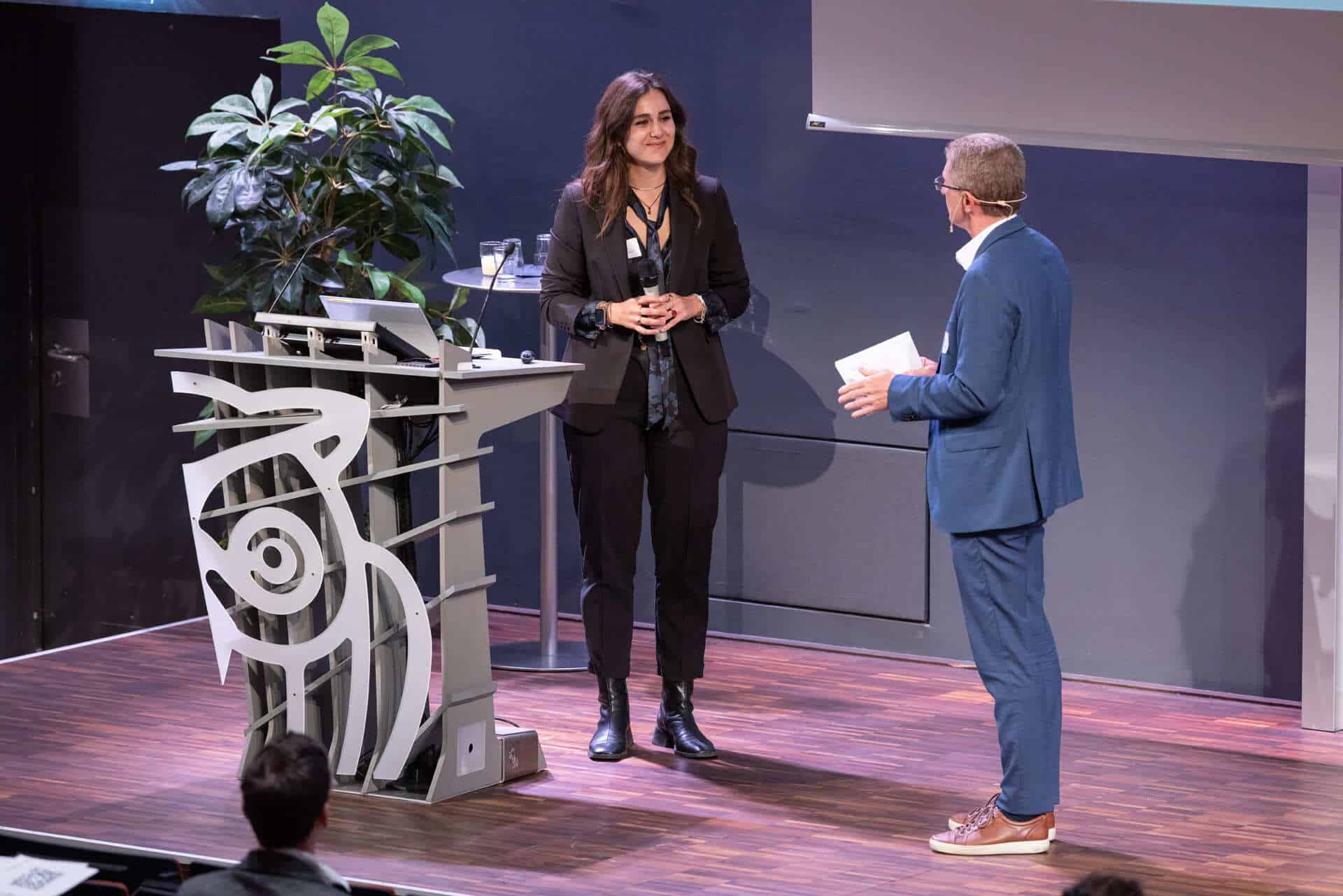
The symposium highlighted that the construction sector — responsible for around 35–39% of all waste generated in Europe — plays a decisive role in the transition to a circular economy. In her keynote, Julie Paciello (CEREMA) underlined the urgency of rethinking how materials are produced, used, and reused, noting that around 2.8 billion tonnes of raw materials are consumed annually in the EU. She presented European initiatives, including BAUHALPS and the New European Bauhaus, as examples of cross-border cooperation testing models for sustainable, aesthetic, and socially inclusive construction.
Sustainable procurement and design for disassembly
In his presentation, Wolfgang Wiesner (Porr) focused on how ecological criteria can be systematically embedded into public procurement procedures — from material selection and energy efficiency requirements to dismantling concepts and CO₂ limits. He emphasized that sustainability in public tenders is no longer optional but mandatory, and that clear award criteria can accelerate the ecological transformation of the construction sector.
Jörg Koppelhuber (KOPPELHUBER² und Partner ZT) presented practical tools for dismantling-oriented timber construction, showing how well-designed details, detachable joints, and accessible service layers can make circular construction feasible. Similarly, Jørgen Tycho (Oslo Tree) demonstrated the HasleTre project in Norway — a fully demountable, bio-based wooden building proving that circular architecture is not only possible but also economically and environmentally superior.
Innovations in materials and reuse
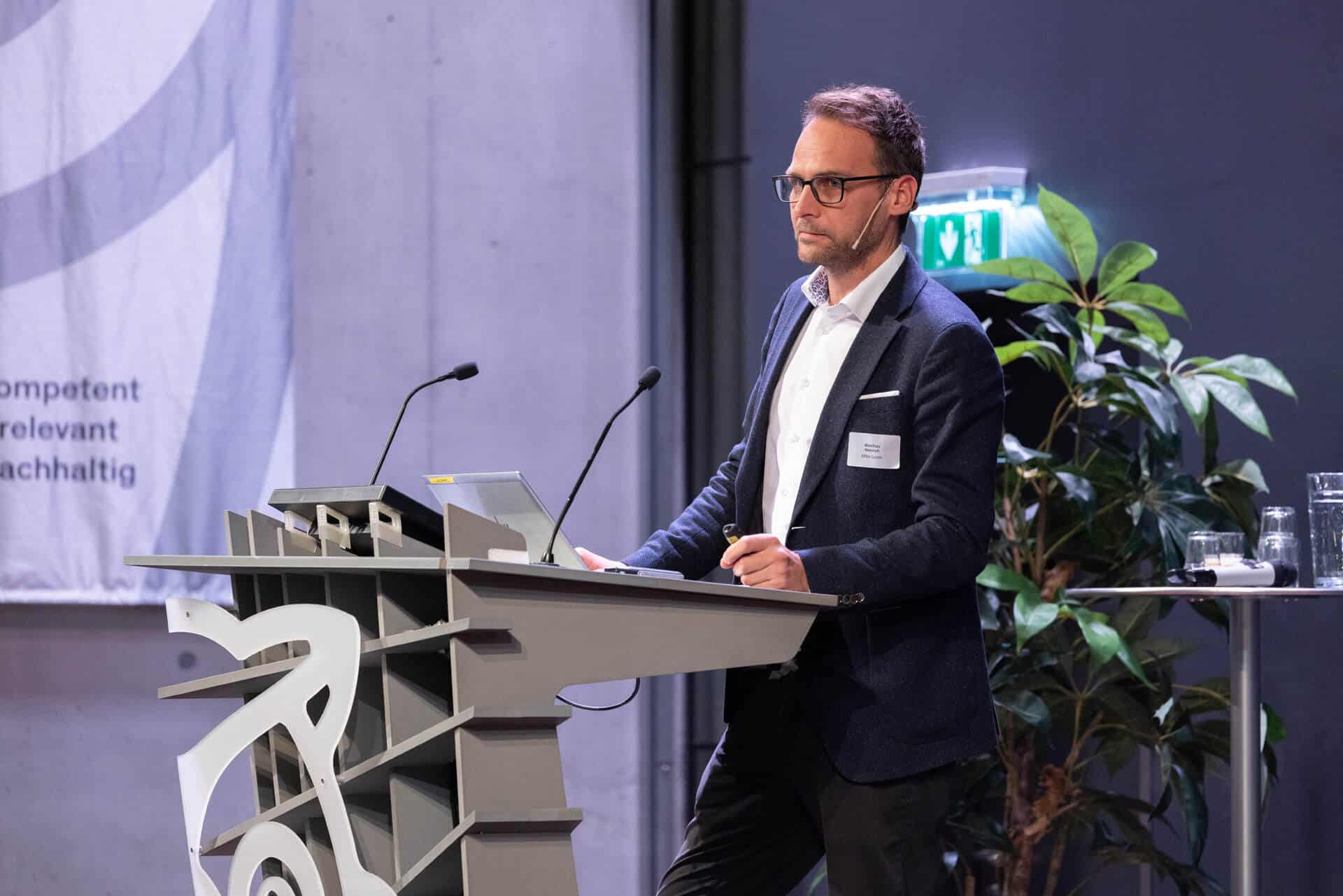
A strong focus was placed on recycling and reuse. Matthias Heinrich (EPEA/Drees & Sommer) showcased examples of urban mining and recyclable new construction, while Peter Kneidinger (Material Nomads) demonstrated that reusing components from existing buildings can reduce material costs by up to 60% and significantly cut CO₂ emissions.
Clemens Deisl (Deisl Beton) presented new research on recycled concrete and CO₂ mineralisation, showing how regional industry can close material cycles — turning demolition waste into new, carbon-absorbing building materials.
BAUHALPS pilot project: Circular renovation meets cultural heritage
A highlight of the symposium was the presentation of the Slovenian BAUHALPS pilot project by Gregor Mljač (Museum of Architecture and Design, Ljubljana). The case study at Fužine Castle, a 16th-century heritage site, explores how circular renovation principles can be applied to protected historical buildings. The project aims to develop reversible, low-impact interventions and a methodological model for heritage restoration that balances conservation, functionality, and sustainability.
Mljač emphasized that circularity is not only a technical but also a cultural and institutional challenge — one that requires museums and cultural institutions to become active agents in ecological transformation.
Digitalisation and new technologies
In the technology session, innovative approaches such as AI-assisted waste analysis (OptoCycle) and parametric design in timber construction (Loft Concept, FH Salzburg) demonstrated how digital tools can make planning, material tracking, and circular design more efficient. These systems help reduce errors, automate decision-making, and promote smarter use of resources throughout the building lifecycle.
New narratives for transformation
The closing keynote by storyteller Stefan Stockinger reminded participants that sustainable change also depends on how we tell stories about construction. He called for new narratives that celebrate renovation, reuse, and community values, arguing that emotional storytelling can inspire action more effectively than data alone.
Conclusion
The symposium demonstrated that circular economy, digitalisation, and Alpine building culture are complementary forces driving the future of sustainable construction. Close cooperation between research, practice, and policy is paving the way for a climate-neutral building sector. Projects such as BAUHALPS show that Alpine regions can become pioneers of resource-efficient and culturally rooted construction, where innovation, knowledge, and commitment come together for a more resilient future.
* Copyright of the photos: Innovation Salzburg / Benedikt Schemmer