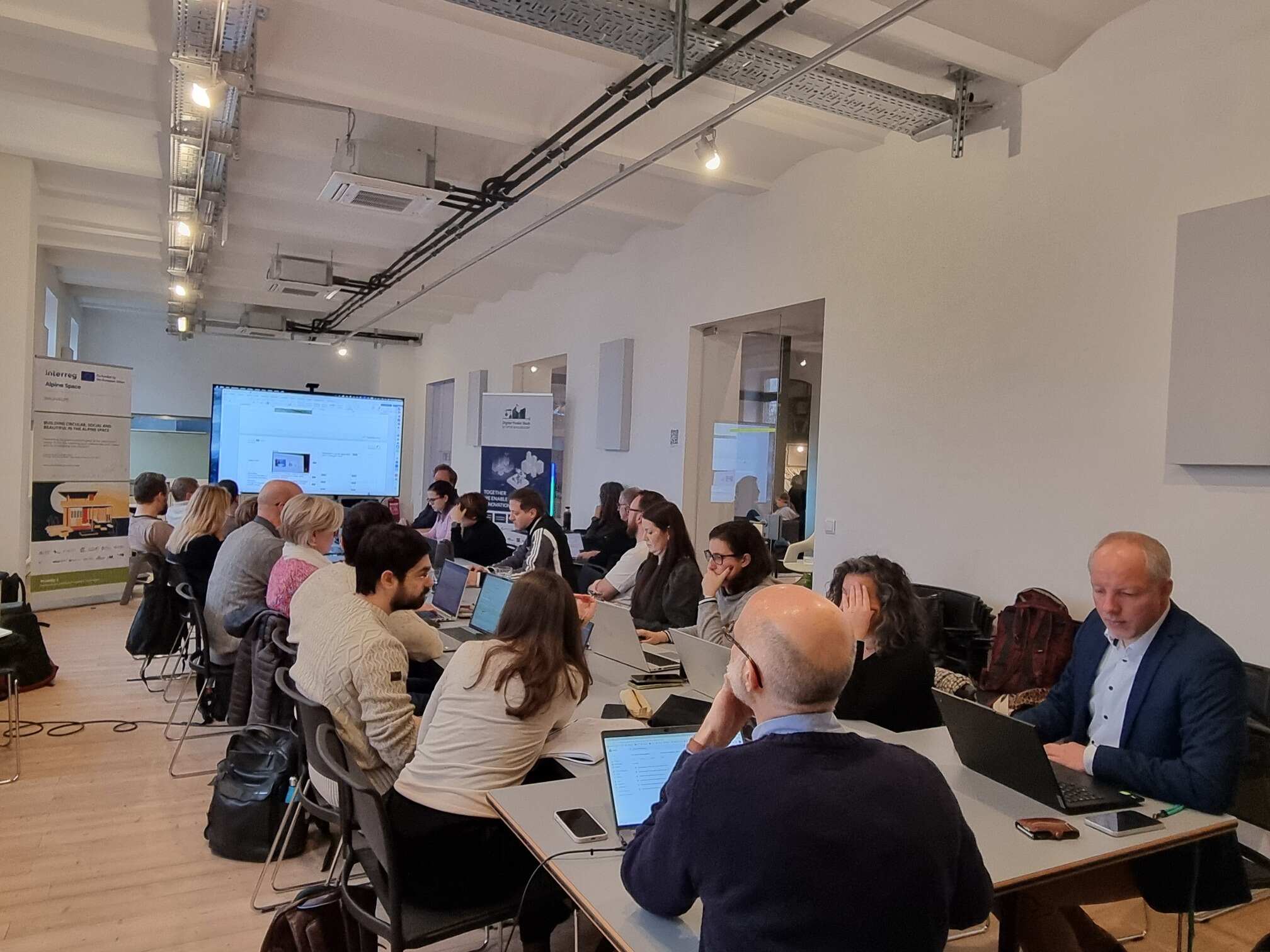
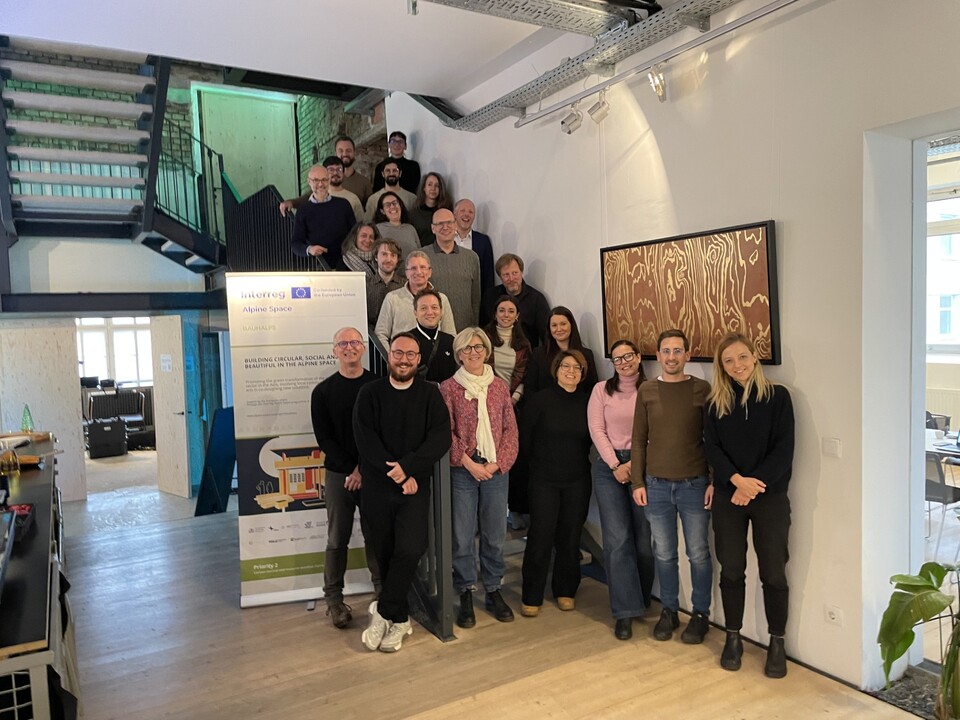

On 16–17 December 2025, the partners of the BAUHALPS – Building Circular in the Alpine Space project gathered in Vienna for a joint meeting of the Technical Committee and Steering Committee. The meeting marked an important milestone at the end of the year, providing an opportunity to review the progress achieved so far and to align on the next steps leading into the pilot phase in 2026.
Over two intensive working days, partners from across the Alpine Space shared updates on project implementation, discussed key challenges, and coordinated activities to ensure the effective testing and long-term uptake of the project’s results.
Review of WP1 Achievements and Demonstration of the BAUHALPS Tools
A central focus of the meeting was the review of achievements under Work Package 1 (WP1), which lays the foundation for the upcoming pilot actions. Partners presented and demonstrated the core BAUHALPS tools, including:
- a methodology for engaging local communities in building sector transformation processes,
- the Genius Loci online repository, mapping traditional building knowledge, materials, and local characteristics across the Alpine region,
- the Circularity Maturity Assessment Tool, designed to support the structured evaluation of circular and sustainability performance in building projects.
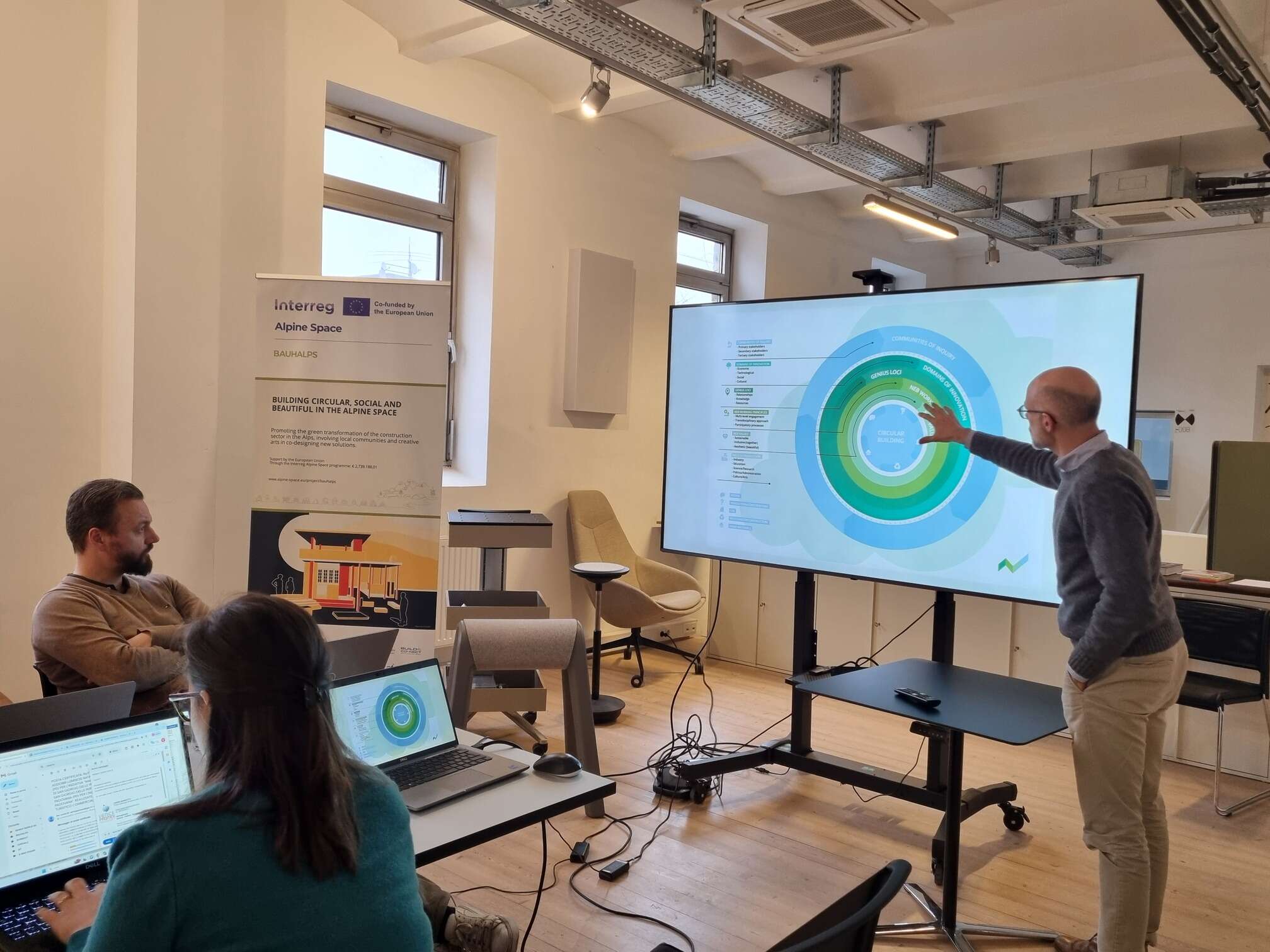
In addition, the meeting included the presentation and validation of the BAUHALPS Model, which integrates circularity, community, and quality of living in line with the principles of the New European Bauhaus. The model provides a conceptual framework underpinning the entire BAUHALPS approach and will serve as a key reference for public authorities, practitioners, and decision-makers.
Preparing for Pilot Actions and Looking Ahead to 2026
A substantial part of the discussions focused on the pilot actions (WP2) that will be implemented in different Alpine Space regions. These pilots will test the BAUHALPS tools in real-life cases involving public buildings, public spaces, and residential buildings.
Partners exchanged views on:
- the methodological approach for pilot implementation,
- the preparation of feasibility studies and executive plans,
- the involvement of local stakeholders and SMEs,
- monitoring, documentation, and evaluation of results.
The meeting clearly highlighted that 2026 will be a decisive year, marking the transition from tool development to practical application. The outcomes of the pilot actions will play a crucial role in refining the BAUHALPS tools and ensuring their transferability and long-term use beyond the project duration.
Strengthening Cooperation, Quality Management, and Communication
Within the Steering Committee session, partners also reviewed progress related to:
- project management and quality assurance,
- communication and dissemination activities,
- cooperation with other European initiatives and networks.
The discussions reaffirmed the importance of transnational cooperation, interdisciplinary exchange, and strong local engagement in driving the transition towards a more circular, sustainable, and place-based built environment in the Alpine Space.
Conclusion
The Vienna meeting represented an important step in consolidating the shared vision of the BAUHALPS project and preparing for its next implementation phase. By concluding 2025 with a strong alignment among partners, BAUHALPS is well positioned to move forward with pilot actions that will translate project results into concrete solutions and contribute to the sustainable transformation of the building sector in the Alpine region.