

The role of the European Center for Renewable Energy Güssing Ltd in the ALPHA project
The European Center for Renewable Energy Güssing Ltd. (EEE) is a research and networking organisation that develops and implements regional, national and international projects in the fields of renewable energy, energy efficiency and decentralised energy systems. Since its foundation in 1996, EEE has focused on the evaluation of innovative technologies and the practical support of municipalities and companies in their transition towards sustainable energy solutions.
EEE operates as the central coordination body of the ecoEnergyland, a cooperative of 19 municipalities surrounding Güssing in Southern Burgenland. For more than two decades, this region has pursued the long-term objective of achieving a high degree of energy self-sufficiency and has established a broad range of renewable-energy demonstration plants to advance this goal. Originally launched as a private initiative, EEE has evolved into a publicly oriented institution contributing to regional development and knowledge transfer in energy-related matters.
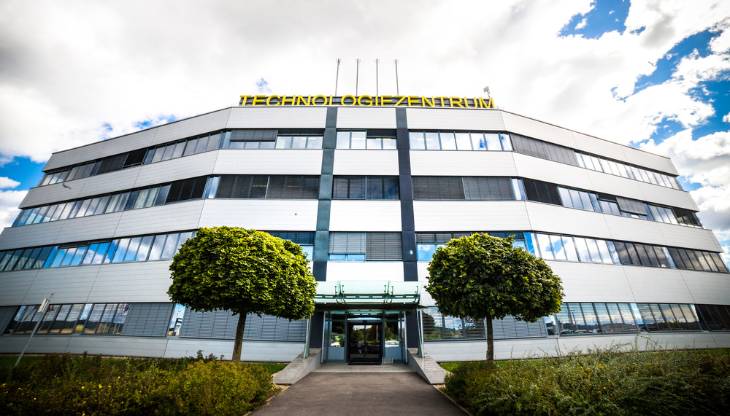
The organisation is based in the Technology Center Güssing, established in cooperation with the Province of Burgenland, and maintains an extensive network of regional, national and international partners. Through research and innovation projects, EEE supports the development of sustainable regional concepts and the implementation of concrete demonstration activities. As the 100% owner of EEE, the ecoEnergyland provides direct access to real-life infrastructures—including biomass CHP units, biogas plants, photovoltaic systems, district heating networks and storage facilities—which serve as practical environments for testing, evaluation and replication within various projects.
EEE in the ALPHA Project: Translating Biomass Experience into 5GDHC Potential
Within the ALPHA project, EEE contributes a crucial rural perspective that is grounded in decades of practical experience with renewable district heating networks. While 5GDHC represents a new generation of decentralised, low-temperature, flexible and multi-source heating and cooling systems, the ecoEnergyland provides an ideal environment to examine how mature biomass-based systems can interface with or gradually transition toward 5GDHC principles, how temperature reductions, decentralised feed-in concepts and hybrid configurations can be implemented in a region where biomass has traditionally dominated heat supply, and how rural networks can benefit from efficient approaches.
In ALPHA, EEE brings practical insights from biomass and district heating plants to support feasibility assessments and scenario development. The organisation also helps identify pilot opportunities within the ecoEnergyland where elements of 5GDHC—such as low-temperature loops, decentralised generation units, hybrid heat pump solutions or new storage concepts—could complement or improve the existing renewable networks. EEE exchanges its regional experience with Alpine partners to illustrate how rural biomass regions can contribute to broader heating and cooling decarbonisation pathways. Additionally, EEE assesses potential synergies and transition strategies, for example by evaluating the continued role of biomass as a peak or backup resource while low-temperature renewable heat provides the base load. By doing so, the organisation also contributes to the development of replication approaches for regions with similar resource structures.
Through ALPHA, EEE builds on the ecoEnergyland’s long-standing renewable-energy identity to explore future-oriented heating and cooling models that combine the established strengths of biomass systems with the technological and organisational innovation potential of next-generation 5GDHC solutions.