The participatory process we started with the local communities in our pilot areas is continuing.
Between Spring and Fall 2025, all 8 pilot areas had a first local workshop going on, where local stakeholders, in collaboration with project partners, met and started a conversation on hydric resources in the area and climate change.
Waterwise is using an approach composed of different steps and actions, in order to reach a conclusion that satisfies the local stakeholders and provides long-term, sustainable water management solutions.
The first step was interviewing the stakeholders and gather from them which topics, conflicts and expectations lied on the ground; then the first workshop was held, and by mixing the information emerged from this meeting and from the vulnerability assessment that was lead, at the same time, on the field, a common narrative was created.
A common narrative is a collectively written document based on local stakeholders’ perceptions. Its format is readily accessible and fosters stakeholder appropriation, making way for the development of a shared understanding of current and future issues in a given area. Through a comprehensive approach, it aims at uniting local stakeholders around a shared story, collectively supported and endorsed, while acknowledging where points of view converge or diverge.
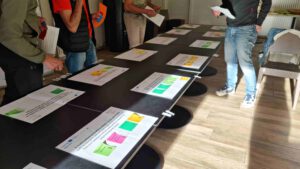
Beyond local issues, the common narrative helps identify existing initiatives and projects. It provides a framework in which everyone can understand and recognize each other, thus forming a basis for discussion to capitalize on common ground, overcome differences, and accelerate transition processes by identifying levers for change. This tool helps steer the headwater catchment toward a common path that stakeholders agree on, thereby facilitating the development of a strategy.
The common narrative will be developed gradually during workshops with local stakeholders. It is a collective assessment that can evolve throughout the local dialogue process, ultimately resulting in a shared vision.
We believe this methodology will have local stakeholders feel engaged and part of the process, the key element to achieve a successful result for our project.