
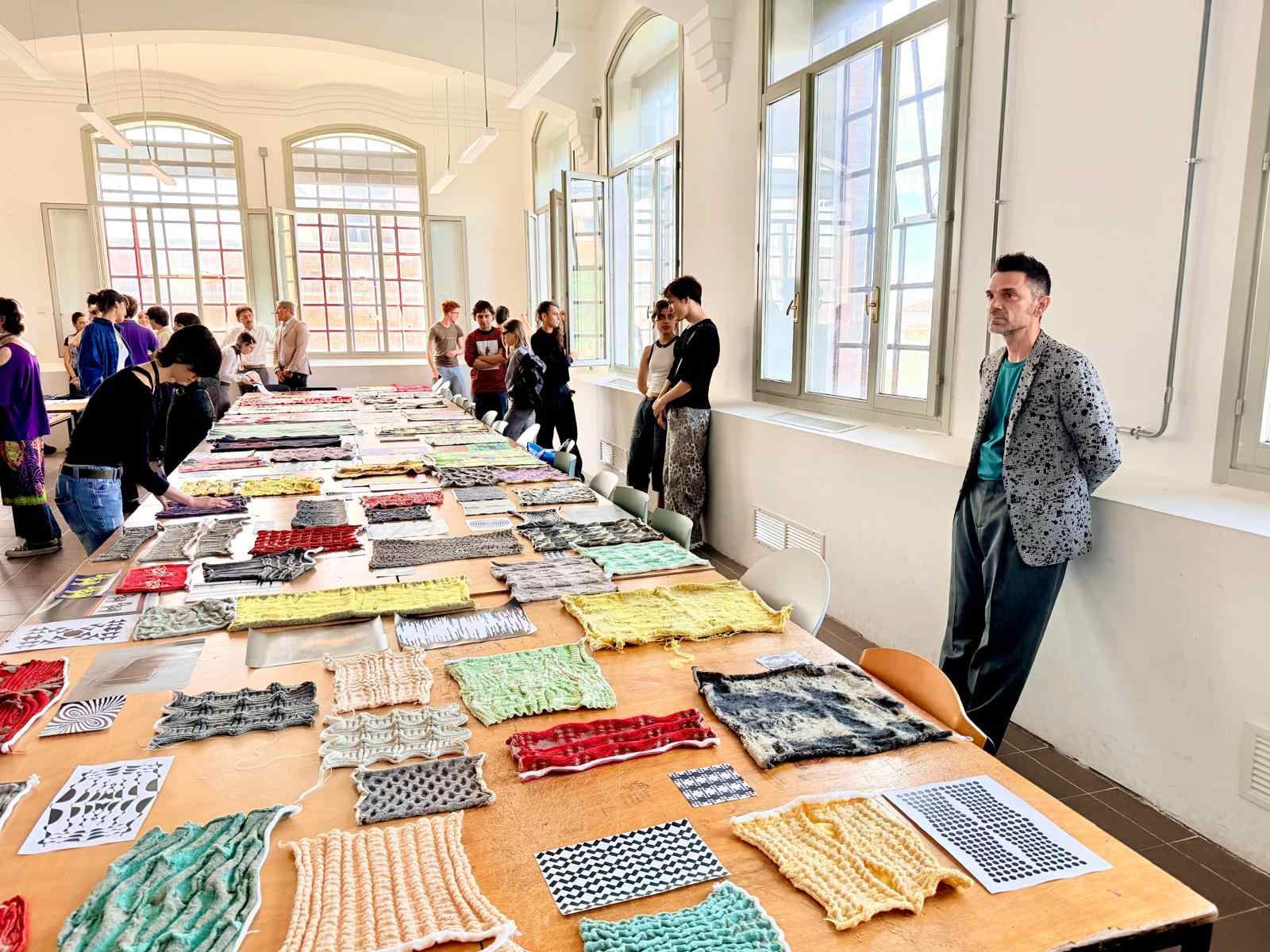

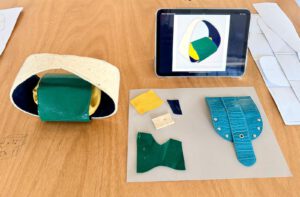
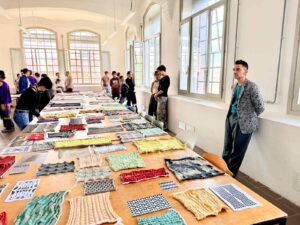
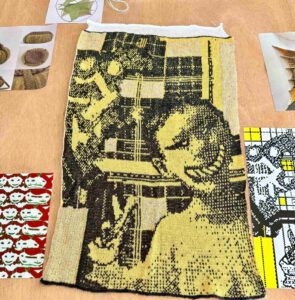
On 3 June 2026, the Woolshed project presented the first outcomes of its Design Marathons at Università Iuav di Venezia, during the event Wool shaping futures. The presentation brought together the results of two experimental pathways, Felt for accessories and Digital knitting, while also opening the next step of the process with the launch of Sculpting with wool.
The starting point was deliberately ambitious. Alpine wool, especially wool from native mountain breeds, is still too often considered unsuitable for fashion: too irregular, too coarse, too far from the standards of industrial textile production. Through the Woolshed Design Marathons, we wanted to challenge this assumption in the most concrete way possible: by working with the material, testing it, transforming it and placing it directly in the hands of designers, students, makers and textile experts.
The experimentation focused on wool from native and resident Alpine breeds such as Alpago, Brogna, Foza and Lamon. Together, these breeds account for fewer than 10,000 animals overall. Their wool is not an anonymous raw material. It belongs to fragile territorial systems, to small-scale farming economies, to pastoral landscapes and to forms of knowledge that remain deeply embedded in mountain life.
What made the process distinctive was the quality of the alliance built around the material. The Design Marathons involved hobby and professional breeders, historic wool mills and textile companies, designers, fashion practitioners, students, researchers, university lecturers, makers and material specialists. The expert network connected to the marathons included, among others, Tessitura La Colombina, Lanificio Paoletti, Lanificio Bottoli, Lanificio Bigagli, Atelier Resta, Design Fiction Lab, Green FabLab, eco-tapis, the University of Padua, the University of Ljubljana, the University of Maribor, and the Institute of Agriculture and Forestry Nova Gorica, together with independent designers, craftspeople, artists, breeders and technologists working across fashion, product design, material research and digital fabrication.
This combination allowed the project to move beyond a narrow view of wool as either an agricultural by-product or a nostalgic heritage material. Instead, Alpine wool was treated as a design resource: one that requires technical care, creative interpretation and a deeper understanding of its origin. Felt, accessories, digital knitting and sculptural experimentation became practical ways to explore what fashion can become when it starts from local breeds, short supply chains, material intelligence and territorial responsibility.
The first results show that the real question is not whether Alpine wool can be used in fashion, but how it can enter fashion without losing its ecological and cultural meaning. The marathons demonstrated that even rustic and underused wools can generate contemporary applications when they are approached through collaboration rather than standardisation.
At the heart of Woolshed there is a wider challenge: to keep sheep in the mountains. Not only for wool, milk or meat, but above all because sheep are indispensable allies in the maintenance of Alpine landscapes. Through grazing, they help preserve open mountain areas, support biodiversity, reduce landscape abandonment and sustain the ecosystem services on which many Alpine communities depend.
Wool shaping futures therefore marks an important step for Woolshed. It shows that native Alpine wool can become a material for fashion, design and innovation, provided that innovation remains rooted in the people, places and ecosystems that make the material possible. The first Design Marathon outcomes are not an endpoint. They are a proof of possibility: Alpine wool can shape new futures, and those futures can begin from the mountains.