What if the materials needed for the buildings of the future already exist within our regions?
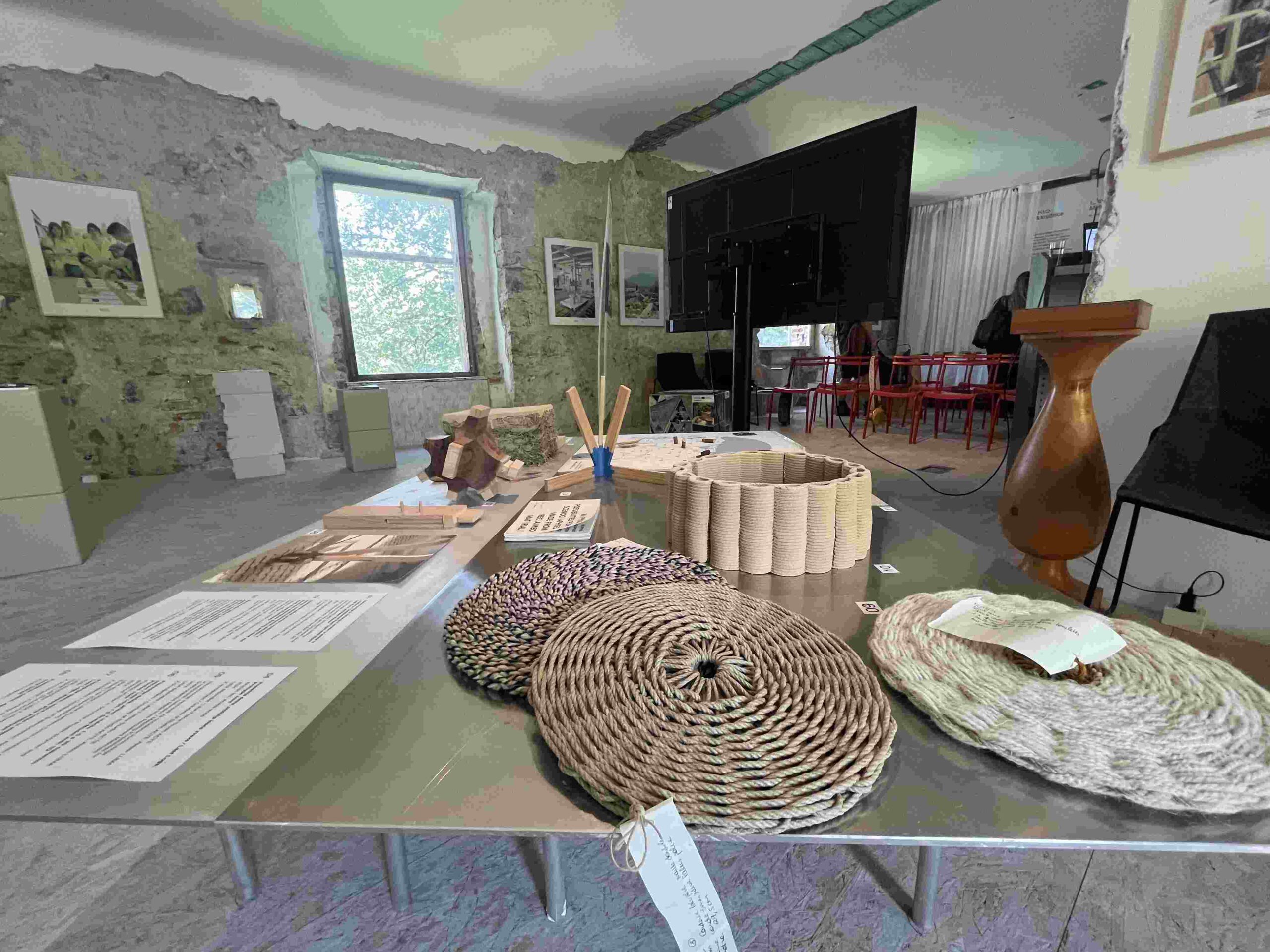
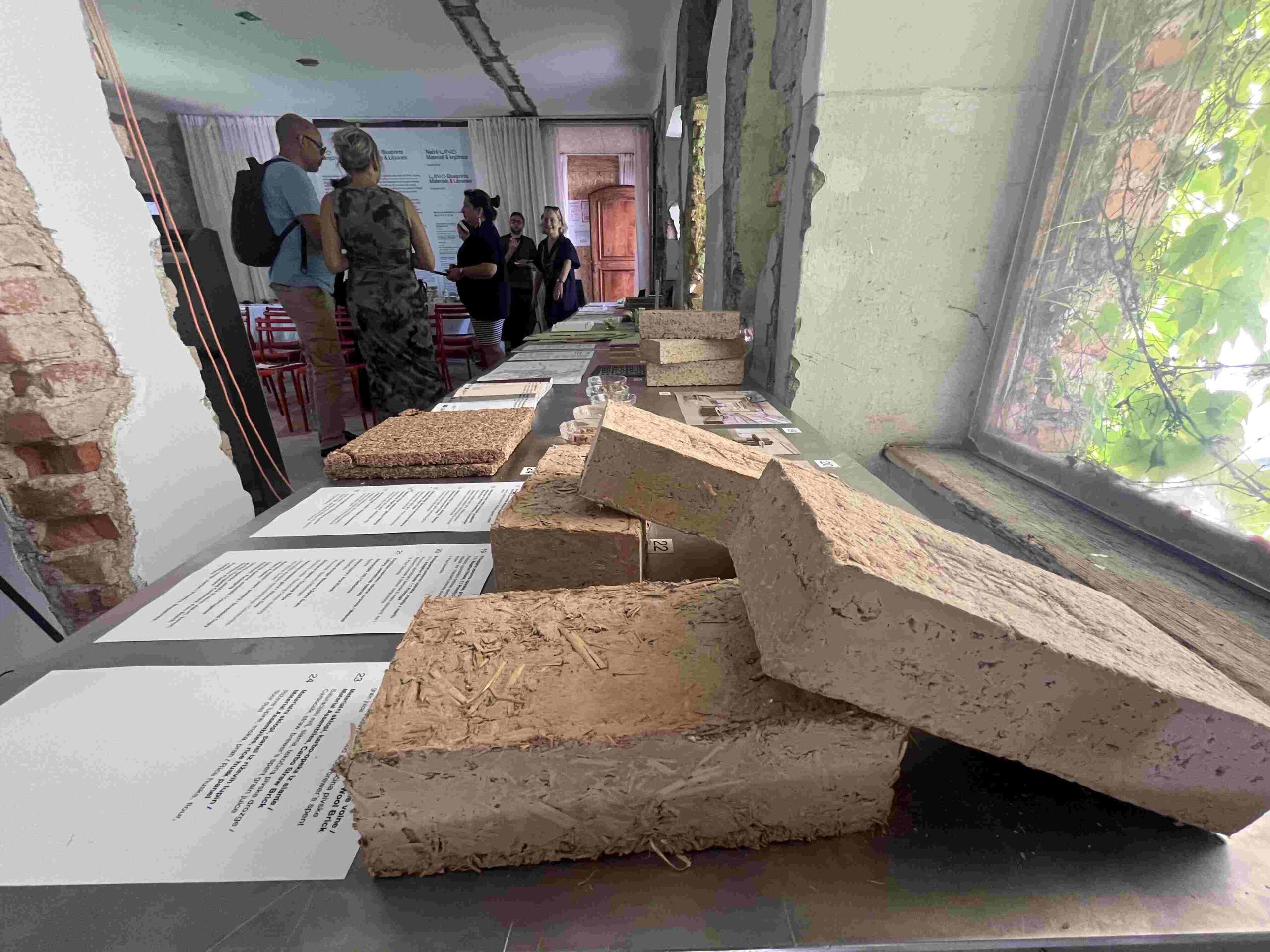
This question was at the heart of a material showcase presented alongside the BAUHALPS stakeholder workshop at the Museum of Architecture and Design (MAO) in Ljubljana, Slovenia. Featuring projects developed through the LINA Architecture Programme and Atelier LUMA, the exhibition demonstrated how locally available materials, industrial by-products and agricultural residues can be transformed into valuable resources for architecture, design and construction.
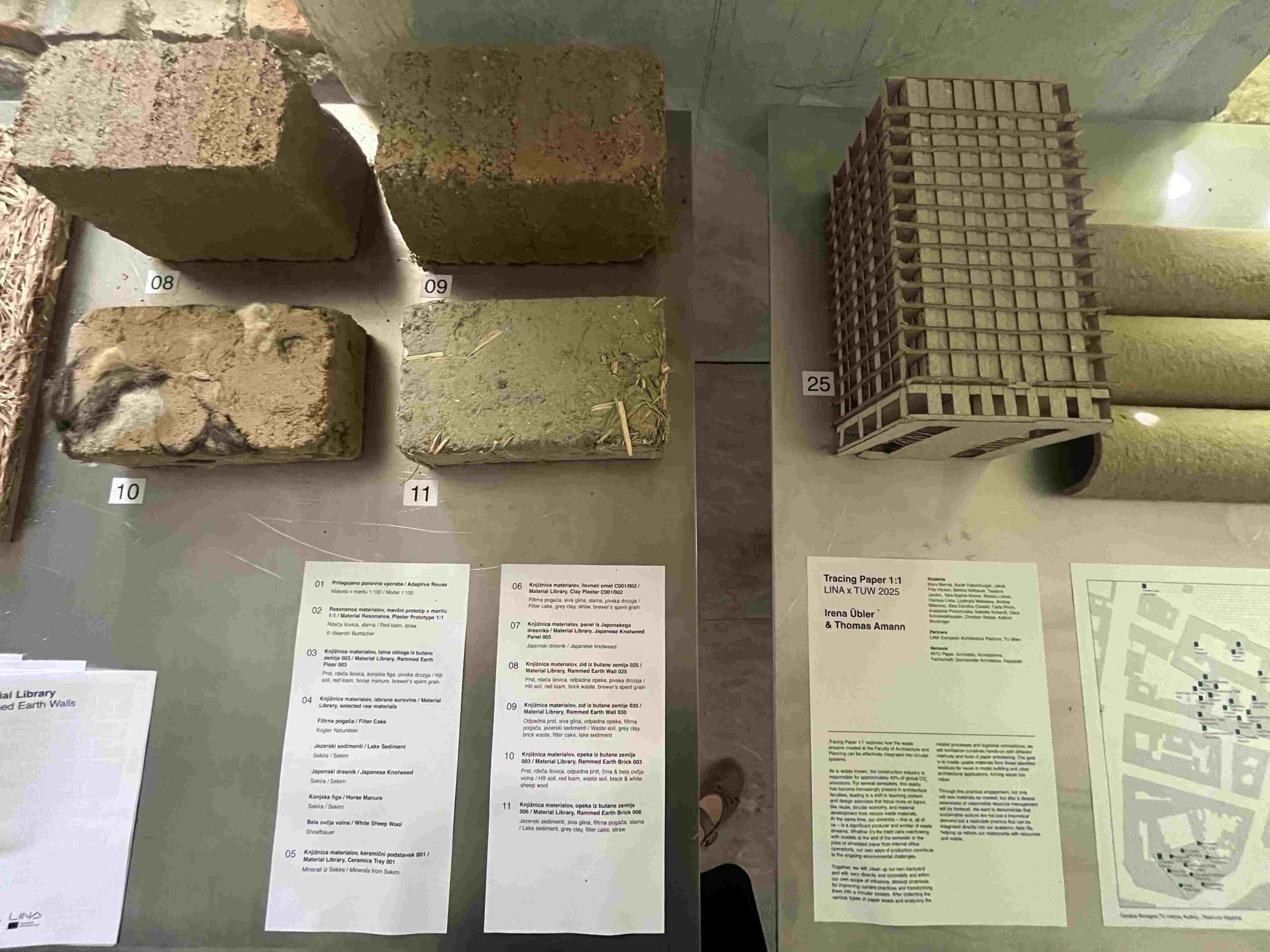
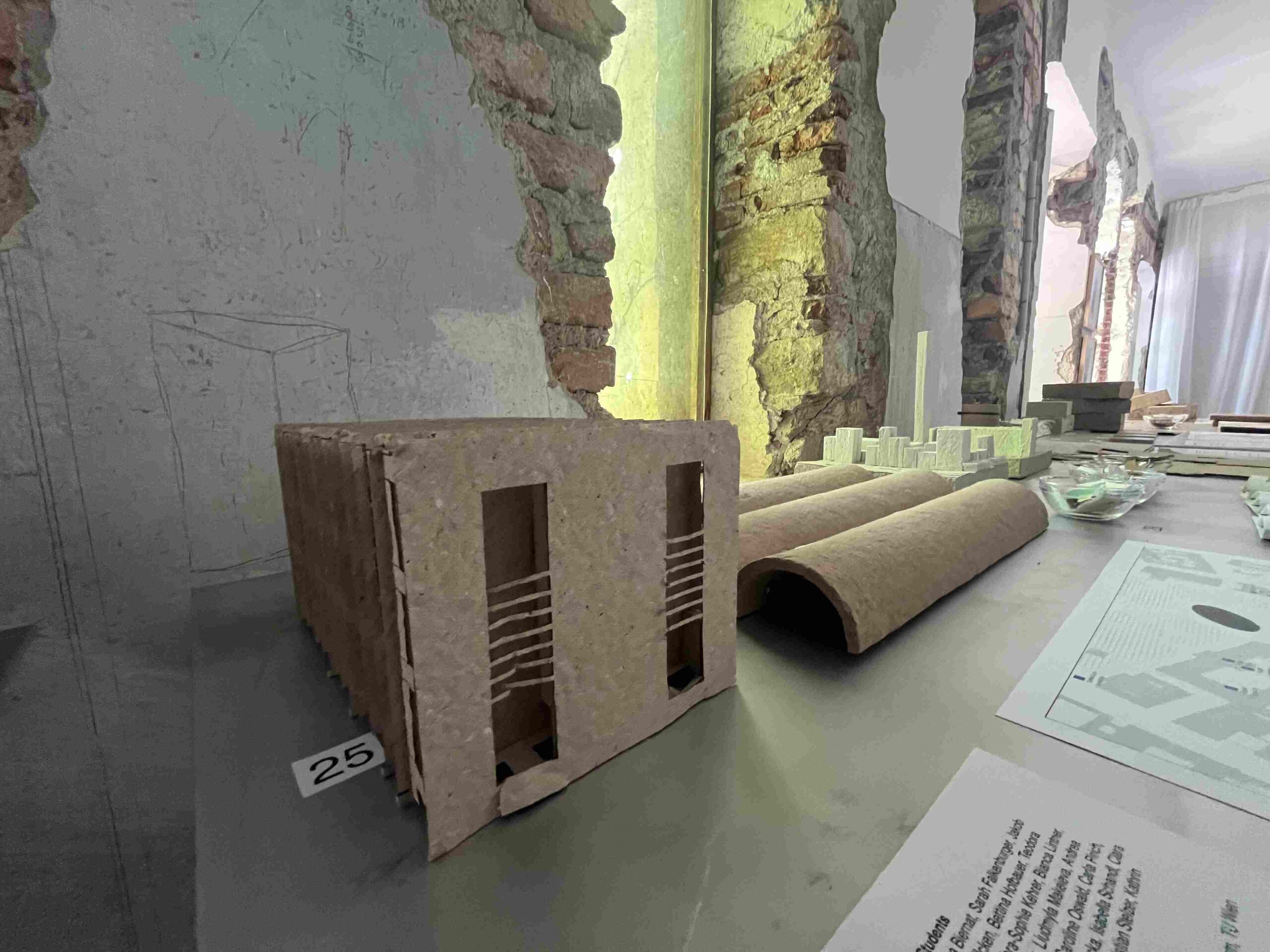
The showcased projects explored innovative uses of materials such as reeds, clay, timber, sheep wool, brewer’s spent grain, rice husks, lake sediments, construction waste, paper and cardboard. Rather than treating these materials as waste streams, the projects revealed their potential as building components, insulation systems, structural elements, furniture and experimental architectural prototypes.
Building with What Already Exists
Many contemporary construction systems rely on global supply chains and resource-intensive materials. In contrast, the projects presented at MAO demonstrated an alternative approach: building with materials that already exist within a region. Several prototypes focused on earth-based construction methods using locally sourced clay, soil and mineral residues. Others explored the use of reeds as insulation and building components, while timber-based systems investigated new approaches to adaptive reuse and material efficiency.
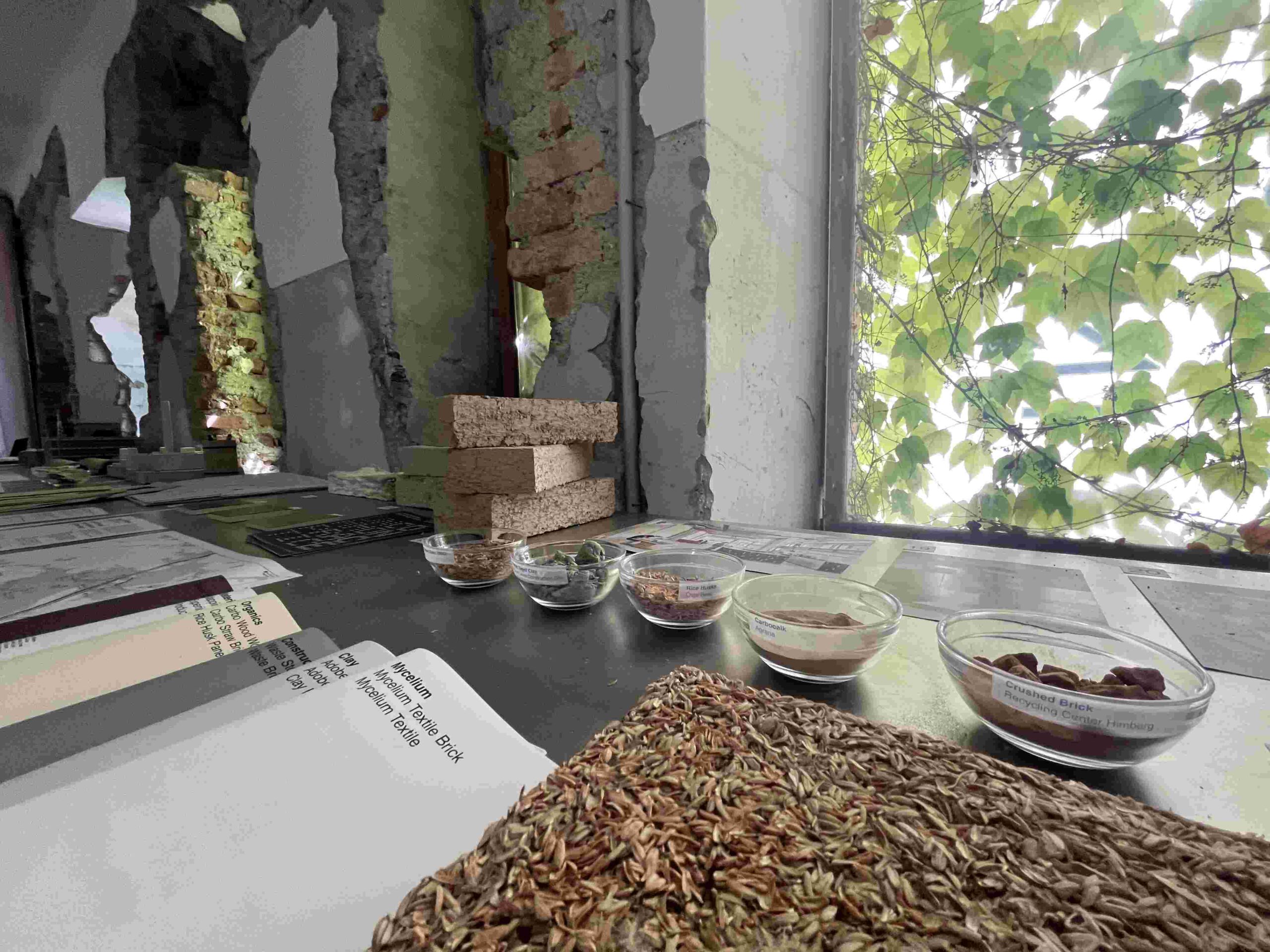
The exhibition also highlighted how agricultural and industrial by-products can be integrated into construction. Materials such as brewer’s spent grain, wool and rice husks were transformed into new building elements, proving that waste can become a valuable resource when viewed through a circular design perspective.
Material Libraries and Local Knowledge
A recurring theme throughout the exhibition was the importance of understanding local material ecosystems. Projects such as Material Library documented regional resources, mapping both natural and industrial material flows. These material libraries not only catalogue available resources but also preserve local knowledge, production methods and opportunities for future innovation.
By connecting material research with specific territories, the projects demonstrate how architecture can respond more directly to local environmental, economic and cultural conditions.
 Regional Materials for a Circular Future
The exhibition reflected one of the key ambitions of the BAUHALPS project: supporting circular construction models rooted in regional potential. Rather than importing standardized solutions, circular construction encourages designers, builders and communities to identify resources that already exist within their territories and find new ways to use them.
This approach can reduce waste, shorten supply chains, strengthen local economies and lower the environmental footprint of the built environment. At the same time, it helps preserve regional identities and traditional knowledge while fostering innovation. As the construction sector seeks pathways toward climate neutrality and resource efficiency, regional materials are increasingly emerging as an important part of the solution.
The projects presented at MAO offered a compelling reminder that the future of sustainable construction may not depend on entirely new materials, but on rediscovering the value of those that have been overlooked for decades. In this sense, circular construction is not only about technology. It is about reconnecting architecture with place, resources and communities.