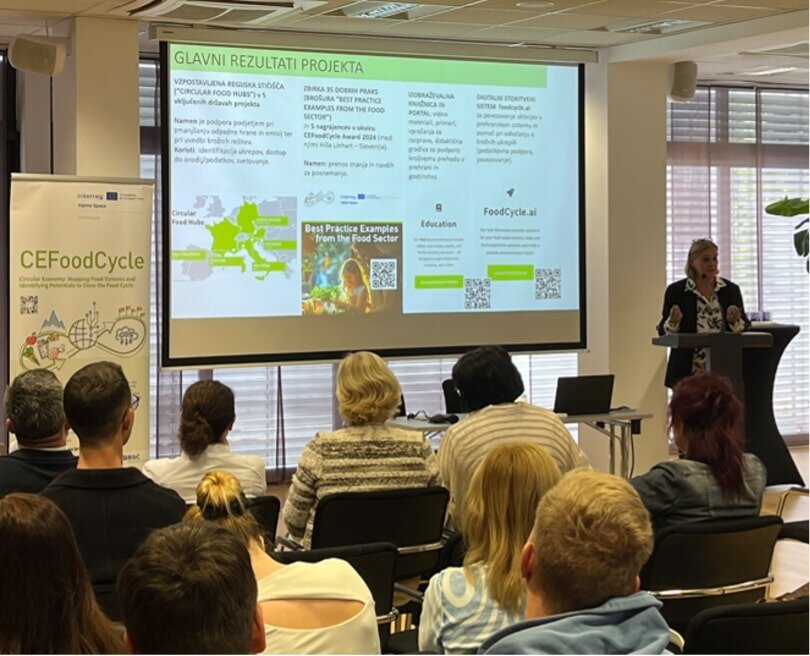

The circular transition can only succeed where stakeholders know how to work together. This was confirmed at the final event of the Interreg Alpine Space project CEFoodCycle, which took place on 24 October 2025 at the Astoria School Hotel in Bled, bringing together more than 80 representatives from tourism, regional development, education, government bodies, and businesses. The purpose of the event was to show how tourism and hospitality can already reduce food waste today through innovation and efficient resource management, while creating new value from leftovers.
The conclusion was clear: the circular transition will only be successful through close cooperation between policy, development, education, the local environment, and businesses. In Slovenia, a central project result was the establishment of the Gorenjska Food Cycle Hub, which connects stakeholders and supports the implementation of circular solutions in practice. The active involvement of students from the Vocational College for Hospitality, Wellness and Tourism Bled further demonstrated how important it is for future tourism professionals to become familiar with circular practices already during their education.