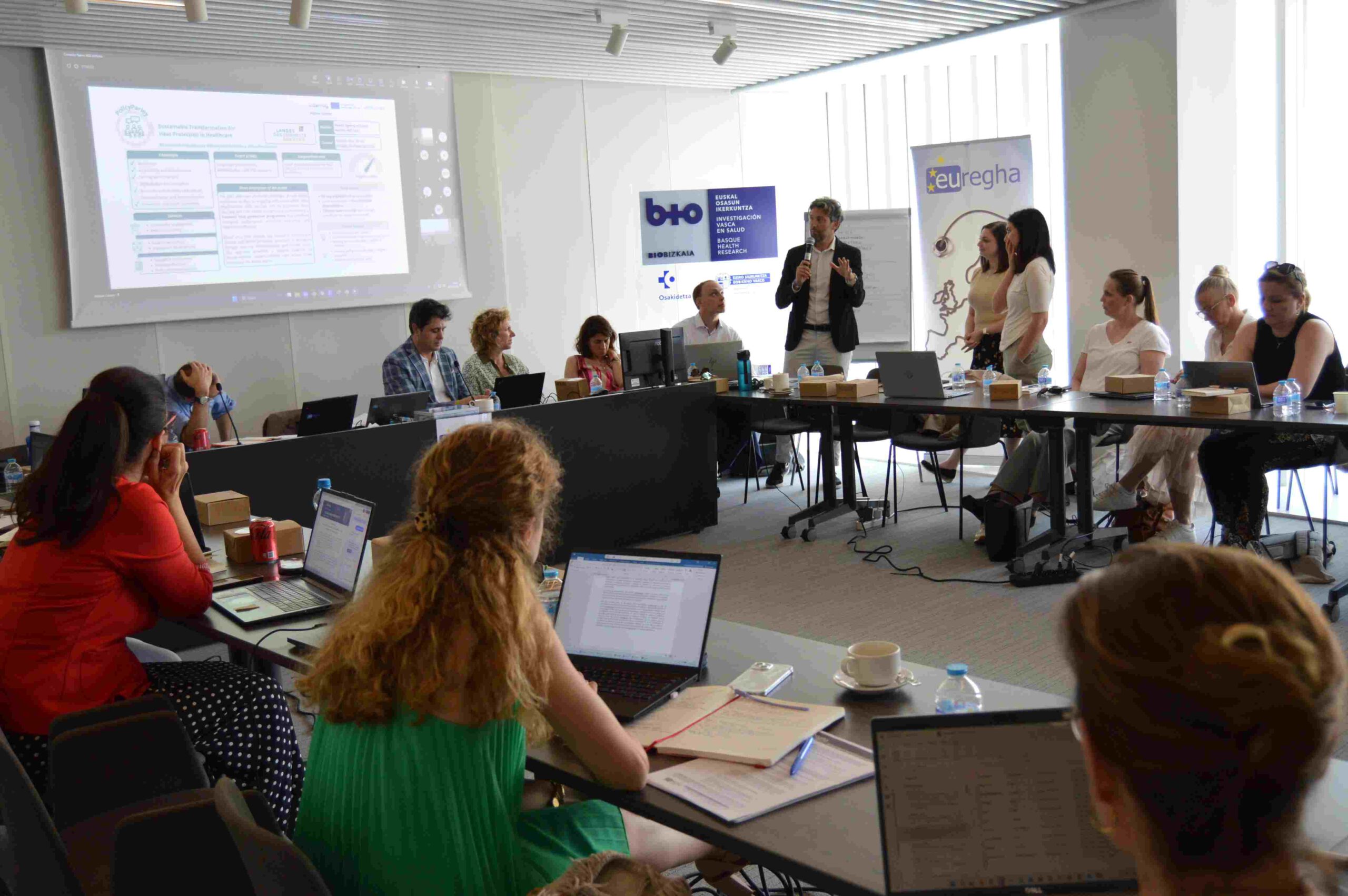
On 28 May 2026, during the 2026 Annual General Assembly of the EUREGHA network in Bilbao, Spain, HACK-IT-NET organised a dedicated Exploitation Workshop to bring innovative climate-health solutions to the systemic level.
The interactive session took place brought together more than 35 participants representing European local and regional public authorities, sectoral agencies, healthcare providers, international organizations, and higher education institutions. The primary goal was to disseminate ongoing project activities and co-create pathways for improving system-level service provision across European borders.
Presenting Pilot Actions for Systemic Change
The workshop kicked off with an outline of the HACK-IT-NET core objectives, outputs, and the specific challenges surrounding health and climate adaptation. Lead Partner ProMIS, the Autonomous Province of Trento (PAT), the Lower Austrian Health Agency (NÖ LGA), showcased theirs concrete pilot actions designed to build resilience in care systems.
Transnational Exchange and Key Takeaways
An open, interactive discussion allowed members of the EUREGHA network to share how their respective territories are tackling climate-related health risks and engaging relevant stakeholders to improve healthcare delivery:
-
Flanders (Belgium): Addressed sustainability and heat protection within healthcare facilities, using targeted webinars to keep regional actors engaged.
-
Basque Country (Spain): Emphasized the critical importance of setting clear timelines for seasonal protection plans. They highlighted their newly established center connecting scientific research directly with healthcare operators, alongside a regional “Health Pact” implemented to engage political stakeholders from the very beginning.
-
Wales: Focused on climate adaptation strategies both within and outside institutional settings, providing dedicated guidelines and targeted support to vulnerable populations at home.
-
Germany: Showcased the “World-Café” method to bring politicians, cross-sectional stakeholders, and diverse demographic groups to the same table for co-designing care solutions.
Mapping Future Exploitation
The workshop successfully mapped out strategic interests and potential future exploitation pathways among European networks. To sustain the momentum, key deliverables, output presentations, and detailed factsheets of the pilot actions were distributed to all regional delegates to foster future cross-border collaborations.