Val di Fiemme is the valley where our project partner Fondazione Edmund Mach runs the socioeconomic activities, engaging the local stakeholders in territorial workshops aimed at evaluating the vulnerability of local water resources as a step toward resilient and sustainable management strategies.
In 2018 the Vaia storm destroyed 500.000 m3 of forest in the whole valley: it is estimated that the trees crashed by the winds (reported as faster as 200 km/h) are as many as could have been cut for profit in 10 years.
The consequences are still very visible: the forests on the mountains in this area (and the surrounding valleys) are not as thick as they used to be and are unevenly spread, and one can see crashed and unhealthy trees.
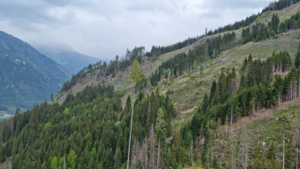
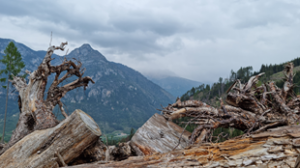
The high availability of dead wood produced by the Vaia storm, together with other climate-related events, such as longer dry spells and warmer winters, facilitated the spreading of the bark beetle, which became epidemic.
In a society that strongly relies on the wood industry, losing this amount of profitable forest – the forest will be back at its original state in no less than 50 years – is an issue. 150 km of forest roads were damaged, with consequences on other socioeconomical activities. A lower income for the managing authority means that territory management and maintenance will be supported by reduced resources.
The forest’s ecosystem services, such as carbon-cycle regulation, soil protection, biodiversity conservation, headwaters health and recreational and tourist activities, are at risk.
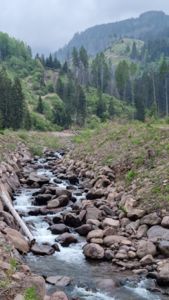
Waterwise, approaching the water resources issue with a holistic vision, finds in the Fiemme Valley an interesting case study to tackle: here, where the climate crisis impacted on an already vulnerable territory, the only way to promote water sustainably and resilience is to take the full picture into consideration, first to understand what is or can affect the water quantity and quality, and then to remind everyone that we live in a world made of connections: our ecosystems are net of ties and links and if one element changes, we are all impacted!