Overview
In view of the current energy crisis, it is now more important than ever to strengthen the development of renewable energies in the Alps. Hydrogen has many advantages to become a key player in the energy transition: easily produced with renewable electricity, it can be used for many purposes, such as mobility, industry or exploitation in tourist areas. AMETHyST aimed to support the deployment of local Alpine green hydrogen ecosystems to pave the way for a post-carbon lifestyle in the Alps. The project partners have reinforced the role of public authorities by increasing their capacity, designing support services to roll out green hydrogen solutions and including green hydrogen in local and regional energy strategies and plans.
Factsheet
- 2021 – 2027
- Carbon neutral and resource sensitive Alpine region
- SO 2.1 - Promoting energy efficiency and reducing greenhouse gas emissions
-
- AG9 Energy efficiency and renewable energy
- 11/2022
- 10/2025
- 1.948.840 EUR
- 1.349.280 EUR
Description
AMETHyST supported the deployment of Alpine green H2 ecosystems for a post-carbon future in the Alps. It reinforced the role of public authorities by increasing their capacity, designing support services to roll out green H2 solutions.
AMETHyST increased the capacity of public authorities, designed support services to deploy green H2 solutions, mainly in touristic areas as flagship project for energy transition, and includes green H2 in local and regional energy strategies and plans.
AMETHyST in a few words:
6 pilot territories in 5 countries that worked together to implement the most appropriate solutions and test the ecosystem models.
What AMETHyST have provided:
- An Alpine H2 package that includes integrated state of art of technologies, market players and policies;
- Local Alpine green H2 ecosystem model supported by techno-economic analyses and a decision support system;
- Support services for local authorities and project developers.
An Alpine green H2 package was developed to help public authorities support concrete H2 projects. Based on the results of the pilot projects, a “Local Alpine green hydrogen ecosystem model” identifies and provides the constituent elements of hydrogens territorial approach, combining production, storage, distribution and uses. Policy recommendations to support green H2 development are elaborated and shared with EUSALP and regional policymakers to reinforce the role of public authorities.
Project outputs:
- Piloting H2 territorial ecosystem
- Development guideline for local Alpine green hydrogen ecosystem
- Financial evaluation toolkit for Alpine green H2 ecosystems
- Policy guidelines to implement local Alpine green hydrogen ecosystems
Partners
- Lead partner
- France
- Rhône-Alpes (FRK2)
- Villeurbanne
- Etienne Viénot
- etienne.vienot@auvergnerhonealpes-ee.fr
- France
- Rhône-Alpes (FRK2)
- Grenoble
- Hervé Muguerra
- herve.muguerra@tenerrdis.fr
- Italy
- Provincia Autonoma di Trento (ITH2)
- Trento
- Luigi Crema
- crema@fbk.eu
- Italy
- Provincia Autonoma di Trento (ITH2)
- Trento
- Sara Verones
- sara.verones@provincia.tn.it
- Italy
- Provincia Autonoma di Bolzano/Bozen (ITH1)
- Bolzano
- Benjamin Auer
- benjamin.auer@klimahausagentur.it
- Italy
- Friuli-Venezia Giulia (ITH4)
- Germona del Friuli
- Matteo Mazzolini
- matteo.mazzolini@ape.fvg.ii
- Slovenia
- Vzhodna Slovenija (SI03)
- Maribor
- Vlasta Kremlj
- vlasta.krmelj@energap.si
- Austria
- Tirol (AT33)
- Innsbruck
- Markus Winkler
- markus.winkler@standort-tirol.at
- Germany
- Oberbayern (DE21)
- Penzberg
- Stefan Drexlmeier
- drexlmeier@energiewende-oberland.de
- Switzerland
- Région lémanique (CH01)
- Le Chable
- Horvath Laurent
- Laurent.Horvath@BlueArk.ch
- 45.76605814.8796267
- 45.09407865.697198
- 46.06266214999999411.124068870427994
- 46.072192311.1212361
- 46.478475311.3323298
- 46.273802613.1307433
- 46.559939215.6373107
- 47.267921511.4009453
- 47.758166111.3806009
- 46.08014627.2125027
Outcomes
-
Piloting H2 territorial ecosystem
DownloadThe following document provides the overall concept of local Alpine green H2 ecosystems together with the guidelines to shape an implementation plan for our project pilots: these are experimental solutions disseminated in the variuos regions that are participating to the AMETHyST project. Some of the following are projects in which hydrogen has already been implemented, in others it is being implemented (with projects already financed), while for the remaining ones we are thinking about possible implementations. The study gives an insight and overview on the aims, strategies, roadmaps and risk assessment analysis for each project in the AMETHyST framework. The pilot projects investigated are the following:- Auvergne Rhône Alpes region (France)
- Funivie Madonna di Campiglio Ski Area (Italy)
- Peio, Ronzo-Chienis and Fiera di Primiero (Italy)
- Arieshof organic farm and tourist accomodation (Italy)
- Valle del Bût hydrogen ecosystem (Italy)
- Maribor region H2 working group (Slovenia)
- WIVA P&G HyWest and H2Alpin projects (Austria)
- Das HAUS (Germany)
- Val de Bagnes hydrogen ecosystem (Switzerland)
-
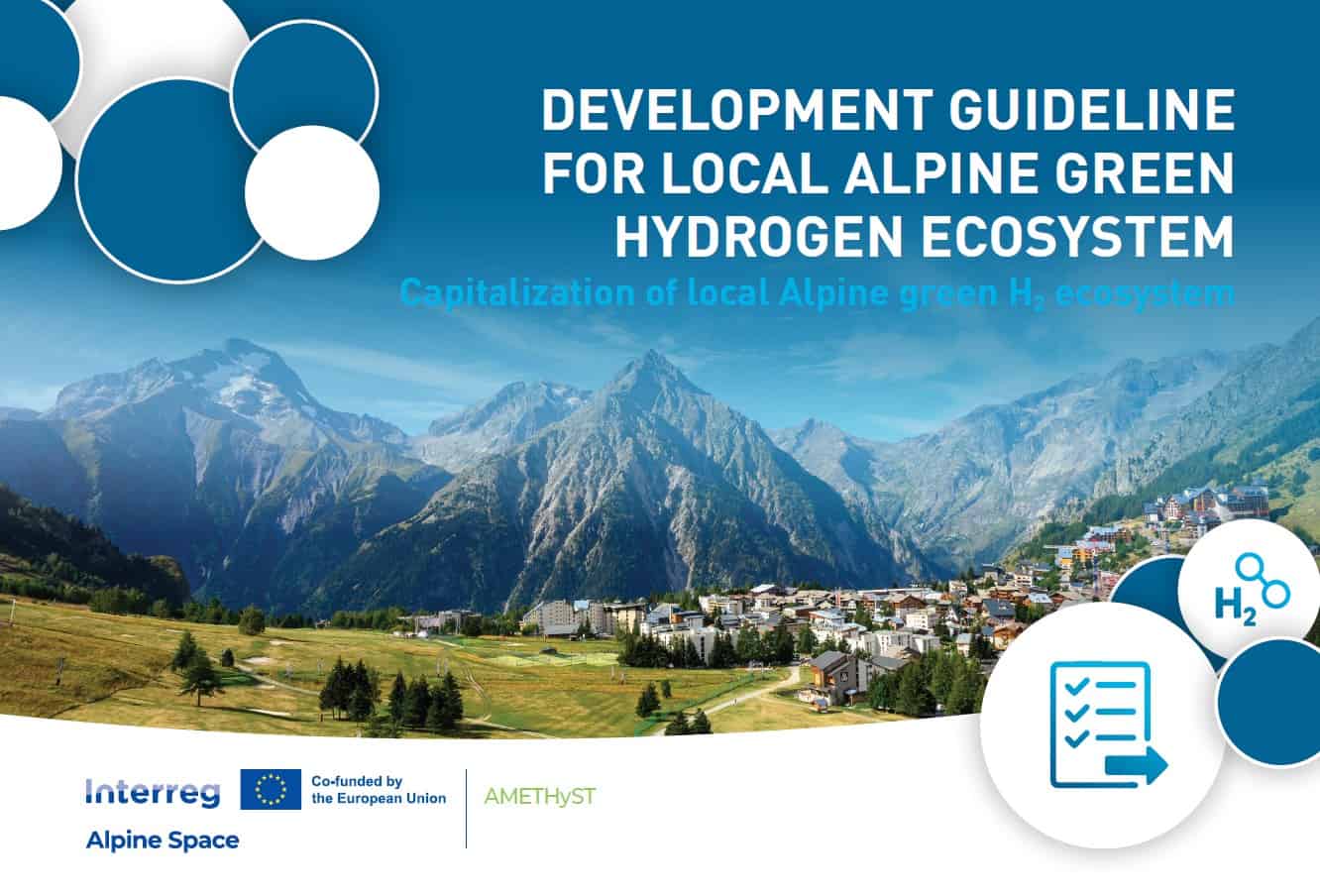
Development guideline for local Alpine green hydrogen ecosystem
DownloadThis document presents a comprehensive, step-by-step methodology for designing, testing, and evaluating green hydrogen (H₂) applications in Alpine regions. It supports public authorities and project developers in aligning hydrogen production with local energy ecosystems and demand, ensuring both environmental sustainability and economic viability. Grounded in real-world pilot testing, the methodology provides a solid foundation for scaling up green H₂ initiatives across the Alpine area. By combining strategic planning with practical guidance, it facilitates informed decision-making for a cleaner, hydrogen-powered future. The document is also available in German, French, Italian, and Slovenian, making it an accessible and practical tool for stakeholders across the Alpine region. -
Financial evaluation toolkit for Alpine green H2 ecosystems
DownloadThis toolbox assesses the financial planning of green H2 projects in Alpine territories: the " H2FAsT" Evaluation Tool offers a structured framework to assess the feasibility, sustainability, and overall impact of hydrogen technologies and initiatives. A key focus of the tool is to make hydrogen projects both financially and technically calculable, helping users navigate complex planning and investment decisions with confidence. This tool has been developed to help policymakers, industry professionals and researchere to make informed, strategic choices. The platform provides: a clear overview of the tool’s methodology, guidance for practical application and direct access to the evaluation framework. The tool is available on the SkHyline website: https://skhyline.eu/h2fast-evaluation-tool/ -
Policy guidelines to implement local Alpine green hydrogen ecosystems
DownloadThe policy guidelines have been developed based on the EU Alpine Space AMETHyST project, expert interviews, and interregional exchanges as well as desk research. They provide practical recommendations for decision-makers at the local, regional and national levels, emphasizing multi-level governance, public-private partnership, knowledge exchange, and citizen involvement. By advancing these interventions, the Alpine Space could position itself as a frontrunner in green hydrogen, supporting Europe’s decarbonization agenda, ensuring industrial competitiveness, and contributing to the EU`s climate neutrality goal to be achieved by 2050. The document is also available in German, French, Italian, and Slovenian language.
Videos
Gallery
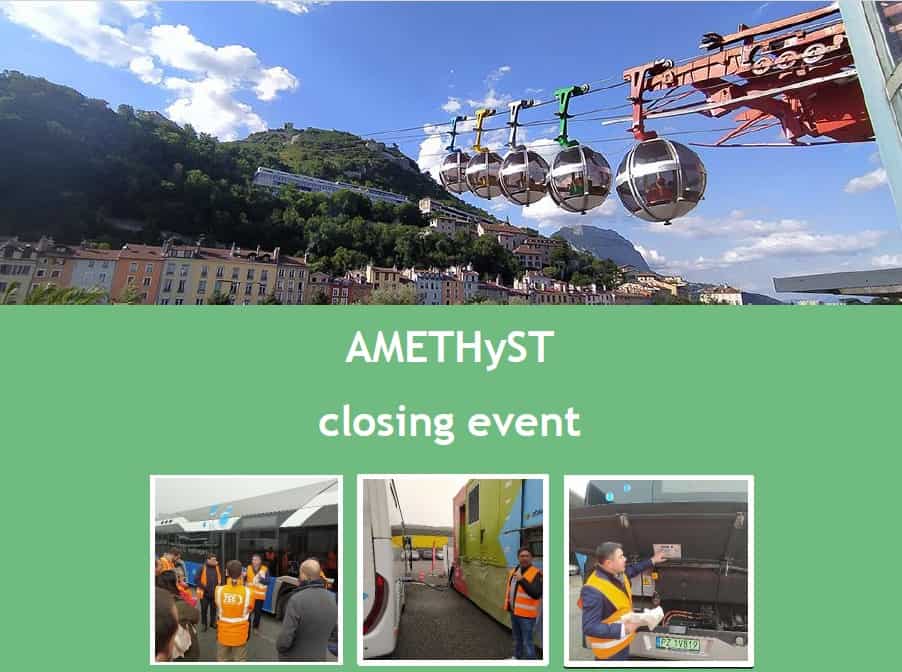
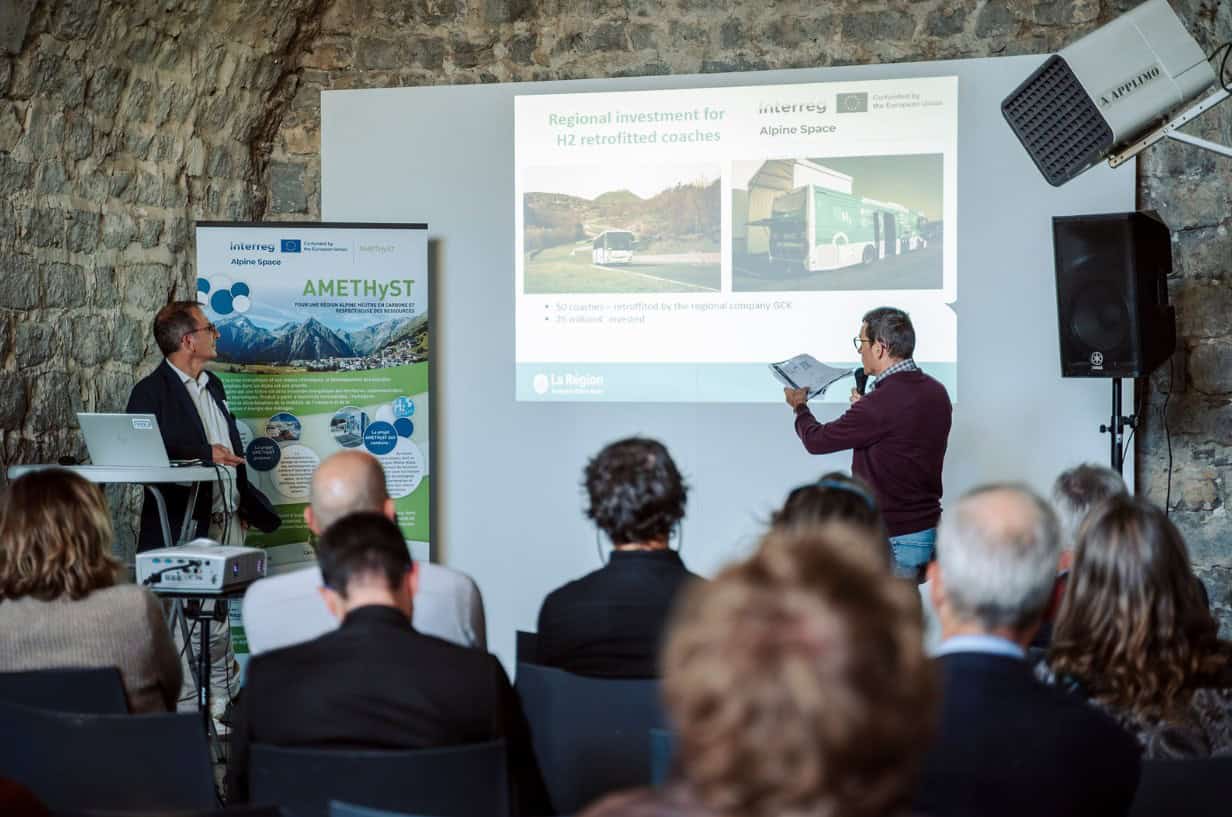
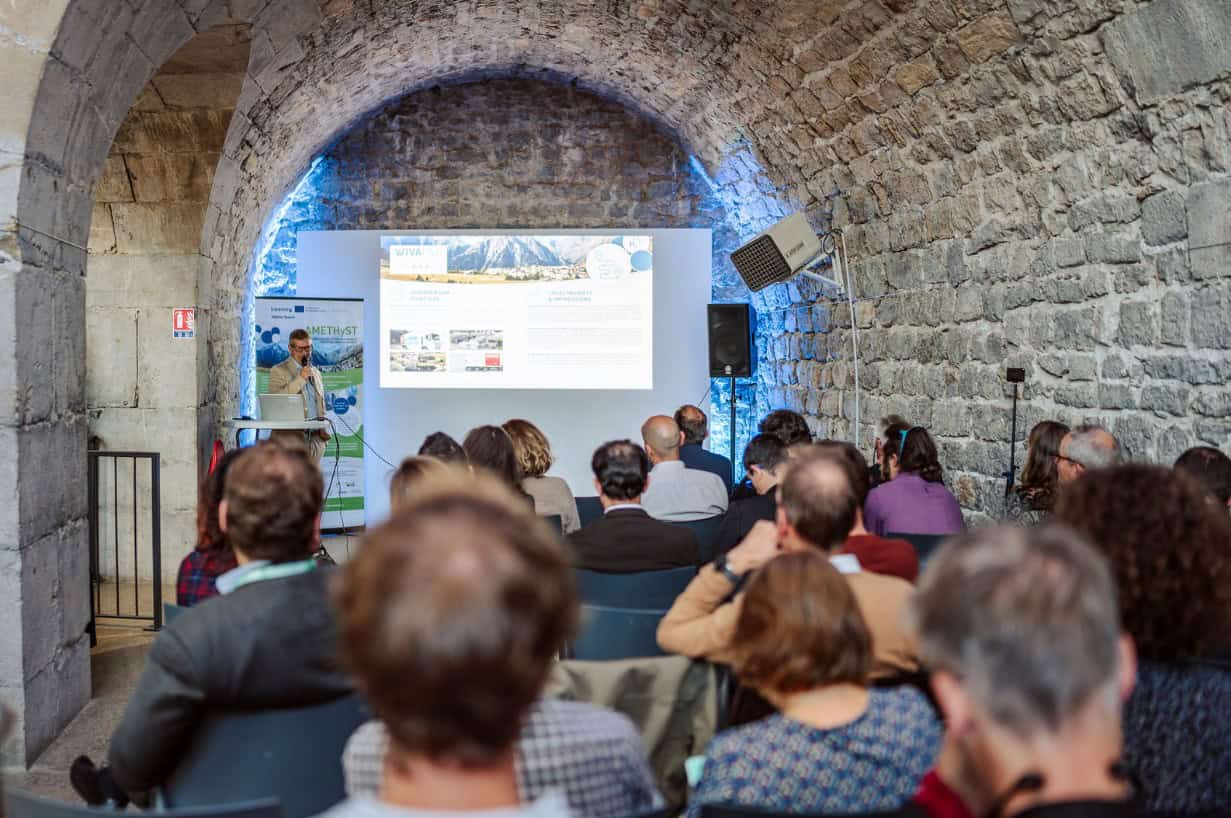
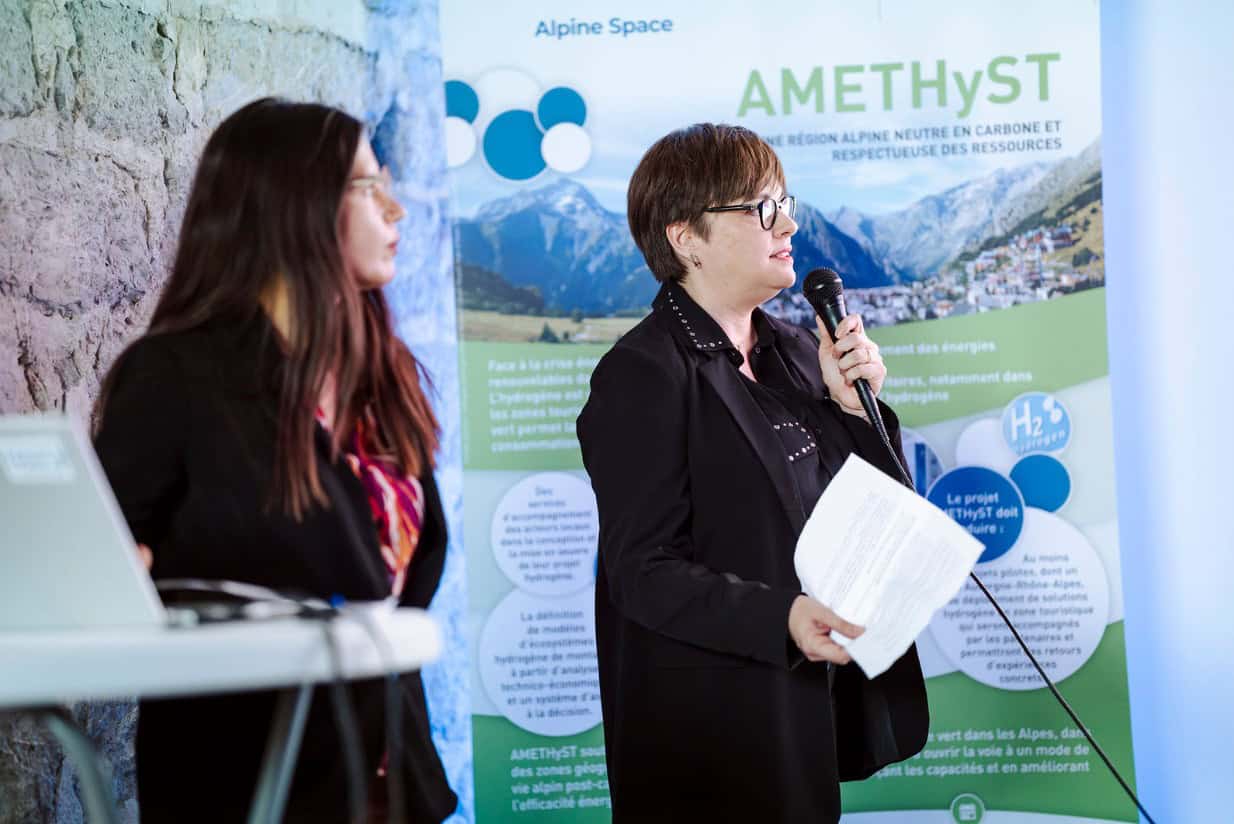
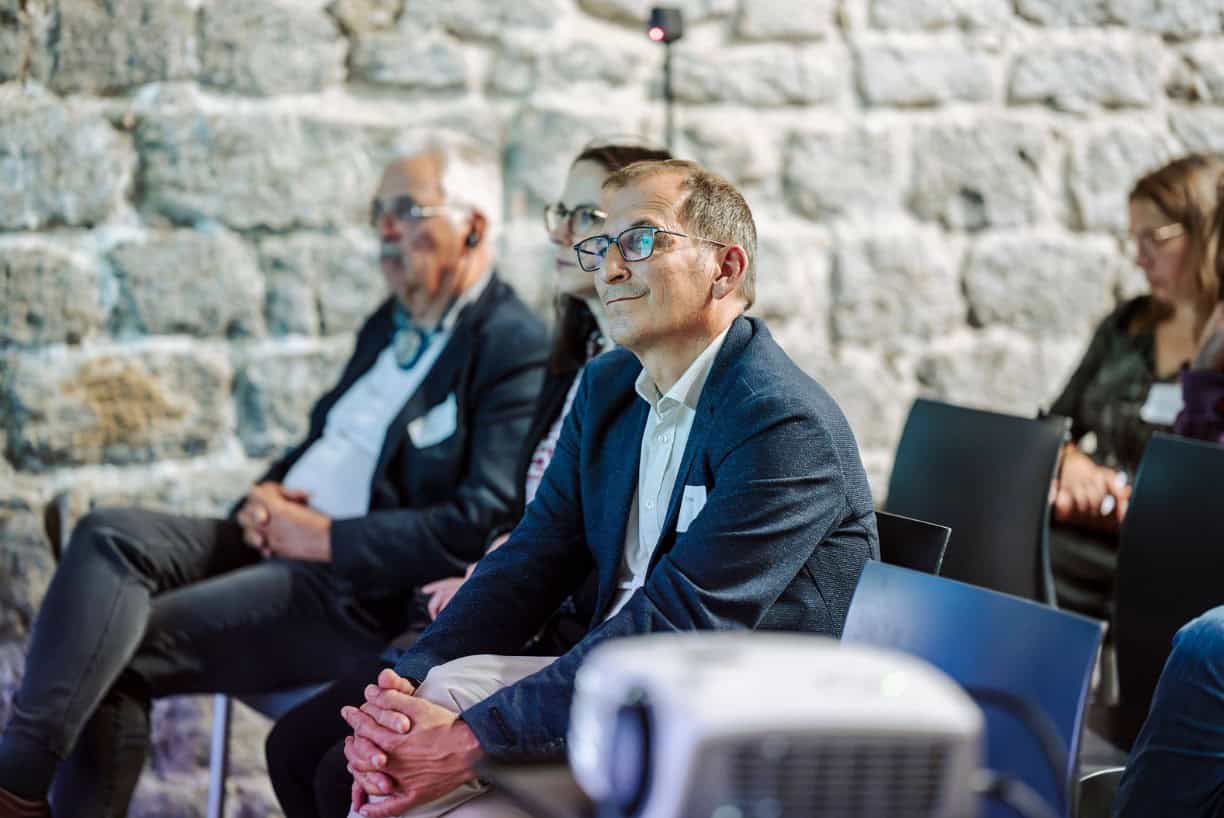
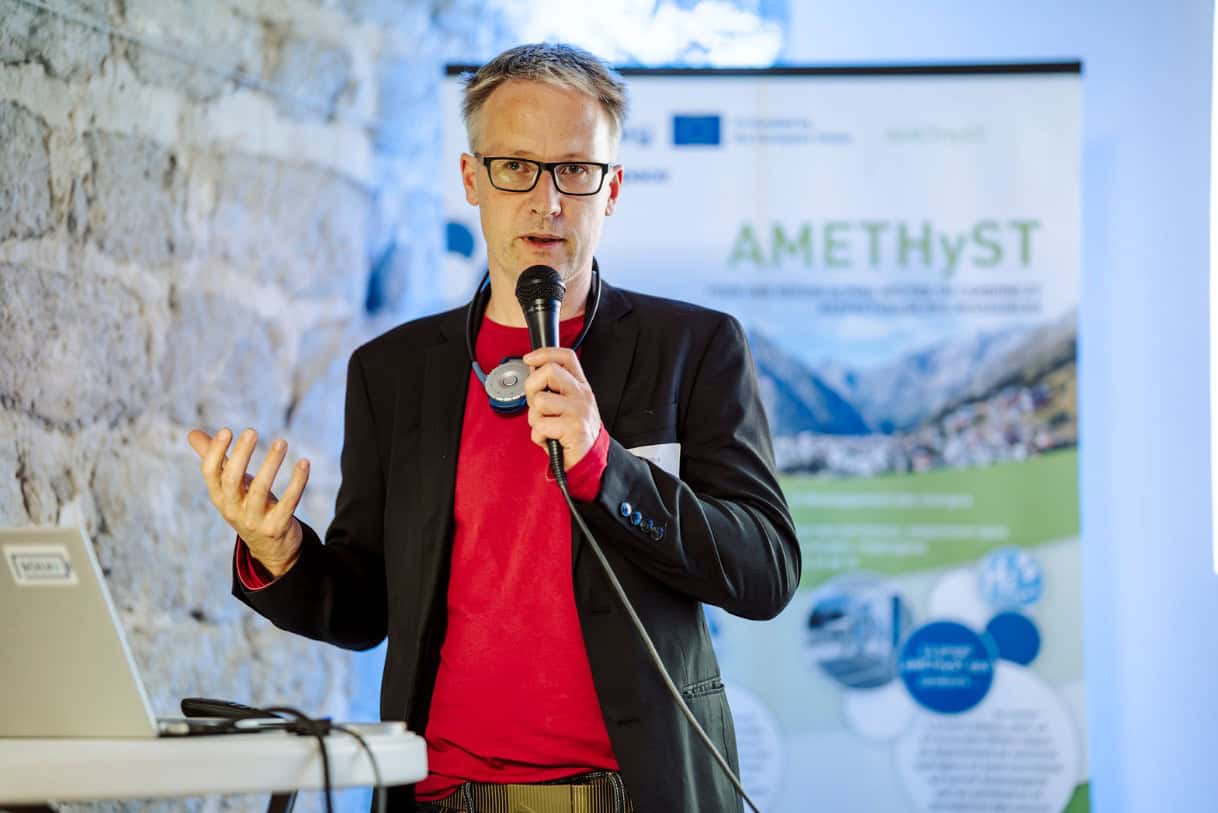
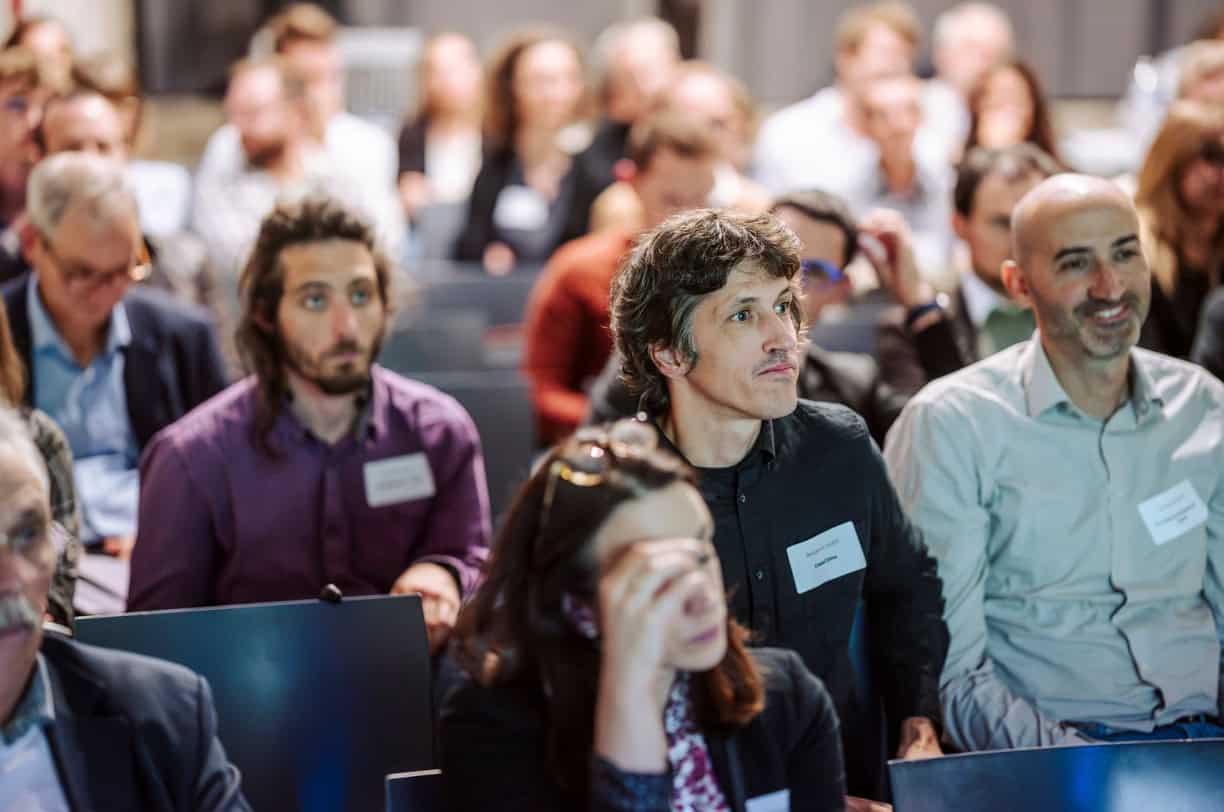
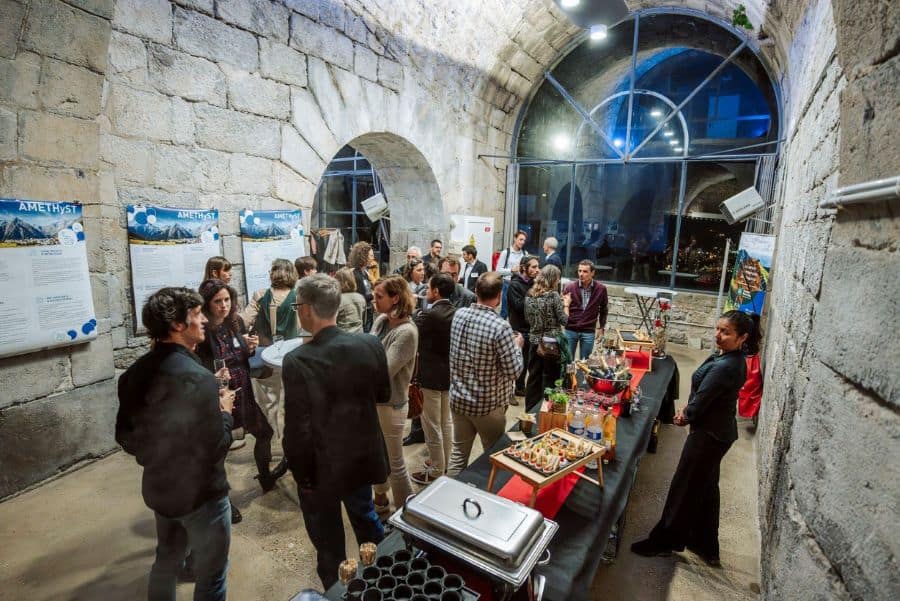
- Final Conference in Grenoble, France@TENERRDIS
- Final Conference in Grenoble, France@TENERRDIS
- Final Conference in Grenoble, France@TENERRDIS
- Final Conference in Grenoble, France@TENERRDIS
- Final Conference in Grenoble, France@TENERRDIS
- Final Conference in Grenoble, France@TENERRDIS
- Final Conference in Grenoble, France@TENERRDIS
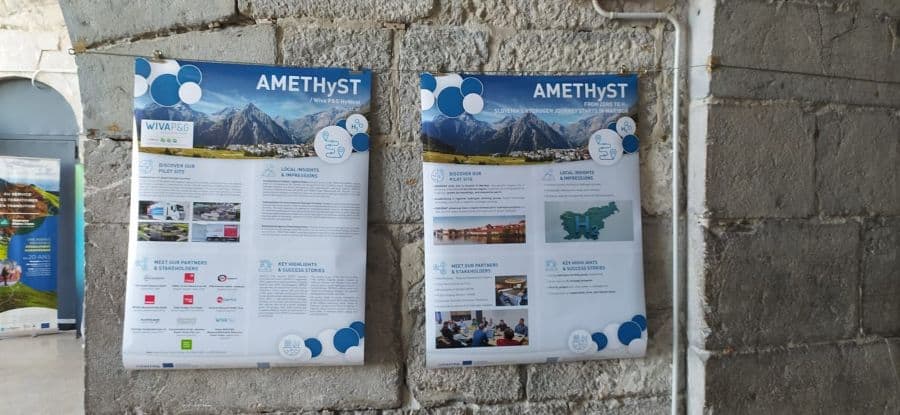
- Final Conference in Grenoble, France _ poster session@TENERRDIS
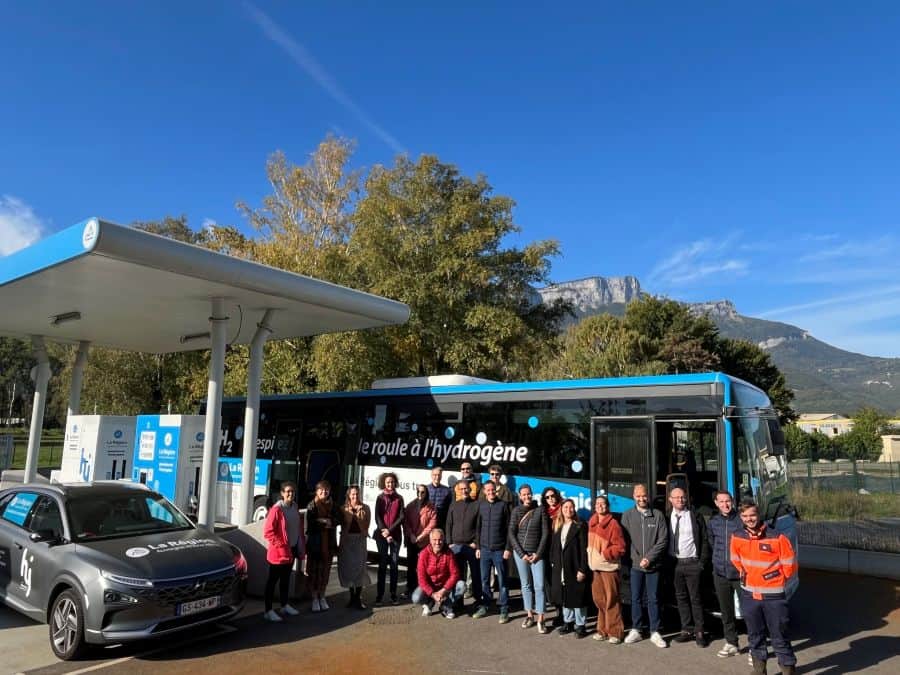
- Final Conference in Grenoble, France_study visit@TENERRDIS
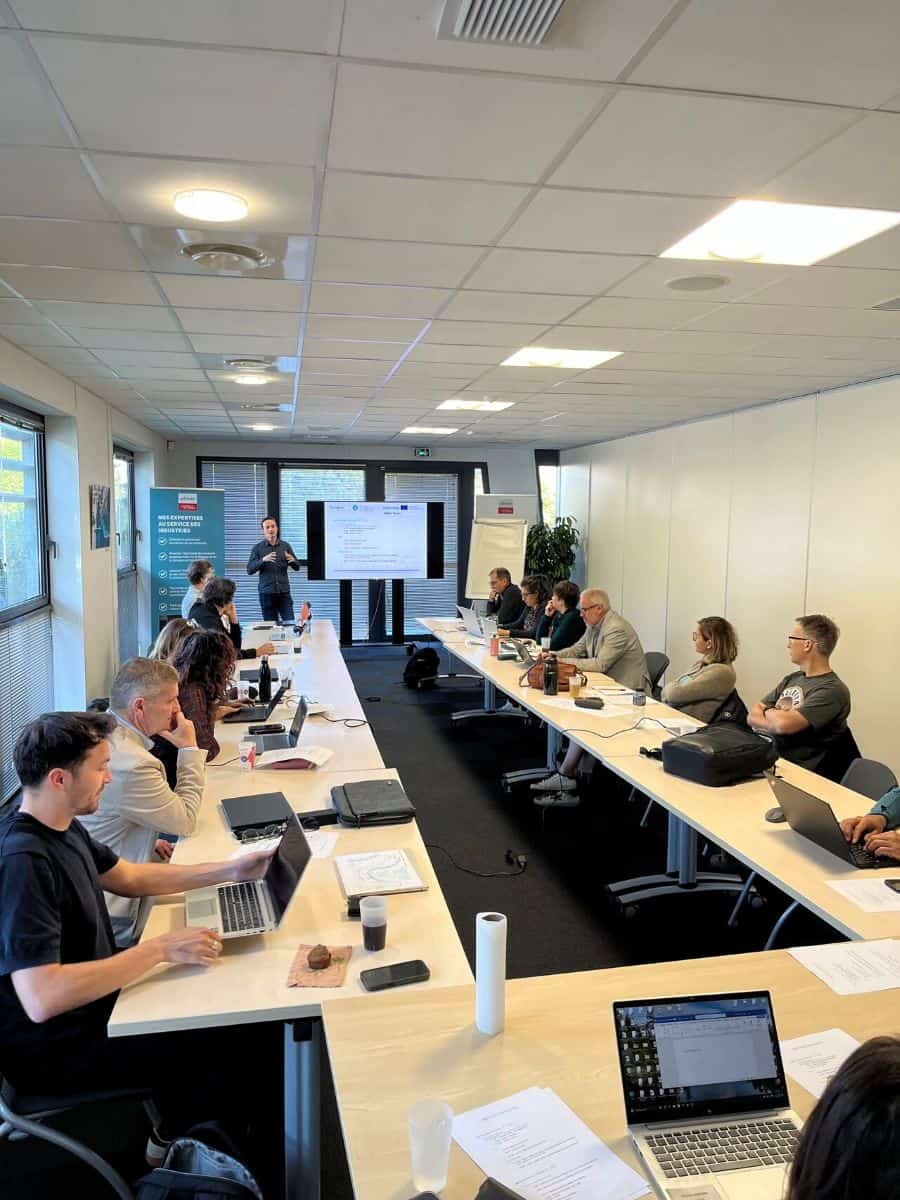
- Final Conference in Grenoble, France@TENERRDIS
Downloads
-
Are you passionate about green energy and the future of hydrogen? SkHyline is your go-to platform for exploring and mapping hydrogen projects across the Alpine region. Whether you are a policymaker, a technical expert, or a curious citizen, SkHyline provides the tools and insights you need to navigate the hydrogen revolution. Visit SkHyline now: https://skhyline.eu/ Join us on this journey towards a cleaner, hydrogen-powered Alpine region!Download
-
Amethyst project partners met in Moûtiers (french Alps) on March 7 & 8 for the project kick-off. After a full day of project meeting, project partners participated in a major conference on H2 opportunities to decarbonize mountain territories followed by a study visit to Moûtiers’ H2 refueling station, organized by the two french project partners AURA-EE and Tenerrdis.Download
-
Here you can read the first edition of the bi-annual newsletter of AMETHyST project, which will inform you on the project development, results and public events.Download
-
Download
The second edition of the bi-annual newsletter of AMETHyST project is out. You are welcome to read it. You will find a lot of news, events findings, key points and first two results in it.
-
You are welcome to read the 3rd version of the AMETHyST Newsletter. You will find a lot of news, events findings, key points and results achieved in it.Download
-
This newsletter offers an insight into some questions through input from the AMETHyST project midterm conference, where many of the most important stakeholders in the hydrogen sector in the Alpine region came together in Trento.Download
-
How can green hydrogen become a reliable cornerstone of the Alpine energy transition? And what does it take to turn visionary Hydrogen Valleys into structured, scalable ecosystems? These are the questions driving local and regional actors as they work to make hydrogendeployment more predictable, integrated, and effective. Learn more in Newsletter #5.Download
-
After three years of collaboration across the Alpine region, the AMETHyST project has reached its conclusion. But what has been achieved? How can the results support regions and stakeholders on their path toward a green hydrogen future? Find out more in Newsletter #6. This final newsletter offers a look behind the scenes of the closing event in Grenoble, showcases the main project outcomes, and provides access to recordings and further insights from three years of joint work.Download
-
D.1.1.1 _ Activity A.1.1 Identification of needs and targets for the deployment of green H2 solutions with a focus on touristic usesDownload
-
D.1.2.1 _ Activity A.1.2 Mapping of H2 initiatives in the Alpine regionDownload
-
D.2.1.1_Activity A.2.1 Potential evaluationDownload
-
D.2.5.1_Activity A.2.5 Capitalization of local Alpine green H2 ecosystem modelDownload
-
D.3.1.1_Activity A.3.1 Mapping of green hy drogen policiesDownload
-
D 2.4.1_Activity A.2.4 Pilot implementation and assessmentDownload
- Download
-
Draft programme of the eventDownload
- Download
- Download
- Download
- Download
- Download
- Download
- Download
- Download
- Download
More
Are you passionate about green energy and the future of hydrogen? SkHyline is your go-to platform for exploring and mapping hydrogen projects across the Alpine region. Whether you are a policymaker, a technical expert, or a curious citizen, SkHyline provides the tools and insights you need to navigate the hydrogen revolution.
Visit SkHyline now: https://skhyline.eu/
What Can You Find on SkHyline?
- A Comprehensive Project Map – Discover ongoing and completed hydrogen initiatives across the Alps.
- Territory Insights & Policies – Gain access to regulations, policies, and expert interviews shaping the hydrogen economy.
- Techno-Economic Evaluation Tool (Coming in 2025) – Develop your own hydrogen project with financial feasibility support.
- Policy Guidelines (Coming in 2025) – A robust framework to guide the development of hydrogen ecosystems.
- Empower Decision-Makers – Access a rich repository of policies and case studies to make informed hydrogen-related decisions.
- Enhance Technical Knowledge – Learn about hydrogen technologies, explore European projects, and assess their economic feasibility.
- Engage with the Community – Understand how hydrogen contributes to a greener future and sustainable energy transition.
Project calendar