
Overview
Recurring disasters related to climate change is affecting nature and humans in the Alpine region even more severely than before. In order to be able to cope with unpredictable climate events, ADAPTNOW worked on strengthening the adaptive capacity of Highly Affected and Exposed Territories (HAET). To this end, the project partners have implemented and evaluated the available tools and practices for climate adaption and risk mitigation. By bringing together different local stakeholders, such as regional sectoral agencies and research centres, ADAPTNOW aimed at making risk and adaption planning more integrated, collaborative and inclusive.
Factsheet
- 2021 – 2027
- Climate resilient and green Alpine region
- SO 1.1 - Promoting climate change adaptation and disaster risk prevention, resilience, taking into account eco-system based approaches
-
- AG8 Risk governance
- 11/2022
- 10/2025
- 2.034.650 EUR
- 1.525.988 EUR
Description
Climate change is happening now, we need to be better prepared for its consequences on citizens' wellbeing, nature and the economy. We must act fast, smart, effectively and integrate adaptation measures across all sectors and levels of society.
ADAPTNOW objective was to increase the risk management and adaptation capacities of Highly Affected and Exposed Alpine Territories (HAET) through the implementation and evaluation of agile, integrated, systemic and participatory approaches coordinated by regional and local public authorities with the support of sectoral agencies and research institutes.
ADAPTNOW worked on strengthening the adaptive capacity of Highly Affected and Exposed Alpine Territories (HAET) by implementing and evaluating the available climate adaptation and risk mitigation management tools and practices, assessing the Climate Adaptation Plans and developing Climate Services to support the territories and their local public authorities. Ultimately, ADAPTNOW aimed at making risk and adaptation planning more integrated, collaborative and inclusive. This was reached through a more dynamic, agile and participatory planning process in which all local stakeholders was involved.
ADAPTNOW brought together regional sectoral agencies and research centres from five Alpine Space countries (France, Italia, Austria, Germany and Slovenia) to support Pilot Actions and helped set up and run Climate Services in support of 7+ HAET in the Alps. Their efforts focused in implementing and evaluating the adaptive capacity of pilots within predominant hazards in the Alps: Heatwaves, Heavy rains/floods and Gravitational/landslides. Key sectors have been identified to assess related impacts: Urban infrastructure, Forestry, Tourism and Health.
A replication action linked at least 6 additional HAET outside the partners consortium to test the replicability of climate adaptation and risk mitigation tools and practices, climate services and policy recommendations to ensure that HAET in the Alps also strengthen their adaptation capacities.
ADAPTNOW provided:
- Support information and knowledge exchange of existing adaptation and risk mitigation management tools and practices a transnational/regional/local levels to improve the adaptive capacities of HAET;
- At least 7 pilots tested the adapting capacity of specific economic sectors within HAET (Urban infrastructure, Forestry, Tourism and Health) shared their experiences and developed a more integrated and agile adaptation planning;
- Existing Climate Support Services was tailored to the local needs and have increased the adaptation capacity of HAET;
- Raise awareness among experts, policymakers, and citizens to create a common and shared knowledge of Alpine risks & adaptation solutions and practices.
Project outputs:
- Guidebook for introducing advanced Climate Adaptation and Risk Mitigation planning at local level
- Alpine Climate Adaptation Support Service Package
- Replication guide
- Policy recommendations
Partners
- Lead partner
- France
- Rhône-Alpes (FRK2)
- Villeurbanne
- Rogelio Bonilla
- rogelio.bonilla@auvergnerhoealpes-ee.fr
- Italy
- Liguria (ITC3)
- Genova
- Francesca Verardo
- verardo@ireliguria.it
- Italy
- Provincia Autonoma di Bolzano/Bozen (ITH1)
- Bolzano/Bozen
- Marc Zebisch
- marc.zebisch@eurac.edu
- France
- Rhône-Alpes (FRK2)
- St Martin d’Hères Cedex
- Frederic Berger
- frederic.berger@inrae.fr
- Germany
- Oberbayern (DE21)
- Neubiberg
- Ivo Baselt
- ivo.baselt@unibw.de
- Italy
- Piemonte (ITC1)
- Torino
- Andrea Moro
- andrea.moro@iisbeitalia.org
- Germany
- Schwaben (DE27)
- Kempten
- Martin Sambale
- sambale@eza-allgaeu.de
- Austria
- Vorarlberg (AT34)
- Dornbirn
- Sabine Erber
- sabine.erber@energieinstitut.at
- Slovenia
- Vzhodna Slovenija (SI03)
- Maribor
- Klavdija Polutnik
- Klavdija.polutnik@energap.si
- Italy
- Liguria (ITC3)
- Genova
- Andrea Gandolfo
- agandolfo@comune.genova.it
- Slovenia
- Vzhodna Slovenija (SI03)
- Selnica ob Dravi
- Suzana Prajnic
- suzana.prajnc@selnica.si
- France
- Rhône-Alpes (FRK2)
- Grenoble
- Guillaume Tournaire
- guillaume.tournaire@grenoblealpesmetropole.fr
- 45.77163274.8649712
- 44.40711118.9350994
- 46.494530211.3472734
- 45.193451045.76550849
- 48.076993511.6615136
- 45.06697147.6564385
- 47.724224510.31926659412166
- 47.4063629.7431549
- 46.559939215.6373107
- 44.41133178.9070062
- 46.5515197515.49303763874046
- 45.18874315.7391967
Outcomes
-
Guidebook for introducing advanced Climate Adaptation and Risk Mitigation planning at local level
WebsiteThis guidebook OT2.1 provides methodological guidelines for designing, implementing and assessing pilot actions targeted at experimenting advanced local planning. It provides answers to the question: How to make a change in climate planning? It includes case studies based on pilot projects and examples of nature-based adaptation measures. The document is also available in German, French, Italian, and Slovenian. -
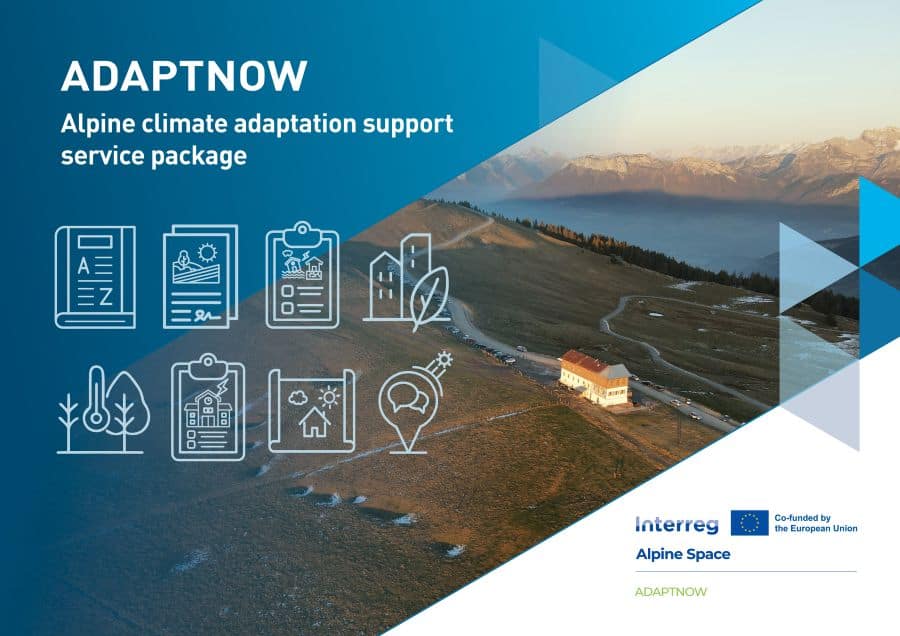
Alpine Climate Adaptation Support Service Package
WebsiteThis document OT2.2 presents a package of seven services designed to help municipalities across the Alpine region strengthen their resilience to the impacts of climate change. It is aimed at sectoral agencies supporting the upscaling of local action on climate adaptation and risk mitigation, through the introduction of climate support services for highly affected and exposed territories in their region It draws on services being tested and deployed in ADAPTNOW and provides advice and guidance based on a set of concrete examples, testimonies, learnings and recommendations. The document is also available in German, French, Italian, and Slovenian. -
Replication guide
DownloadThe online replication guide offers clear, practical advice for applying the ADAPTNOW approach in other Alpine territories that face strong climate impacts. It brings together lessons learned from partner exchanges, testimonies, and discussions held during the Alpine Policy Roundtable. Developed within the Interreg Alpine Space project ADAPTNOW, the guide supports regional and local authorities in strengthening climate-risk management and adaptation capacities. ADAPTNOW focuses on helping Highly Affected and Exposed Territories respond to increasing climate variability, improve the use of Climate Services, and enhance coherent climate and energy planning. It also encourages integrated and flexible approaches, including Nature-Based Solutions, and helps bridge knowledge gaps so that local actors and communities can implement more systemic and effective adaptation measures. The document is also available in German, French, Italian, and Slovenian. -
Policy recommendations
DownloadOver the last few years, the effects of climate change have been showing themselves with all their ferocity in the Alpine territories, which are increasingly subject to environmental catastrophes and irreparable damages caused by the climate that has already changed. Moving from theoretical to practical actions, aiming to increase the resilience of the Alpine territories, it’s now the right time to act. Six Policy Recommendations have been developed in the context of the ADAPTNOW project, which will be described in this document. They have been identified as the crucial ones by the partnership, on the basis of the analytical findings emerged during the development of the pilot actions throughout the lifetime of the project. Thus, the document intends to illustrate the content of the six Policy Recommendations, which aim to promote specific actions to be implemented within and outside the Alpine Region to improve the resiliency of the territories to the effects of climate change. Here you can find also a SHORT version of the document in English. The short version is also available in French and German language.
Pilots
-
Grenoble-Alpes Métropole (France)
Strengthening Municipal Cooperation for Climate Resilience
Grenoble-Alpes Métropole developed a comprehensive pilot programme to strengthen local climate resilience by improving cooperation between municipalities, enhancing risk communication and introducing innovative participatory tools for climate adaptation. Facing increasing risks from floods, flash floods, landslides, rockfalls and wildfires, the pilot focused on helping local authorities better prepare for climate-related hazards while strengthening collaboration across different levels of governance.
The pilot combined three complementary actions. First, municipalities worked together to improve Municipal Information Documents on Major Risks by integrating climate change into local risk communication and sharing good practices. Secondly, municipalities tested the ClimaSTORY participatory planning tool, enabling local stakeholders to jointly explore adaptation options across sectors such as urban planning, biodiversity, tourism and forestry while providing valuable feedback to further improve the tool. Finally, Grenoble introduced an innovative serious game that simulated emergency situations, allowing municipal staff and elected representatives to practice crisis management, resource sharing and inter-municipal cooperation during extreme weather events.
More than simply testing new methods, the pilot strengthened dialogue between municipalities, improved preparedness and created practical tools that support more integrated climate adaptation planning. The combination of collaborative workshops, participatory planning and simulation exercises demonstrated how innovative approaches can build stronger institutional cooperation and increase local resilience. The methodologies developed through the pilot can be readily transferred to other Alpine municipalities seeking more effective and participatory climate risk management.
-
Pusteria Valley (Italy)
Building Climate Resilience for Forests and Tourism
The Pusteria Valley pilot addressed two sectors that are essential for the region's future: forests and tourism. Increasing temperatures, drought, heavy rainfall and more frequent extreme weather events are already affecting forest ecosystems and changing the conditions on which tourism depends. The pilot therefore focused on strengthening local capacity to adapt through knowledge, cooperation and practical planning.
The first pilot action delivered specialised training for foresters using a "train-the-trainers" approach. Combining scientific expertise with practical field demonstrations, participants learned how to implement climate-resilient reforestation, select future-adapted tree species and improve long-term forest management. As foresters are the primary advisors to forest owners, the knowledge gained will continue to support climate adaptation well beyond the project.
The second action brought together tourism organisations, municipalities, ski resorts and climate experts to develop a practical roadmap for adapting tourism to changing climate conditions. Through workshops and collaborative discussions, stakeholders identified local climate risks, explored adaptation options and developed recommendations for strengthening the resilience of both winter and summer tourism.
By connecting science with local knowledge and involving a broad range of stakeholders, the pilot delivered practical solutions that strengthen two of the region's most important economic and environmental assets. The experience demonstrates how collaborative planning can help Alpine regions prepare for future climate challenges while supporting sustainable development. -
Chivasso (Italy)
Integrating Climate Adaptation into Urban Development
The Municipality of Chivasso used the ADAPTNOW pilot to place climate adaptation at the centre of urban planning and decision-making. As the municipality was already updating its Master Plan and Strategic Environmental Assessment, the project created an opportunity to integrate climate resilience directly into future urban development instead of treating it as a separate policy.
The first pilot action supported the development of a climate-resilient Master Plan by identifying local vulnerabilities related to heatwaves, droughts, heavy rainfall and flooding. Climate risk assessments were incorporated into planning documents, helping the municipality better protect buildings, transport infrastructure and public spaces while preparing for future climate impacts.
The second action focused on strengthening the skills of municipal planners and decision-makers. Through workshops, expert support and knowledge exchange, participants gained practical guidance on integrating climate adaptation into planning procedures, urban policies and future investment decisions.
Working together with regional authorities, universities, environmental agencies and technical experts, Chivasso established a more integrated approach to climate governance. The pilot demonstrates how municipalities can combine scientific evidence with planning practice to create safer, healthier and more resilient communities while providing a model that can be replicated by other Alpine cities facing similar climate challenges. -
Kempten (Germany)
Creating Cooler and Healthier Cities through Nature-Based Solutions
The City of Kempten explored practical ways to improve urban resilience to increasing heatwaves by combining climate education with innovative nature-based solutions. The pilot demonstrated that successful climate adaptation requires both informed citizens and sustainable urban design.
The first pilot action, Sun Detectives, engaged children, schools and educators in interactive activities that explained the impacts of rising temperatures and encouraged simple actions to reduce overheating in everyday life. By raising awareness among younger generations, the programme helped build long-term understanding of climate adaptation and inspired children to become active ambassadors for climate resilience.
The second pilot focused on testing façade greening solutions as an effective response to urban overheating. Working with research institutions, the city explored how green façades can reduce surface temperatures, improve thermal comfort, support biodiversity and contribute to healthier public spaces. The pilot also assessed practical implementation methods that can be applied to existing buildings and future developments.
Together, these actions demonstrated how education, innovation and green infrastructure can complement one another in creating more liveable and climate-resilient cities. The pilot provides practical inspiration for municipalities across the Alpine region looking to reduce the impacts of heatwaves while improving the quality of urban life. -
Plan B Region (Austria)
Building Climate Awareness and Improving Local Risk Preparedness
The Plan B Region pilot strengthened local resilience by combining climate education with practical risk assessment tools that support better planning and decision-making. Recognising that effective climate adaptation depends on both informed citizens and well-prepared municipalities, the pilot addressed climate challenges from multiple perspectives.
The first pilot action developed an educational programme for kindergartens and schools to raise awareness of overheating in buildings and introduce simple measures to improve indoor comfort. Children, teachers and building operators explored how climate change affects everyday life and learned practical solutions that can reduce heat stress while promoting healthier learning environments.
The second action focused on supporting municipalities through comprehensive natural hazard assessments. By analysing climate-related risks such as heavy rainfall, landslides and heatwaves, the pilot identified vulnerable areas and provided local authorities with valuable information for spatial planning, infrastructure management and emergency preparedness.
By combining education, stakeholder engagement and evidence-based planning, the pilot demonstrated how local communities can strengthen their capacity to respond to climate change. The experience provides a practical and transferable approach that helps municipalities make more informed decisions while encouraging citizens to become active participants in climate adaptation. -
Selnica, Podravje Region (Slovenia)
Combining Risk Assessment with Nature-Based Solutions
The ADAPTNOW pilot in Selnica supported the municipality in strengthening its resilience to climate change through a combination of climate risk assessment and practical adaptation measures. Responding to increasing risks from heavy rainfall, landslides and heatwaves, the pilot provided local authorities with the knowledge and tools needed to improve long-term planning and protect vulnerable areas.
The first pilot action focused on identifying climate risks, assessing local vulnerabilities and mapping areas exposed to landslides and heavy precipitation. Special attention was given to critical infrastructure, including roads, residential areas and drinking water supply systems, providing a solid basis for future spatial planning and disaster risk management.
The second pilot introduced nature-based solutions by improving public green spaces to reduce overheating during increasingly frequent summer heatwaves. Through additional greenery and climate-sensitive planning, the municipality demonstrated how green infrastructure can improve thermal comfort, support biodiversity and create healthier public spaces for residents and visitors.
By combining scientific assessment with practical local action, the Selnica pilot demonstrated how even smaller municipalities can successfully integrate climate adaptation into local planning. The experience provides a replicable model for Alpine communities seeking to increase resilience while improving the quality of life for their citizens. -
Genoa (Italy)
Advanced Climate Services for More Resilient Cities
The Genoa pilot strengthened the city's capacity to prepare for extreme weather events by developing advanced climate services that support evidence-based planning and decision-making. As a densely populated coastal city, Genoa faces increasing risks from windstorms, sea storms, heatwaves and other climate-related hazards, requiring accurate data to support effective adaptation.
The first pilot action focused on analysing climate hazards and producing detailed hazard maps that identify vulnerable urban areas. These maps help local authorities better understand future climate risks and support planning decisions related to infrastructure, public health, tourism and emergency management.
The second action developed a high-resolution urban wind model capable of providing detailed information on local wind behaviour. This innovative tool improves the city's ability to assess wind-related risks, protect critical infrastructure and strengthen preparedness for extreme weather events.
By translating complex climate data into practical planning tools, the pilot enables more informed decision-making and supports the development of safer, more resilient urban environments. The methodologies developed in Genoa demonstrate how advanced climate services can help cities across the Alpine region better prepare for the impacts of climate change while strengthening long-term resilience.
Videos
Gallery
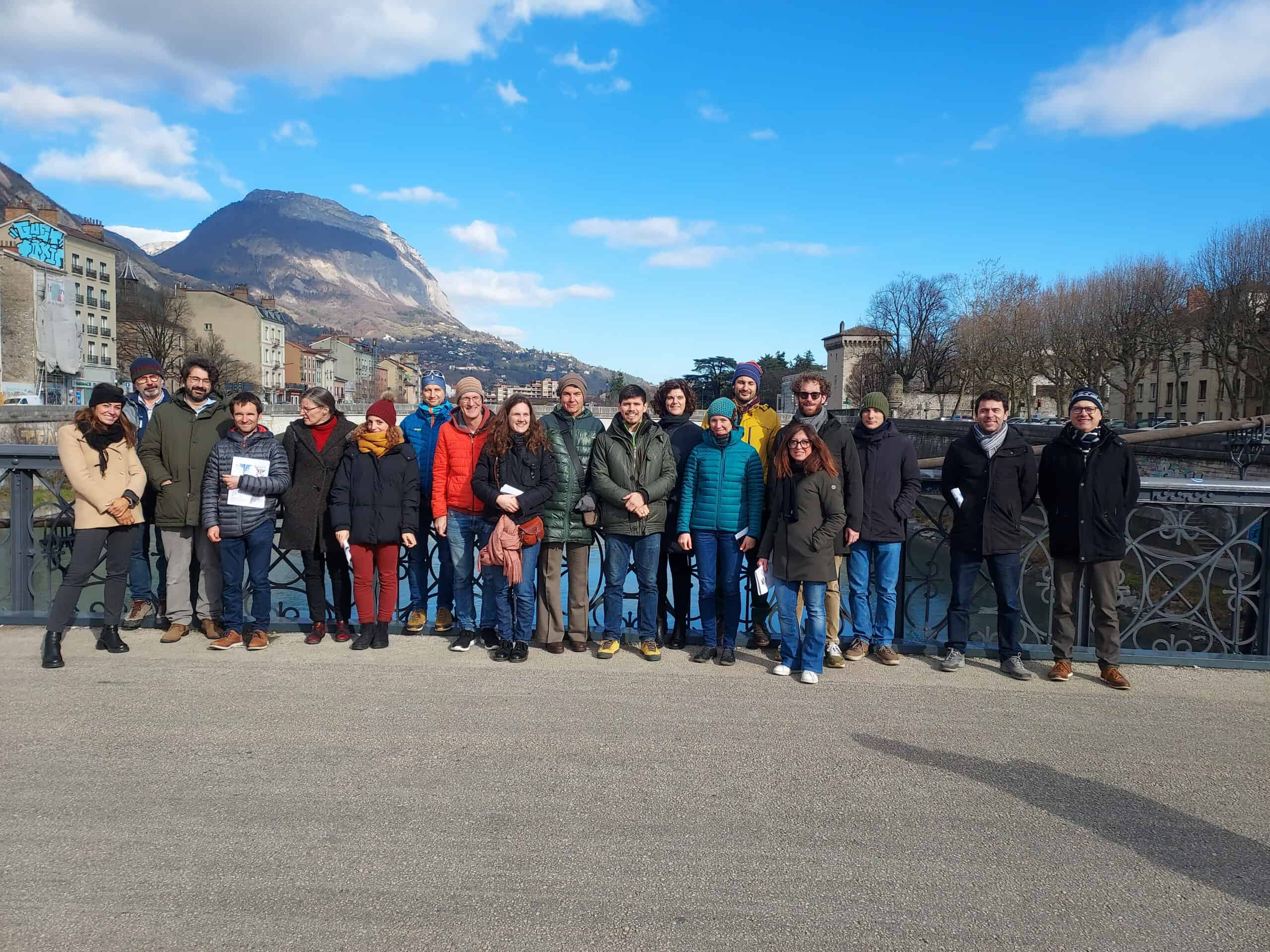
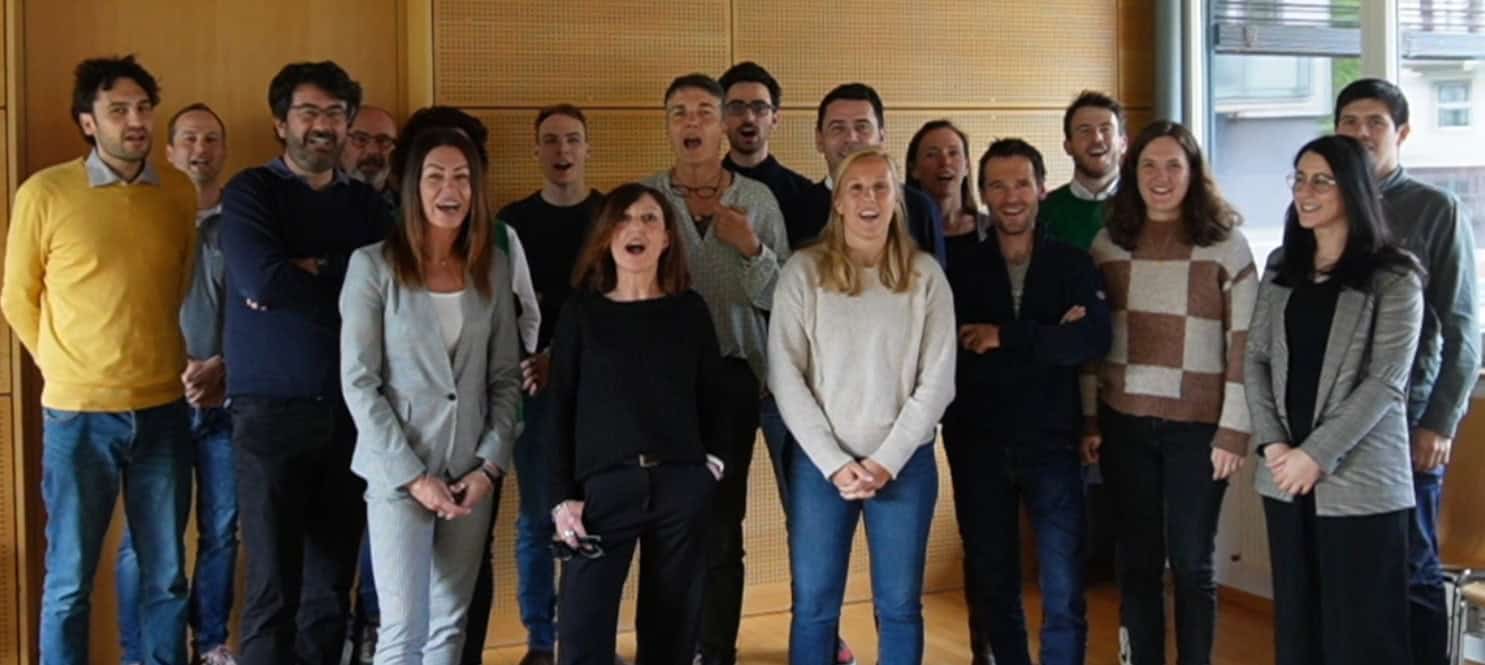
- Group picture_KOM Grenoble, FranceAuvergne-Rhône-Alpes Energy Environment Agency
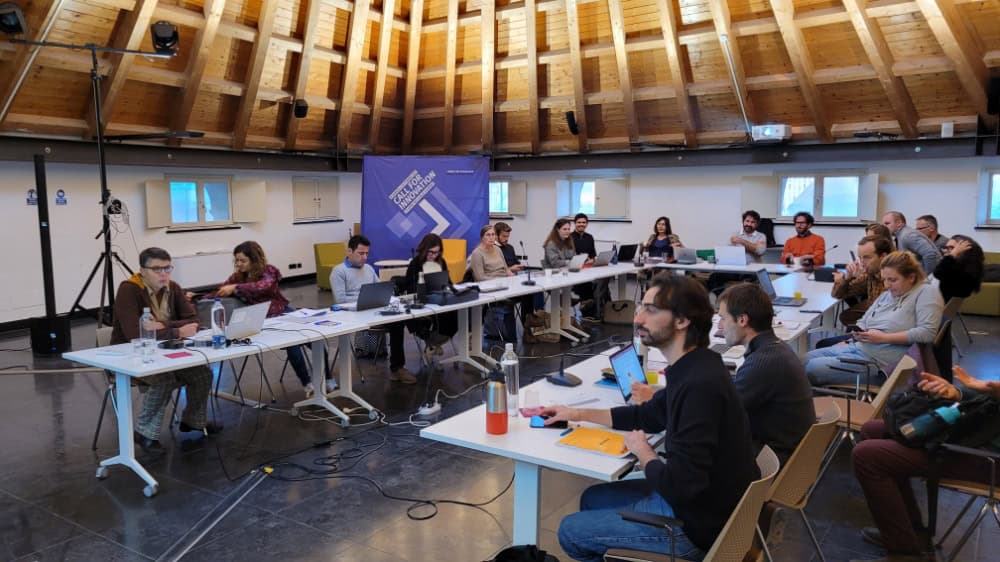
- Project partners at the meeting
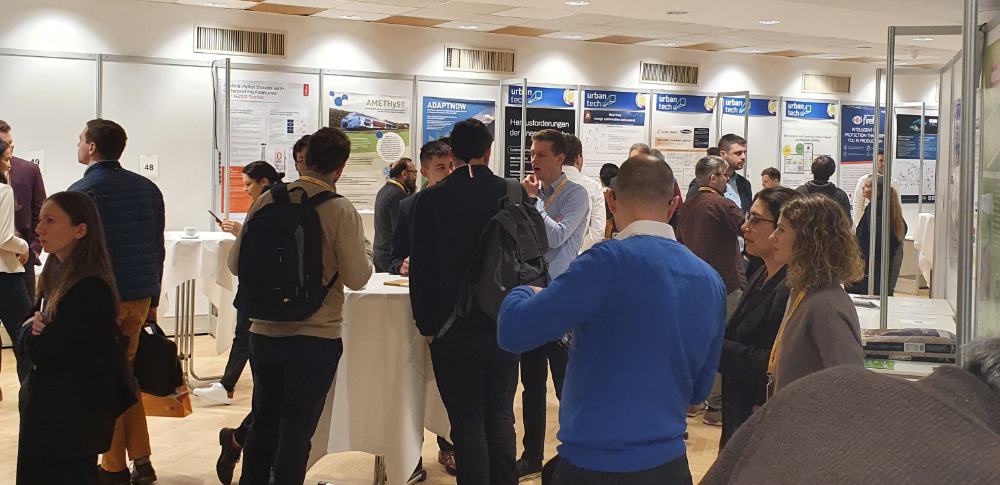
- WSED event 2024@WSED 2024
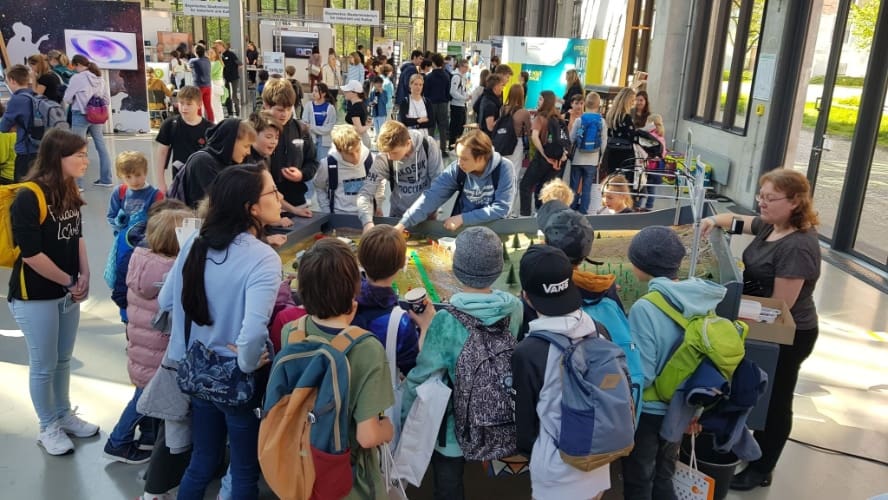
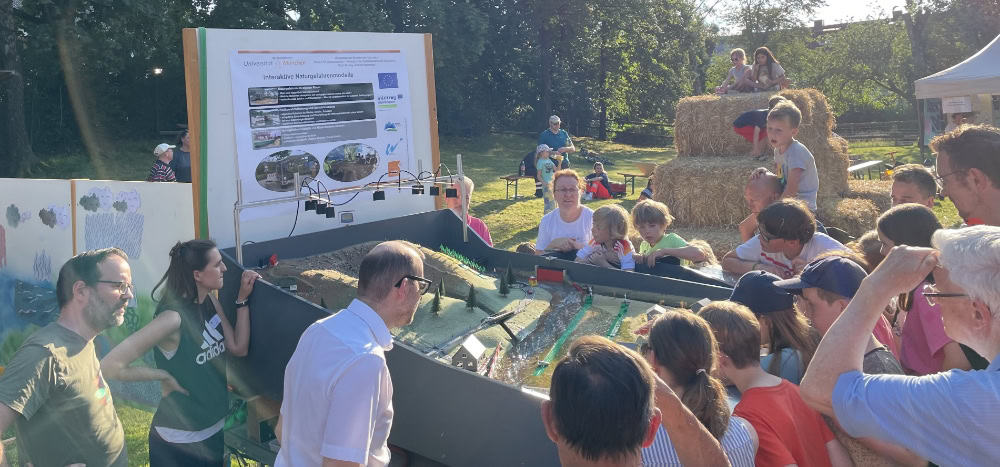
- Munich-Science-Days-FORSCHAUniversity of the Bundeswehr Munich
- Bundeswehr-University-Munich@unibw.de
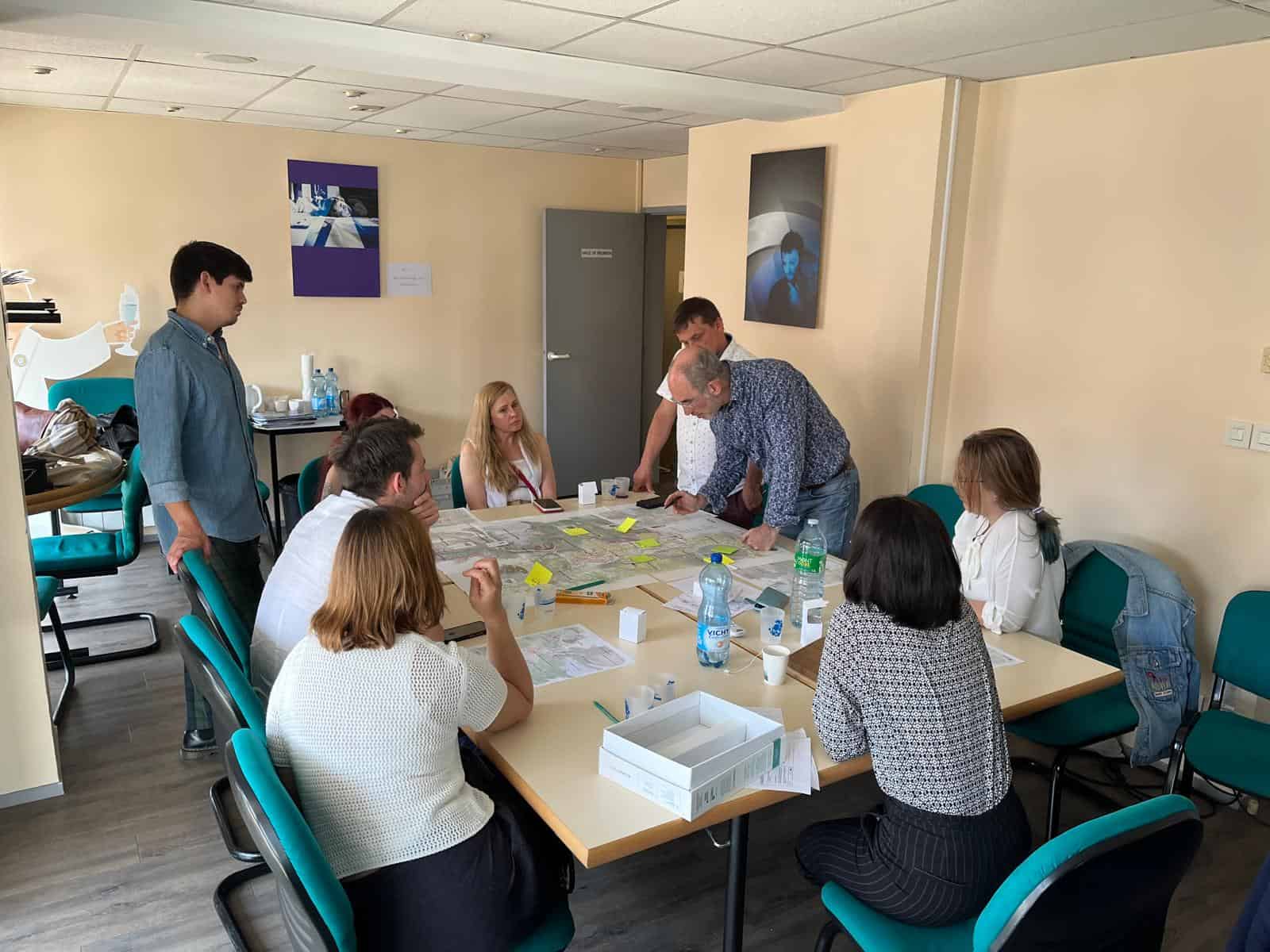
- GreenSPAS study visit in France
- ADAPTNOW project partners
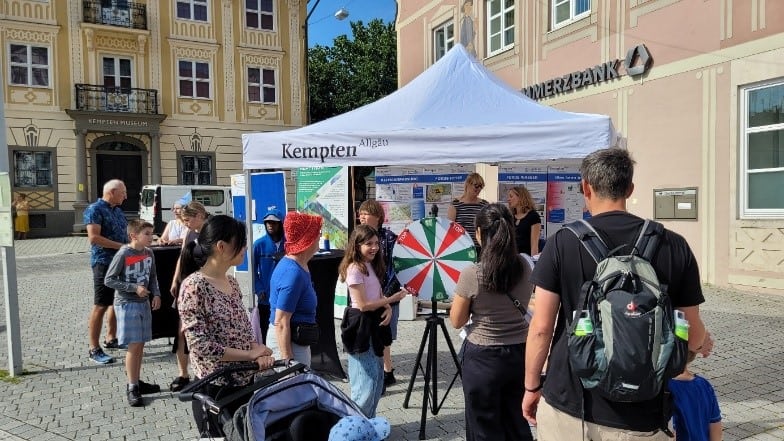
- Heat action summer in Kempten:sun detectives and drinking fountains@eza!-Klimaschutz
Downloads
-
Activity A.1.1: Identifying Climate Adaptation and Risk Mitigation Instruments Supporting Local Action - Deliverable provides an inventory of climate adaptation and risk management tools to support knowledge exchange among HAET stakeholders. The inventory was developed during RP1 and RP2 and will be continuously updated throughout the project. The identified tools are available in the attached Excel file and on the online CAPA platform.Download
-
Activity A.1.2: Mobilizing local actors and establishing cooperation frameworks_short version - This deliverable provides insights into local planning processes, existing climate adaptation and risk management practices, and the support needs of the pilot areas. Based on stakeholder engagement and a common assessment framework, it identifies local capacities, gaps, and priorities to support more agile, participatory, and integrated climate adaptation planning. The findings provide the basis for the design and implementation of pilot actions and climate support services within the project.Download
-
Topic briefs suited to regional and local actors for integrated planning: examples, support tools and capacity building programmes.Download
-
Activity A.2.1: Pilot design - This deliverable presents the pilot action plans of the seven target regions aimed at improving local climate adaptation planning processes. Based on the results of WP1 activities, each pilot focuses on selected hazards and sectors and applies participatory and integrated approaches involving local stakeholders. The report outlines the objectives, hazards, sectors, tools, practices, and methodologies of the planned pilot actions.Download
-
Activity A 2.2 Pilot Implementation and assessment - This deliverable reports on the implementation and results of the pilot actions in the seven target regions. It summarizes the applied methods, achieved outcomes, and recommendations for transferring project results to other regions.Download
-
Activity A.2.3: Designing regional climate support services - This deliverable presents the planned climate support services to be developed by project partners to support public authorities in climate adaptation. The services focus on capacity building, data sharing, financing, risk management, and awareness raising, and will be promoted at the regional level.Download
-
Activity A.2.4: Implementing and promoting climate support services - This deliverable summarizes the climate support services developed and implemented in the partner regions to support public authorities in climate adaptation. It presents the achieved results and the promotion of these services at the regional level.Download
-
The Open Call to select Promoting Organizations in Alpine territory more informations.Download
-
The ADAPTNOW project supports climate adaptation and risk management in Alpine regions through the exchange of knowledge, tools, and good practices. Selected Promoting Organizations participated in bilateral exchanges, study visits, and expert support activities to strengthen local adaptation capacities across the Alpine region.Download
-
In the face of increasing climate risks and environmental challenges, municipalities and regional stakeholders need effective strategies to enhance resilience, protect communities, and ensure sustainable development. Nature-based Solutions (NbS) have emerged as a key approach, offering cost-effective and multifunctional benefits for climate adaptation and disaster risk reduction. However, implementing these solutions at the local level requires clear guidance, practical knowledge, and an understanding of best practices.Download
-
In order to strengthen their adaptive capacity, local municipalities must identify methodologies and strategies able to promote and facilitate the development of the climate adaptation measures within the territories, verifying their implementation feasibility and identifying appropriate financial and funding mechanisms to finance the implementation of climate adaptation measures.Download
-
Climate Change Adaptation must not stop at isolated actions carried out by municipalities and technical or infrastructure stakeholders, it must be integrated across the targeted community to maximize its impact. Climate Change Adaptation relies on awareness and knowledge of Climate Hazards, collective resilience and collaboration. Thus, a series of Community Engagement and Communication methods are shared in this topic brief to include alongside any adaptation measure adopted by local municipalities.Download
-
The Alpine region faces increasingly complex climate-related challenges, where extreme weather events often trigger secondary and cascading impacts, such as landslides, floods, and infrastructure failures. These interconnected risks threaten both communities and ecosystems. This workshop aimed to build a shared understanding of extreme, compound, and cascading events, identify gaps in current risk management, and develop tailored strategies to enhance local preparedness and communication.Download
-
Welcome to the first edition of the ADAPTNOW Newsletter. In these pages we would like to introduce you to our project and its activities, our project partners and some of our news.Download
-
Welcome to the second edition of the ADAPTNOW Newsletter. In these pages we would like to introduce you to our project pilot areas, implemented activities and some of our news.Download
-
Welcome to the third edition of the ADAPTNOW Newsletter. In these pages we would like to highlight some achievements of our project partners and some of our news.Download
-
Welcome to the fourth edition of the ADAPTNOW Newsletter. This newsletter contributes to the commitment towards a more sustainable, carbon neutral, climate resilient and green Alpine region and we hope that you find it just as interesting as we do.Download
-
Welcome to the fifth edition of the ADAPTNOW Newsletter. In this issue, we’re excited to share key milestones and inspiring updates from across our partner regions. From local training initiatives and award-winning climate planning approaches, to hands-on pilot actions in forestry, tourism, and urban planning — the ADAPTNOW project continues to make meaningful progress toward a more resilient, sustainable, and climate-adaptive Alpine region.Download
-
This final edition of the ADAPTNOW newsletter marks the conclusion of three years of collaboration aimed at strengthening climate adaptation capacity in highly affected and exposed territories of the Alpine region. Throughout the project, ADAPTNOW has developed a range of tools, resources, and practical solutions that remain available to support stakeholders in addressing the growing challenges of climate change adaptation.Download
-
Climate change-induced extreme events and natural hazards pose increasing risks to the Alpine region, affecting ecosystems, communities, and infrastructure. As climate change also influences risk perception, awareness, and behaviour, strengthening adaptive capacity requires improved risk management, stakeholder participation, and effective communication. Addressing these challenges through data-based approaches, participatory decision-making, and climate adaptation and risk mitigation tools is essential to enhance resilience in the Alpine region.Download
-
Around 700 students in Vorarlberg are participating in an EU project to monitor indoor temperatures in their classrooms. Read a story.Download
-
Periods of summer heat are becoming more frequent. Hot days are particularly unpleasant if your own home offers no protection and the warm air builds up in the living spaces. Read more.....Download
-
The ADAPTNOW project has contributed a major insight to international climate research. Led by Ivo Baselt (University of the Bundeswehr Munich), the research team applies the well-known Kübler-Ross model of the five stages of grief to societal responses to climate change – from denial and anger to bargaining, depression, and ultimately acceptance.Download
- Download
- Download
- Download
- Download
- Download
- Download
- Download
- Download
- Download
- Download
- Download
- Download
-
Six Policy Recommendations have been developed in the context of the ADAPTNOW project, which are described in this document.Download
-
This booklet summarises the six policy recommendations emerging from the project’s work, highlighting practical actions for stronger and more resilient Alpine communities.Download
- Download
- Download
Project calendar