
Overview
Textile value chains are amongst the most polluting industries, with a massive potential for CO2 reduction. When we approach the rich textile heritage of the Alps, we see it brimming with specific aesthetics and know-how based on values of circularity and sensitivity to local resources.
So, as consumers grow increasingly critical of globalized value chains and turn to more sustainable lifestyles, the Alpine heritage could contribute to re-territorialize the local textile value chains disrupted by global sourcing and offshore production while boosting natural local resources and projecting an attractive image that justifies the price point of Alpine products.
With its 12 partner organizations from 6 Alpine countries, AlpTextyles gathers precious textile ecosystems to create a common ground of expertise in research and innovation, foster regional development and job creation, and safeguard cultural heritage and circularity.
Factsheet
- 2021 – 2027
- Carbon neutral and resource sensitive Alpine region
- SO 2.2 - Promoting the transition to a circular and resource efficient economy
-
- AG3 Labour market, education and training
- AG6 Natural resources
- 11/2022
- 10/2025
- 2.979.694 EUR
- 1.970.770 EUR
Partners
- Lead partner
- Switzerland
- Ostschweiz (CH05)
- Poschiavo
- Cassiano Luminati
- cassiano.luminati@polo-poschiavo.ch
- Slovenia
- Zahodna Slovenija (SI04)
- Ljubljana
- Katarina Šrimpf Vendramin
- katarina.srimpf@zrc-sazu.si
- France
- Rhône-Alpes (FRK2)
- Ecully
- Diego Rinallo
- rinallo@em-lyon.com
- Slovenia
- Zahodna Slovenija (SI04)
- Škofja Loka
- Katarina Sekirnik
- rokodelskicenter@visitskofjaloka.si
- Italy
- Lombardia (ITC4)
- Milano
- Maria Agostina Lavagnino
- maria_agostina_lavagnino@regione.lombardia.it
- Italy
- Lombardia (ITC4)
- Milano
- Mauro Sampellegrini
- sampellegrini@confindustriamoda.it
- Italy
- Piemonte (ITC1)
- Torino
- Alessandro Bevilacqua
- bevilacqua@bellissimo.it
- Italy
- Lombardia (ITC4)
- Milano
- Paolo Meroni
- p.meroni@istitutomarangoni.com
- France
- Rhône-Alpes (FRK2)
- Ecully
- Robin Oddon
- international@techtera.org
- Austria
- Vorarlberg (AT34)
- Schruns
- Michael Kasper
- m.kasper@montafoner-museen.at
- Switzerland
- Région lémanique (CH01)
- Conthey
- Audrey Kuhn
- audrey.kuhn@mediplant.ch
- Germany
- Mittelfranken (DE25)
- Erlangen
- Tobias Chilla
- tobias.chilla@fau.de
- 46.3251697510.06081852952586
- 46.0476100514.504711191204319
- 45.78668264.7647662
- 46.1639070514.306674164430577
- 45.48604249.1959558
- 45.47817529.1656178
- 45.06775517.6824892
- 45.42766139.0495351
- 45.78642114.7713117
- 47.075008559.911752486928934
- 46.22503127.2961027
- 49.59787210000000411.004528231227573
Outcomes
-
Concept for the development of heritage-sensitive & circular textile craft & Industrial products through cross-border matchmaking
DownloadThis outcome introduces a framework to guide the development of heritage-sensitive and circular textile products, rethinking sourcing, design, and production through Alpine knowledge, local fibers, and living heritage practices.- Introduces a conceptual and operational framework that challenges conventional textile sourcing and production models, proposing alternative logics better suited to heritage-based and circular product development.
- Reframes Alpine textile heritage as a living system of materials, skills, and relationships, showing how historically rooted practices remain relevant to contemporary sustainability challenges.
- Draws on analyses and pilot actions from the AlpTextyles project to support textile SMEs, intermediaries, and cultural actors in aligning innovation, local resources, and territorial value creation. Producers engaged in sustainable and heritage-based textile practices often face challenges in making their value visible and comprehensible to consumers. Traditional labelling rarely conveys the cultural, ecological, or territorial depth embedded in these products. This outcome therefore addresses said gap by identifying effective communication strategies, analyzing consumer perceptions of origin and sustainability claims, and showcasing innovative approaches such as narrative labelling, crowdfunding, and symbolic adoption.
-
Communicating the value of heritage-sensitive, circular, cross-border textile products to consumers: The format and analysis
DownloadThis outcome explores how Alpine textile producers can communicate the value of circular, heritage-based products through storytelling, collaborative value chains, and education — positioning marketing communication as a key enabler for consumer engagement and sustainable growth.- Producers engaged in sustainable and heritage-based textile practices often face challenges in making their value visible and comprehensible to consumers. Traditional labelling rarely conveys the cultural, ecological, or territorial depth embedded in these products. This outcome therefore addresses said gap by identifying effective communication strategies, analyzing consumer perceptions of origin and sustainability claims, and showcasing innovative approaches such as narrative labelling, crowdfunding, and symbolic adoption.
- Overall, findings underline the importance of narrating heritage and circularity, framing cross-border collaborations as shared Alpine strengths, and combining certifications with message-driven communication. Beyond promotional goals, long-term consumer education emerges as essential to ensuring that circularity and heritage-based products are properly understood, valued, and cared for.
- By linking storytelling, education, and innovation, this work offers practical insights for small-scale producers and community actors aiming to connect tradition, territory, and sustainability in meaningful, resonant ways.
-
Communicating the value of heritage-sensitive, circular, cross-border textile products to consumers: Narrative Labels & Guidelines
DownloadAlpTextyles Narrative Labels present the stories behind Alpine textiles — connecting producers, fibers, landscapes, and traditions. They sit as complementary tools to legally-required ones, to promote transparency and storytelling and reveal the cultural and ecological value in every thread.- Based on the key findings from academic consumer research, AlpTextyles Narrative Labels are the result of the collaborative work on Alpine textile heritage — a three-year journey carried out by 12 partner organizations also drawing from research in history, aesthetics, and mapping and on-the-ground pilot actions.
- They are freely available for download on Canva in English, French, German, Italian, and Slovene.
- The narrative label is a complementary tool that sits alongside the legally-required product label. While mandatory labels provide basic technical data, the narrative label offers a richer story: in the case of textile products, it gives insight into the producers, the fibers and techniques used, the local breeds and plant varieties they are made from, the landscapes involved, and the values that shape the process. What’s often missing from conventional labels is the human and humane dimension: the care, intention, and cultural heritage that go into making a product. These specifications may not be mandatory, but they are essential. They help people understand what they are truly choosing when they make a purchase — the justify its price and help tell the story of materials, practices, and identities rooted in place.
- This is why AlpTextyles believes that consumers should be offered the tools to distinguish, for example, whether a sweater is made with locally sourced wool or with imported fibers, or whether a product respects circular practices. AlpTextyles believes that the quality of a textile — much like that of food — is first and foremost a story.
- So, why develop this series of narrative labels? To support transparency, amplify local voices, and make visible the cultural and ecological value embedded in every thread.
- Alongside the Narrative Labels, AlpTextyles also developed a practical Guidelines document to support SMEs, organizations, craftspeople, and anyone interested in adopting this tool in using and customizing the labels to best fit their needs. The Guidelines include printing specifications, graphic design suggestions, and examples of content that can be produced.
- Recognizing that language plays a key role in making communication tools widely accessible and adoptable by local organizations across the Alpine region, both the Narrative Labels and the Guidelines are available in English, French, German, Italian, and Slovene.
-
Innovative formats for the cross-border trainings of youth, students, and professionals on the living textile heritage of the Alps and sustainable and circular value chains
Among the key formats are physical activations —including summer schools, community calls, and the participation of youth representatives in major events and conferences— as well as digital tools such as a MOOC, a dedicated Metaverse, and a series of video documentaries and scrapbooks.Physical activations *- Alpine Icon Textile Summer School
- AlpTextyles Summer School
- Reviving flax cultivation and linen production | Flax workshop
- Coperta Poschiavina | Community Call
- Portraits of a Textile Past | Community Call
- Cultural Transhumance | Community engagement event
- Community Festival | Multi-day, multi-focused Event
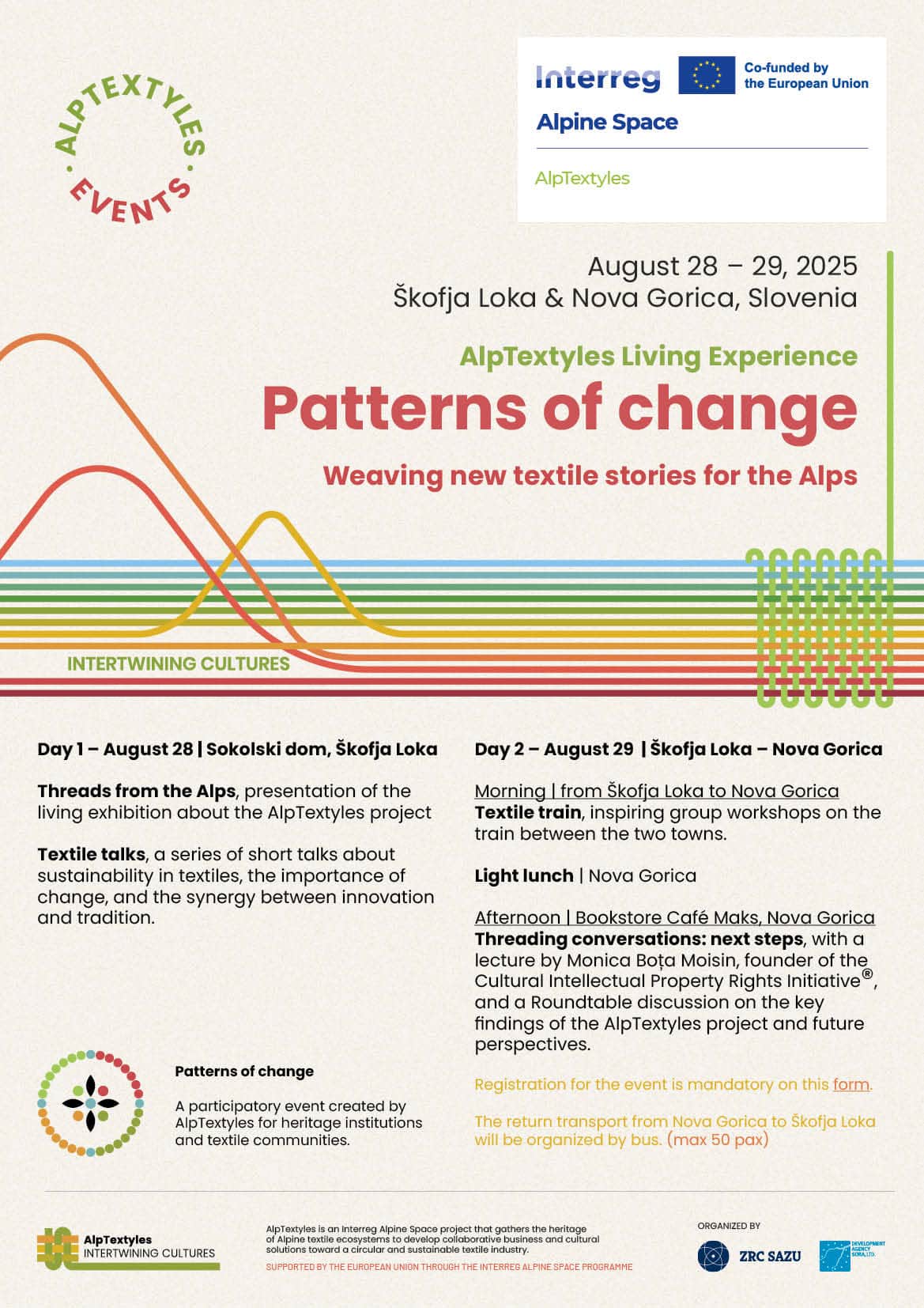
- Living Experience | Multi-day, multi-focused Event
- Fashion Collections Design
- Alpine Space Programme 25th Anniversary Event
- AlpTextyles Project Stand at Milano Unica 2025
- Massive Online Open Course
- Metaverse & Virtual Showroom
- Video & Digital Handicrafts Manual on Embroidery
- Digital Scrapbooks
- Digitized Textile Archive: Poschiavo (Switzerland)
- Digitized Textile Archive: ZRC SAZU (Slovenia)
- Digitized Textile Archive: Montafon (Austria)
-
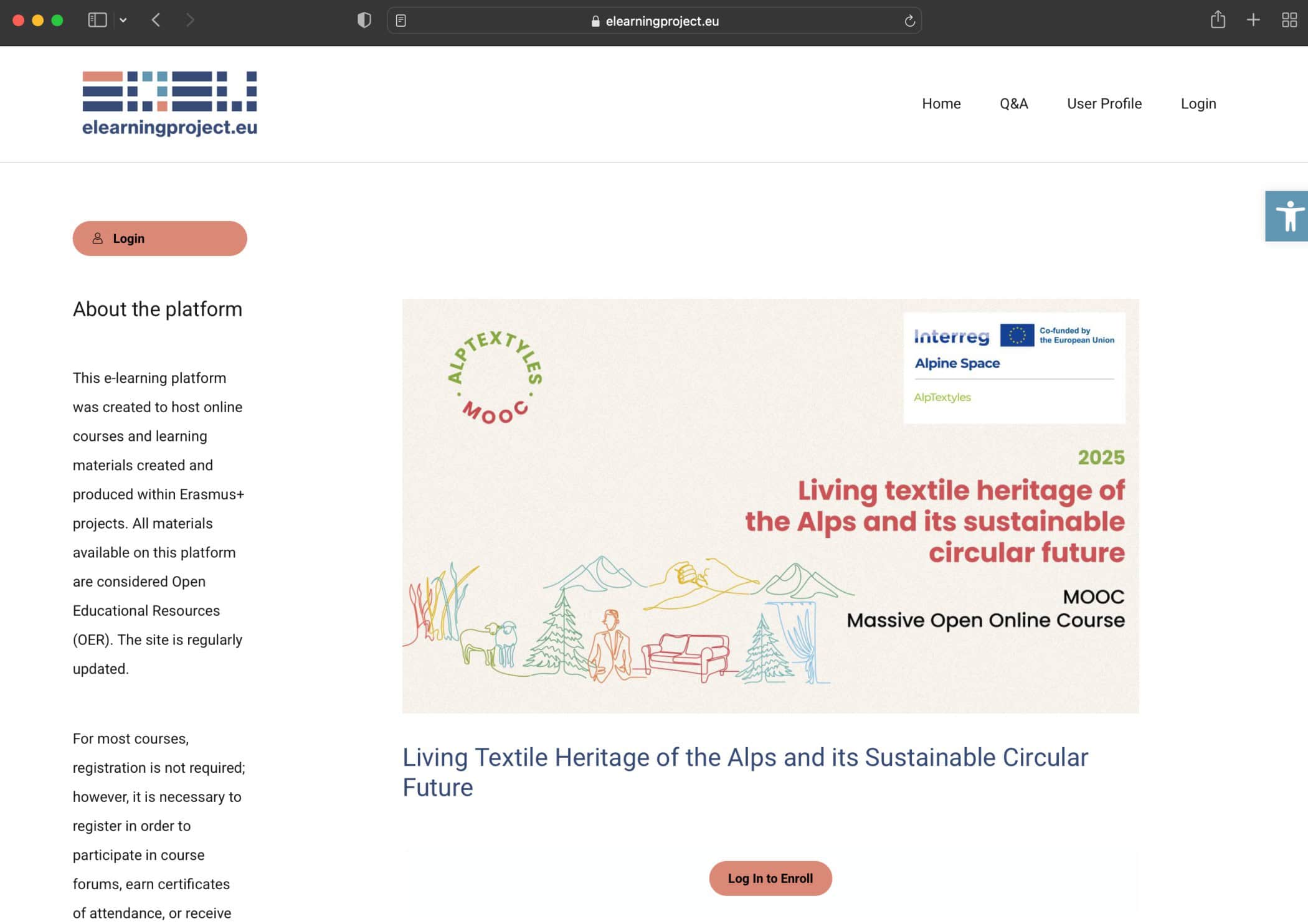
Innovative digital formats and activations: AlpTextyles’ Massive Online Open Course – MOOC “The living textile heritage of the Alps and its sustainable circular future”
WebsiteAlpTextyles’ MOOC is a free, online, and open-source course presenting sustainable, circular, and place-based textile practices in the Alpine region. It explores historical techniques, digitized archives, and innovative approaches to support cultural heritage, local economies, and capacity building.- Drawing on the project’s research and pilot actions, the course highlights key disciplines, methods, and avenues of research, case studies, and approaches that have shaped AlpTextyles’ journey.
- Designed for students, educators, professionals, designers, artisans, policy-makers, SMEs, and enthusiasts in textiles, sustainability, and cultural heritage, the MOOC demonstrates how historical techniques, aesthetic traditions, mapping strategies, and digitized archives can be reactivated to support sustainable innovation, local economies, and institutional development. No prior expertise is required.
- The course aims to deepen understanding of the Alpine textile environment and explore how historical knowledge and contemporary practices converge to inspire cultural production, education, and circular economy strategies. It fosters capacity building and reconnects regional resources and traditions with innovative, digitally enhanced approaches, creating a space where knowledge meets practice and new ideas can emerge.
- The course-specific objectives include: • • Analyze the historical, aesthetic, and cultural aspects of Alpine textile traditions and understand their intrinsic value; • • Interpret mappings of textile data and networks, recognizing key actors, institutional dynamics, and regional specificities; • • Explore and activate the living textile heritage, including crafts, techniques, and community-based practices; • • Understand how digitized textile archives can be used across institutions, education, and creative sectors; • • Apply circular economy principles to textile production chains—such as reuse, material regeneration, and traceability; • • Design cultural, educational, or creative initiatives rooted in sustainability and local Alpine heritage.
- The course consists of 6 modules: • • Module 1: The Textile History of the Alps • • Module 2: The Living Textile Heritage of the Alps and Heritage Sensitive Products • • Module 3: Textile Economies in the Alps • • Module 4: The Alpine Textiles Aesthetics • • Module 5: The Digital Archives • • Module 6: Raising Awareness on Circularity.
-
Innovative digital formats and activations: AlpTextyles’ Metaverse “Materic Knowledge in a Virtual World”
WebsiteAn immersive Metaverse experience where Alpine textile heritage meets contemporary design. Digitized archives and Istituto Marangoni creations become digital twins, connecting tradition and innovation through storytelling, exploration, and creative exchange.- An immersive space where garments from the archives meet contemporary designs by Istituto Marangoni students — all reimagined as digital twins that transcend the physical frame. Heritage pieces stand side by side with innovative creations, allowing users to experience Alpine material culture in motion and witness how past craftsmanship continues to inspire future design.
- The Metaverse becomes a dynamic platform for exploration, storytelling, and experimentation — a place where traditional textiles are preserved, reinterpreted, and amplified through digital expression. Here, creative narratives unfold in three dimensions: weaving together history, technology, and imagination. This virtual encounter extends the reach and relevance of heritage, transforming it into a living dialogue between past, present, and future.
- Within this immersive environment, visitors can navigate through digitized archive garments and the capsule collection designed by Istituto Marangoni students, exploring the intersections between innovation and tradition. Among the interactive features is the opportunity to access the project’s MOOC directly from within the Metaverse, along with a selection of videos, images, and digital materials. Together, these experiences offer a seamless blend of learning, discovery, and creative exchange — an open space where Alpine textile culture continues to evolve and connect across generations and borders.
-
Heritage-sensitive and circular Alpine textile value chains: Orientation Guide
DownloadA synthesis of three years of AlpTextyles collaboration, offering SMEs and support organizations a decalogue for building circular, heritage-sensitive textile value chains that combine innovation, sustainability, and Alpine identity.- This AlpTextyles outcome synthesizes three years of research and collaboration across six Alpine countries to support the development of circular, heritage-sensitive textile value chains. It provides small and medium enterprises (SMEs) and business support organizations with concrete guidance on how to combine sustainability, innovation, and cultural identity in the transition toward post-carbon economies.
- Built around a decalogue of ten key principles, it translates the project’s extensive fieldwork and exchanges into practical insights and case studies. These principles address consumer expectations, market relevance, heritage protection, local value chains, policy alignment, and innovation, while also highlighting transmission and inclusion as drivers of continuity and renewal.
- By bridging artisanal and industrial perspectives —and connecting textiles with related fields such as tourism, education, and territorial development— the outcome demonstrates how Alpine know-how can foster resilient, competitive, and community-driven economies. It invites stakeholders to rediscover the Alpine textile heritage as a living resource for sustainable and circular transformation.
-
Heritage-sensitive and circular Alpine textile value chains: Heritage Safeguarding Toolkit / RAS
DownloadA practical toolkit distilled from the AlpTextyles project, helping communities identify, safeguard, and transmit Alpine textile heritage while connecting traditional know-how with creativity, education, tourism, and sustainable market opportunities.- This AlpTextyles outcome brings together the knowledge generated through project activities and the long-standing expertise of its partners in safeguarding Alpine textile heritage. Conceived as a practical, community-oriented handbook, it supports those who carry living textile traditions in identifying, documenting, and caring for both the tangible and intangible elements of their heritage.
- The toolkit provides clear steps for preserving objects, techniques, and stories; strengthening local capacity; and communicating heritage within and beyond the community. It highlights how traditional know-how can inspire contemporary creation, cultural tourism, and education, while offering guidance on the legal and sustainable presentation of heritage-based products in today’s markets.
- Designed for local communities, schools, associations, researchers, and artisans, the handbook encourages confidence, continuity, and collective engagement. It invites users to view heritage not as something fixed in the past, but as a shared resource for innovation, connection, and intergenerational transmission.
- By activating curiosity and creativity, this outcome ensures that the knowledge of masters, the stories of ancestors, and the richness of local practices continue to thrive — in workshops, exhibitions, digital content, and the hands of new generations.
-
Heritage-sensitive and circular Alpine textile value chains: Heritage Safeguarding Toolkit / Regione Lombardia
DownloadAn outcome offering practical guidance for communities and policymakers seeking to protect Alpine textile knowledge through flexible, culturally grounded, and community-driven approaches.- Built on comparative legal analysis and participatory work in Valle Camonica, Italy, this outcome reframes “protection” not as ownership or exclusion, but as recognition, care, and continuity. The toolkit’s ten guiding principles emphasize that law must adapt to living heritage and how communities themselves can define meaningful, sustainable forms of custodianship.
- A conceptual and participatory framework for understanding protection as a relational practice. By combining legal reflection with hands-on engagement, the document highlights how protection can move beyond ownership and exclusivity toward responsibility, intergenerational transmission, and collective custodianship. Participatory exercises with textile communities revealed that “protection through description” —through documentation, labeling, and narrative protocols— is the most effective way to strengthen collective identity, articulate values, and engage with external stakeholders while keeping knowledge open and shared.
- Hybrid legal approaches that respect living heritage. It also demonstrates how existing frameworks, including intellectual property, sui generis systems, and international heritage instruments, can inform flexible, context-sensitive legal solutions that recognize the evolving, communal nature of traditional knowledge rather than imposing rigid categories.
- Preserving the contexts of knowledge transmission. Protection is not limited to techniques or objects but extends to the environments where learning happens. Workshops, community spaces, and shared gatherings play a critical role in sustaining practices, fostering governance, and supporting continuity across generations.
- Insights from diverse legal and cultural perspectives. Comparative study, including non-Western models, emphasizes alternative ways of valuing traditional knowledge as relational, process-based, and embedded in community life, offering inspiration for policies that honor both heritage and contemporary innovation.
- Guidance for future community action and policy. The toolkit provides practical principles for designing protection tools that respect community diversity, support cultural self-determination, and balance openness with recognition. It encourages seeing heritage as a shared resource for creativity, connection, and sustainable development rather than a static asset.
-
Heritage-sensitive and circular Alpine textile value chains: Policy brief
DownloadA Policy Brief connecting Alpine textile heritage with European sustainability policies, offering recommendations to help regional and EU actors support circular, heritage-sensitive value chains across the Alpine area.- This Policy Brief offers recommendations to support the development of sustainable and heritage-sensitive textile value chains in the Alpine region. Drawing on AlpTextyles’ mapping and pilot activities, it connects local textile traditions and resources with European policy frameworks, including the EU Strategy for Sustainable and Circular Textiles and the forthcoming Geographical Indications for craft and industrial products.
- The document underlines how Alpine textile heritage —anchored in natural fibers, local aesthetics, and long-standing circular practices— can contribute to the EU’s sustainability goals while strengthening regional identity and economic resilience. It encourages cooperation among EUSALP Action Groups, regional authorities, and industry actors to explore synergies, share good practices, and design coherent strategies supporting re-localized and innovative production models.
- By situating Alpine experiences within broader European transitions, this Policy brief aims to inform ongoing discussions on sustainable textile policies and highlight the Alpine region’s potential as a meaningful contributor to a circular and heritage-aware textile future.

Pilots
-
Cultural transhumance: An innovative format to raise awareness about and build capacity on Alpine textile heritage and circular textile design
DownloadTransumanza Culturale 2024:
Rediscover the path of wool
Transumanza culturale (Cultural transhumance) was conceived by Regione Lombardia as a grassroots event to connect the local community with and introduce the younger generation to the stakeholders that contribute to the sustainability of the wool supply chain — from shepherds to local associations that have reactivated traditional artisanal skills and restored value to wool, innovating products and highlighting their sustainability and circularity to consumers.
The video documentary
In this pilot, AlpTextyles brought together the pastoral world and the public for a day-long journey. The event featured a walk with a flock from morning till dusk along the shepherd’s path, allowing participants to meet firsthand the people involved in the wool supply chain of Valle Camonica, and produced various communication materials: a program/diary for participants to fill in and bring home, posters, a flag, and a video documentary — available on AlpTextyles’ YouTube channel.
The event also brought attention back to the public and local and supra-local governance of the theme of wool, its washing, its transformation along an ethical and circular supply chain, and to aggregate good practices for the recovery of Alpine sheep species, wool processing, valorization of women labor, and recognition of artisanal textile products. -
Alpine Icon Textile Summer School: An innovative format to raise awareness about and build capacity on Alpine textile heritage and circular textile design
DownloadAlpine Icon Textile Summer School 2024:
Rediscovering mountain threads
Regione Lombardia and Ca’Mon cultural association conceived this summer school as a learning experience rooted in the living textile heritage of the Alps:- to create an opportunity for hands-on training with craftswomen, and encourage firsthand experimentation and application of traditional spinning and weaving techniques;
- to intertwine artistic and creative skills with technical know-how, allowing students to immerse themselves in a design thinking process towards the development of a new idea;
- and to promote the exchange and blending of Italian and foreign experiences in the Alpine textile supply chain, initiating a community best practice that can be repeated over time and across the Alpine region.
The video documentary | Italian
The starting point
The textile heritage of the Alps consists of yarns of natural fibers of wool, flax, and hemp, utilized to make trousseaus, garments, and textile objects for home and farm work. In a dimension of self-sufficiency, every action was conceived and carried out by hand: from spinning to weaving, from dyeing to printing, from needlework to embroidery, from tailoring to reuse. The logic is, in essence, one of sustainability and circularity.
The guiding principles
A kind of innate sustainability connoted every choice in the daily life of Alpine communities, founded on a balanced relationship with the natural environment and its resources. Looking at this heritage from today’s perspective, we find a wealth of symbols and matrices, a complex and layered iconographic quality to investigate and reinterpret through the tools of contemporary culture.
The goal
Reinterpret traditional cultural values: circularity, multi-functionality, and respect for community processes. The 2024 edition, Alpine Icon, was dedicated to rediscovering and reinventing the iconography of the Alps, exploring new ways in which symbols of textile heritage can be detected and repurposed for the contemporary world.
The students’ artifacts and the Alpine Icon Patch
At the end of the courses, students produced a series of handwoven artifacts reinterpreting the Alpine Icon theme. They also crafted an embroidered patch based on the design provided — an object to be treasured, a sign of recognition of one’s individuality but also of belonging to a new collective tradition.
Photo gallery of the artifacts at the course, September 2024
Photo gallery of the artifacts as showcased at Milano Unica, July 2025 -
AlpTextyles Textile School: An innovative format to raise awareness about and build capacity on Alpine textile heritage and circular textile design
AlpTextyles Textiles School 2024-2025:
Learning through the loom
The vision
Students from the Faculty of Design in Ljubljana took part in a series of training modules and masterclasses shaped by Alpine dedicated to traditional textile techniques and contemporary textile design. Launched by ZRC SAZU and the Development agency Sora and led by seasoned artisans and designers, the training introduced historic materials and techniques while inviting new interpretations. It offered more than skills: it opened space for heritage to inspire innovation, as young designers developed meaningful ways to connect past and future through textiles.
The goal
Raise awareness and build the capacity of future textile professionals by connecting Alpine textile heritage, sustainable innovation, and circular design principles. Through hands-on workshops, academic lectures, and creative experimentation, students learnt to interpret centuries-old know-how within a contemporary framework — translating tradition into modern design practice.
The video documentary | English
The video documentary | Slovene
The program
The Textile School combined introductory lectures, thematic modules, and practical masterclasses, offered across the three years of the design curriculum.- Introductory module | Held during the New European Bauhaus Days at the ROG Center in Ljubljana, the opening session introduced students to the Alpine textile landscape through lectures on heritage, circular economy, aesthetics, and the connection between design and haute couture.
- Masterclass modules | Through small-group workshops in Škofja Loka’s textile hubs and studios, students learned directly from experienced mentors. Modules covered wet felting, weaving, natural dyeing with indigo, blueprinting, and heritage-inspired tailoring, linking traditional skills with contemporary design thinking.
The students’ artifacts
Advanced students also developed site-specific textile installations for the BIEN Textile Biennial, translating material and spatial experimentation into public creative outcomes. The artifacts were also part of the Living Exhibition showcased in Škofja Loka for AlpTextyles’ Living Experience of August 2025. -
Digitized archives: Testing digital technology for documenting and broadening access to Alpine heritage textiles for the young generations
Digitizing and making textile heritage available online, open source, for all.
From the beginning, AlpTextyles set out to safeguard and promote Alpine textile heritage through digitization, making historical collections more accessible to younger generations, researchers, and industry professionals. By fostering collaboration between communities and public institutions, we created a platform for dialogue, knowledge sharing, and synergy across the Alpine Region and beyond.
At the heart of this effort is Istituto Marangoni, which partnered with Europeana, the European digital platform for cultural heritage, ensuring that digitized collections are preserved and widely accessible to the public. Drawing on case studies and lessons learned and involving AlpTextyles’ partners Polo Poschiavo, ZRC SAZU, and Stand Montafon, the project also provides practical guidance for cultural institutions and textile enterprises on how to digitize and share heritage textiles effectively.
The digitization process:
• Included a pilot phase to identify capable partners;
• Tackled challenges such as intellectual property and rights management; and
• Defined effective digitization strategies balancing technical, curatorial, and strategic considerations.
Selected archives were then digitized, showcasing the methodologies and tools used.
Moving memory: three archives, one Alpine tapestry.
Poschiavo | Switzerland
ZRC SAZU | Slovenia
Montafon | Austria
Click on each archive to explore Alpine practices, patterns, and histories. Together, they testify to the region’s rich cultural heritage — a living source of inspiration for contemporary design and a shared platform where Alpine memory continues to move and evolve.
Definition
Digital archives are systematically organized collections of data, documents, photos, audio, video, or other digital content, accessible through computer systems.
Main goals
• Long-term preservation
• Organization of information
• Easy access to materials that might otherwise be lost due to decay or limited accessibility
Challenges
• Technical issues: data corruption, outdated formats
• Continuous maintenance for security and updates
• Copyright and privacy considerations
Reminder
Digital archiving is not a one-time task but an ongoing process requiring adaptation to technological developments.
Final report
A step-by-step framework for preserving and disseminating textile heritage across Europe.
-
Digitization of textile techniques and skills: Testing digital technology for documenting and broadening access to Alpine heritage textiles for the young generations
DownloadOne of the most effective ways to keep living heritage vibrant and ensure its transmission to future generations is through the digitization of traditional knowledge and know-how — from natural dyeing methods to centuries-old textile techniques and craftsmanship skills.
As part of its commitment to preserving and sharing Alpine textile culture, AlpTextyles has developed a collection of instructional manuals born from an initial phase of case studies, field research, and community exchange. These manuals provide practical guidance and insights across a range of subjects, offering both inspiration and hands-on tools to craftspeople, educators, and anyone interested in sustaining the legacy of Alpine textile traditions in a contemporary context.
ZRC SAZU & RAS | Handicraft manual on embroidery
-
The Young Designers Collections (YDC): Woven to Wear
DownloadProject. Scrapbook. Video-series
Woven to Wear is a special series of capsule collections developed within AlpTextyles by Istituto Marangoni, Stand Montafon, and Regione Lombardia. Conceived by young designers working hand-in-hand with Alpine communities and artisans — the custodians of traditional know-how and living heritage — these collections embody a living dialogue between past and future.
Through a shared creative methodology, each designer encounters, questions, and reinterprets centuries-old techniques and locally sourced materials with a contemporary vision. The result is a constellation of original pieces where innovation meets tradition, and where heritage finds new forms of expression — mostly made with AlpTextyles’ cross-border fabric.
Contributing Designers
Students from Istituto Marangoni
Francesco Ferrero with Regione Lombardia
Shuzo Matsuhashi and Bruno Motter with Stand Montafon
The YDC Scrapbook: Woven to Wear
To celebrate and preserve the richness of the work produced during the project, AlpTextyles has created a dedicated Scrapbook — a booklet showcasing the capsule collections of the young designers, alongside a special focus on the artworks developed within the Alpine Icon Summer School and the AlpTextyles Textile School.
Fashion Capsules:
— Coat-turned-knitted-dress by Shuzo Matsuhashi (Stand Montafon)
— Capsule by Istituto Marangoni
— UMID – Una Montagna Indosso by Francesco Ferrero (Regione Lombardia)
— 0 (Zero) by Bruno Motter (Stand Montafon)
Artworks:
— Artworks by Alpine Icon Summer School (Regione Lombardia)
— Artworks by AlpTextyles Textile School (RAS)
The YDC Video-series: Wacth it here
This video trilogy highlights the young designers who took part in AlpTextyles: a group from Istituto Marangoni, a collaboration between Francesco Ferrero with Regione Lombardia, and another with students from Stand Montafon. Each contribution follows the same guiding approach: younger generations meet with Alpine communities and their expertise — bearers of traditional know-how and living cultural heritage — to explore, challenge, and reinterpret ancient techniques and materials through a contemporary, creative lens.
What emerges is the specificity of each Alpine context, yet also a shared intention: retracing the threads of tradition and propelling them into the future.
Featured collections
Istituto Marangoni
Second-year Fashion Design students from the Milano school explored traditional Alpine archives to create a contemporary capsule collection — bridging past and future, heritage and innovation. From physical garments to 3D fashion showcased in the virtual showroom of the Metaverse developed for AlpTextyles, the work merges cultural research, sustainability, and digital craftsmanship. The students —coming from diverse cultural backgrounds— reinterpreted Alpine identity through their own lens, sharing a collective creative journey rooted in tradition and projected into the future.
Francesco Ferrero / The collection & The report on the design process
Born from a dialogue with land, labor, and legacy, UMID – Una Montagna Indosso traces the long thread of wool in Alpine life. Conceived by Codadilana as part of a collective research process, designed by Francesco Ferrero, and co-created with local craftswomen, the collection pays homage to generations of mountain practices, from shepherds and spinners to contemporary makers. UMID sets off to explore how vernacular knowledge and traditional techniques can meet new ways of thinking and making, reactivating wool as both material and cultural resource: each piece embodies the mountain as “a guide — not a backdrop” — a true tribute to Alpine life.
Stand Montafon
What can young designers create by engaging with heritage communities and rediscovering the living textile heritage? Fashion Design students at the University of Applied Arts Vienna were involved in answering this question as part of the AlpTextyles project, and created various pieces through historical looms, forgotten wools from local breeds, and blending traditional expertise with contemporary vision.
-
Developing heritage-sensitive and circular cross-border industrial textile products: The Wools of the Alps and the Wool Library
DownloadThe Wool Library:
Re-unifying the scattered journey from fleece to fabric
Despite its ecological, cultural, and material richness, Alpine wool remains largely marginalized within contemporary textile value chains, often treated as a low-value by-product or even as waste. This pilot action explores whether —and under which conditions— Alpine wool can be reintegrated into industrial textile systems in a heritage-sensitive and circular way.
Objectives and upstream perspective
Focusing on testing concrete pathways for new textile products based on Alpine fibers, skills, and knowledge, the pilot adopts an upstream perspective, examining how Alpine wool can become legible, usable, and credible for industrial actors at early stages of the value chain.
Rather than attempting to compete with global commodity wools on volume or uniformity, it positions Alpine wool as a differentiated ingredient resource, whose value lies in its specific material properties, territorial embeddedness, biodiversity, and circular potential. The scope is deliberately demonstrative: not to solve all structural challenges, but to identify workable configurations that can inform future initiatives at a larger scale.
Material roots: the Wool Library
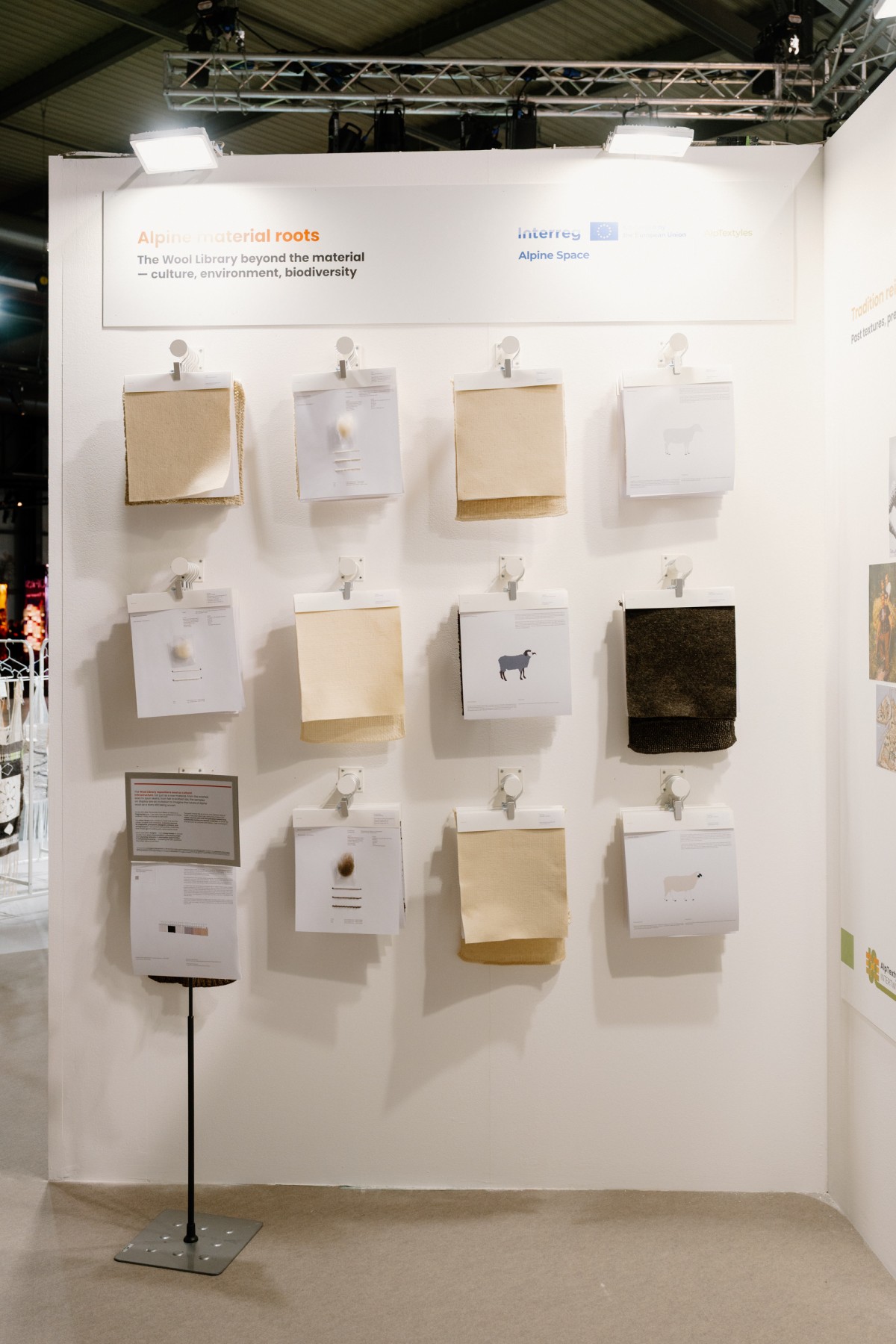
At the core of the pilot lies the Wools of the Alps / Wool Library. More than a material archive, the Wool Library repositions wool as a form of cultural and environmental infrastructure — a medium through which heritage, biodiversity, and contemporary production can be reconnected.
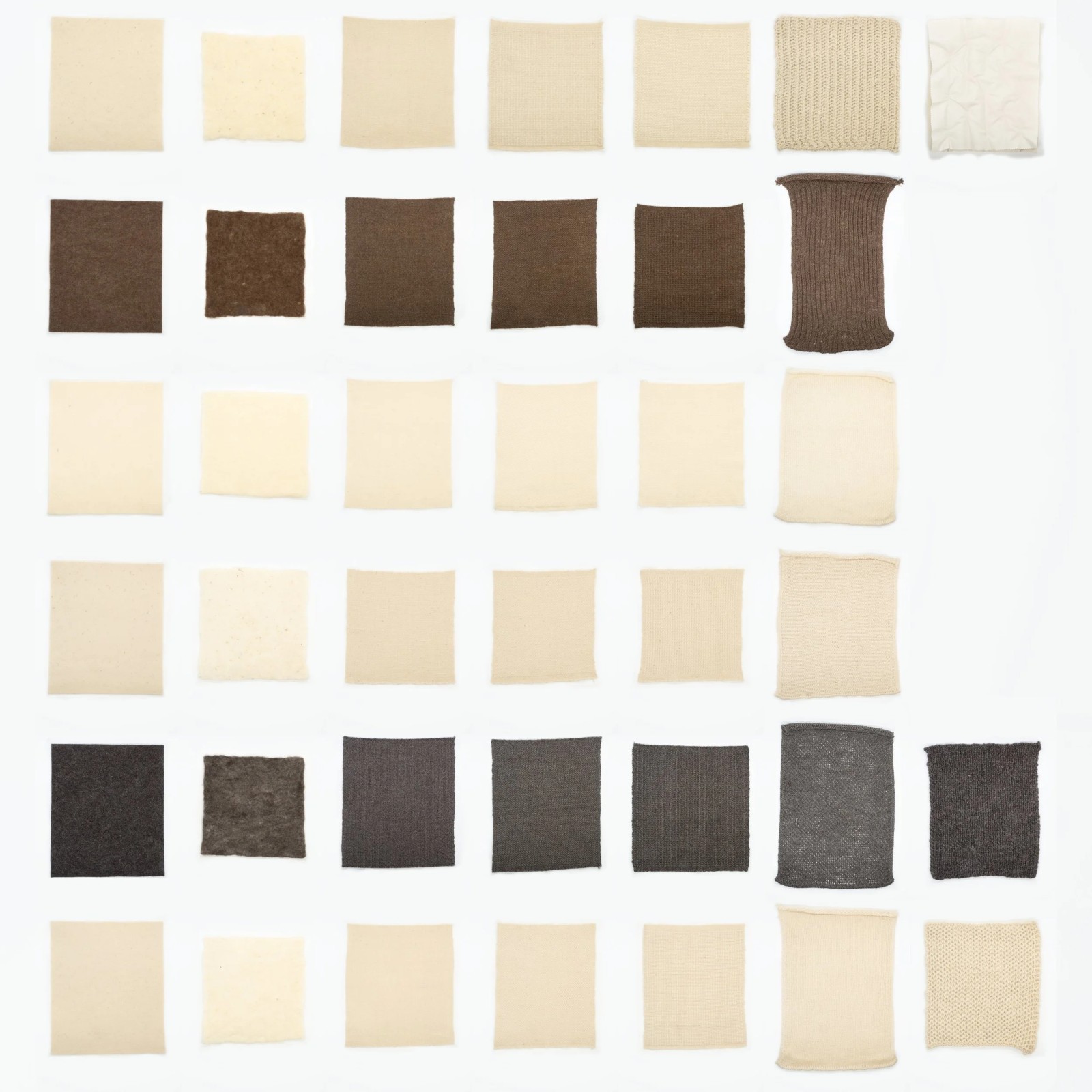
From washed fleece to spun skeins, from felt samples to knitted ribs, the Library presents Alpine wool as a story still being woven. Across the Alpine region, the journey from fleece to fabric is often fragmented: wool may be collected in one country, washed in another, and transformed elsewhere. The Wool Library was created to make this journey visible, tangible, and investable.
Conceived as a shared resource for shepherds, processors, designers, artisans, brands, and entrepreneurs, the Wool Library documents the qualities, potentials, and challenges of working with native Alpine wools. Each card offers concrete insights —from sheep breeds and micron counts to wool characteristics, processing steps, sourcing networks, and valorization opportunities— addressing the very questions that often deter production. Its goal is to unlock the economic and creative value of underused Alpine wool resources, demonstrating that viable volumes and realistic pathways already exist, as illustrated by brands such as La Routo and Salewa.
Discover the full report
From feasibility constraints to operational solutions
The pilot focuses on wool from six autochthonous Alpine sheep breeds, selected across six Alpine countries following a pragmatic “one breed per country” logic. Early engagement with the Biella wool district in Italy clarified a key constraint: minimum economically viable volumes for industrial processing were incompatible with the scale and learning-oriented objectives of the pilot.
This led to a strategic shift and the formalization of a collaboration with Fibershed DACH, building on its experience with the Swiss Wool Library. Through successive iterations, the pilot moved toward a more operationally realistic configuration, working with smaller yet representative quantities while maintaining technical rigor. The production hub was ultimately centered on Laines d’Ici (Canton of Vaud, Switzerland), offering flexibility, expertise, and the capacity to work across diverse wool types. In doing so, the pilot extended the Wool Library concept from a national initiative to a cross-border Alpine infrastructure.
The Wool Library was developed by Fibershed DACH (AT) together with Alix Arto, Emma Casella, and Nina Conrad as a focus point of the AlpTextyles pilot action. The initiative was coordinated by project partner emlyon business school while the wool samples were contributed by Laines d’Ici (CH), Associazione Codedilana (IT), Michael Dal Grande Natural Fibers (DE), Stand Montafon (AT), and Filature Terrade, with the support of project partners Polo Poschiavo, Regione Lombardia, and ZRC SAZU.
The Wool Library with FibershedDACH
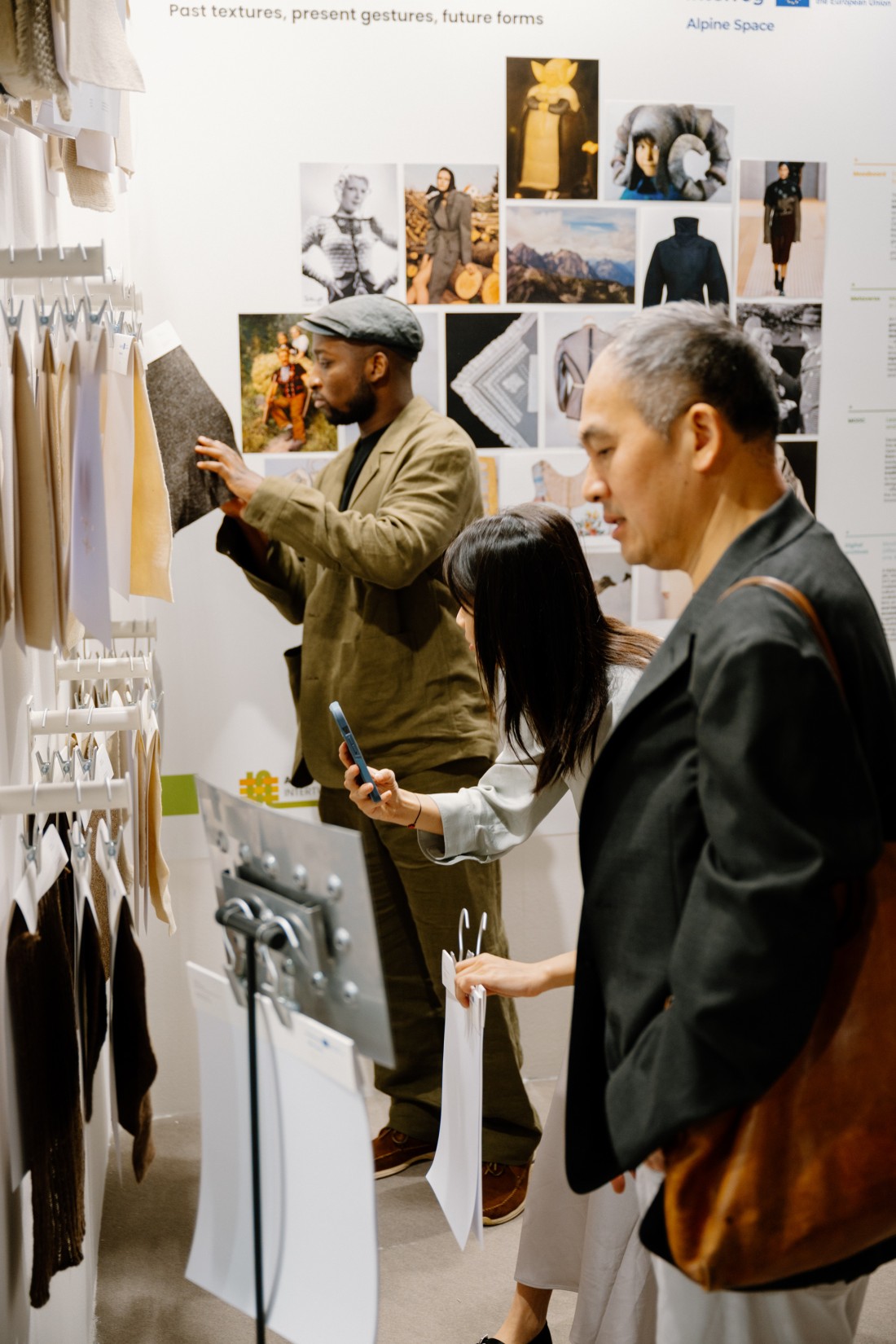
Validation, dissemination, and key learnings- The Wool Library was conceived not only as an awareness-raising tool, but as a practical interface between breeders, designers, brands, and manufacturers. It was first presented at the AlpTextyles project stand during the 41st edition of Milano Unica in July 2025, where it attracted strong professional interest and validated the relevance of tactile, application-oriented material mediation for industrial audiences.
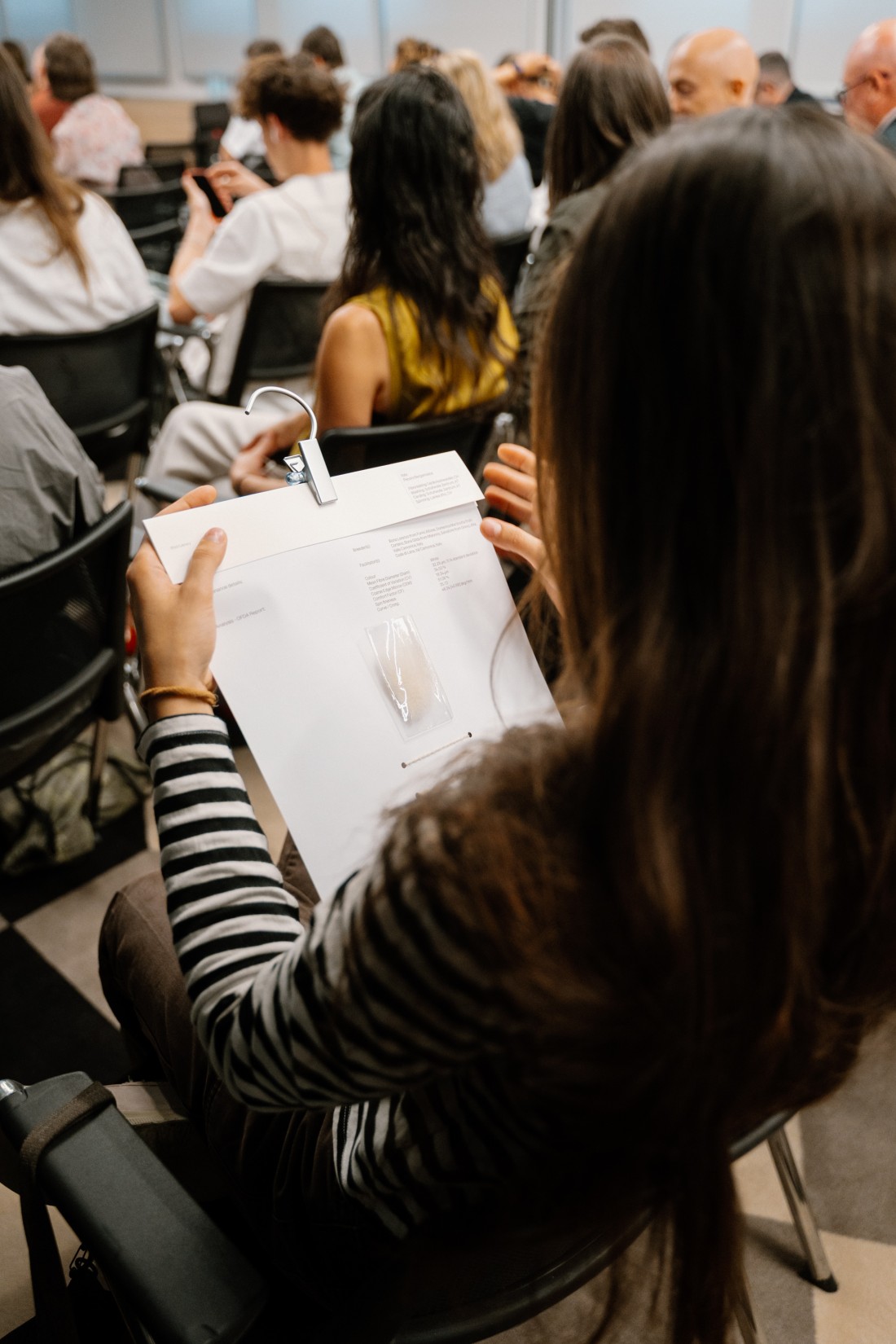
- Since then, the Wool Library has travelled with AlpTextyles across different events, settings, and locations, each time adapting its configuration and narrative to the specific context — demonstrating its flexibility as both a research tool and a catalyst for new alliances on the B2B level and an attractive, innovative tool for communication and knowledge transfer to the public.
- Synthesizing key lessons on circularity, ingredient branding, cross-border value-chain organization, and the role of intermediaries and artisans, the pilot makes a clear conclusion: Alpine wool can be successfully reintegrated into contemporary industrial textile systems, provided that material heterogeneity is embraced as a resource and that heritage sensitivity is combined with pragmatic, application-driven innovation.
-
Natural dyes: From extraction to applications
Alpine natural dyes: From autochthonous plants to textile applications
Led by project partner Mediplant, AlpTextyles explored the reactivation of natural dyeing in the Alpine region through a combination of scientific research, field experimentation, craft know-how, and cross-border collaboration. Rooted in Alpine biodiversity and heritage, the pilot follows a complete trajectory —from plants and pigments to dyed fibers, fabrics, and garments— demonstrating the technical and cultural feasibility of natural dyes in contemporary textile value chains.
The research
The starting point were extended R&D activities on the extraction of natural indigo, advancing from laboratory studies to Mediplant’s first pilot production of the Indigo of the Alps pigment. By integrating phytochemistry, process optimization, and standardized testing protocols, this foundational phase aimed to establish a reproducible, high-quality natural indigo suitable for textile applications.
Key steps were undertaken, often in collaboration with local organizations:- wild harvesting and domestication of Isatis tinctoria to explore cultivation trials adapted to Alpine conditions;
- quality and fastness testing to meet professional textile standards;
- literature research and heritage documentation, drawing on herbalist books, archival sources, and exchanges with local knowledge holders, to shed light on historical dyeing practices in Valais and other mountain regions — reconnecting scientific investigation with both living and forgotten traditions.
Building on this foundation, the pilot expanded to testing additional Alpine dye plants and vegetal by-products, combining lab-scale protocols with craft and semi-industrial experimentation, including up-cycling approaches. Cross-border collaborations with project partner RAS enabled the testing of indigo and larch bark on wool and linen, progressively scaling up to pilot and semi-industrial dyeing processes and opening a dialogue across Alpine regions and textile cultures. These exchanges were further enriched through participation in international forums, workshops, and conferences dedicated to circular economy, biomass valorization, and sustainable textiles.
Phase 2 / Scaling up: New dyes, new applications
The second phase focused on expanding the dye palette and scaling production. Lady’s Mantle (Alchemilla) was introduced as a new Alpine dye candidate, alongside larch bark, with expertise drawn from regional collaborations in plant extraction and dyeing processes.
Pilot-scale production of liquid concentrated extracts of both plants marked a decisive step toward semi-industrial applications. These extracts were tested on wool and linen at increasing scales, including semi-industrial dyeing trials, to assess their performance. Quality testing confirmed very good fastness for Alchemilla on wool and good results for larch bark on linen, validating the technical reliability and potential of these Alpine dyes for professional textile use.
Phase 3 / Design, Education & Transmission
Beyond material development, the pilot integrated design, education, and cultural transmission. Dyed fibers and textiles were transformed into garments and samples presented at AlpTextyles’ 120-square-meter project stand at the 41st edition of Milano Unica as well as an array of public showcases, plus collaborations with students and local wool producers. Workshops, lectures and academic research projects, round tables, the MOOC, and community initiatives further amplified the pilot’s impact, positioning natural dyes as both a material practice and a cultural resource — actively contributing to a growing Alpine ecosystem around natural dyes and textile circularity.
HighlightsDyes
•• Indigo (Isatis tinctoria)
•• Lady’s Mantle (Alchemilla)
•• Larch barkMaterials
•• Wool
•• Linen
•• AlpTextyles cross-border fabricKey activities
•• Laboratory and pilot-scale extraction of natural dyes
•• Cultivation trials and wild harvesting of Alpine plants
•• Craft, pilot, and semi-industrial dyeing on wool and linen
•• Quality and fastness testing
•• Design experimentation and garment creationOutcomes
•• First pilot production of Indigo of the Alps
•• Pilot-scale liquid extracts of Alchemilla and larch bark
•• Verified fastness results suitable for professional textile use
•• Textile samples and garments presented at industry and public events
•• Knowledge transfer through education, research, and cross-border exchange
•• A series of dyeing protocols
Videos
Gallery
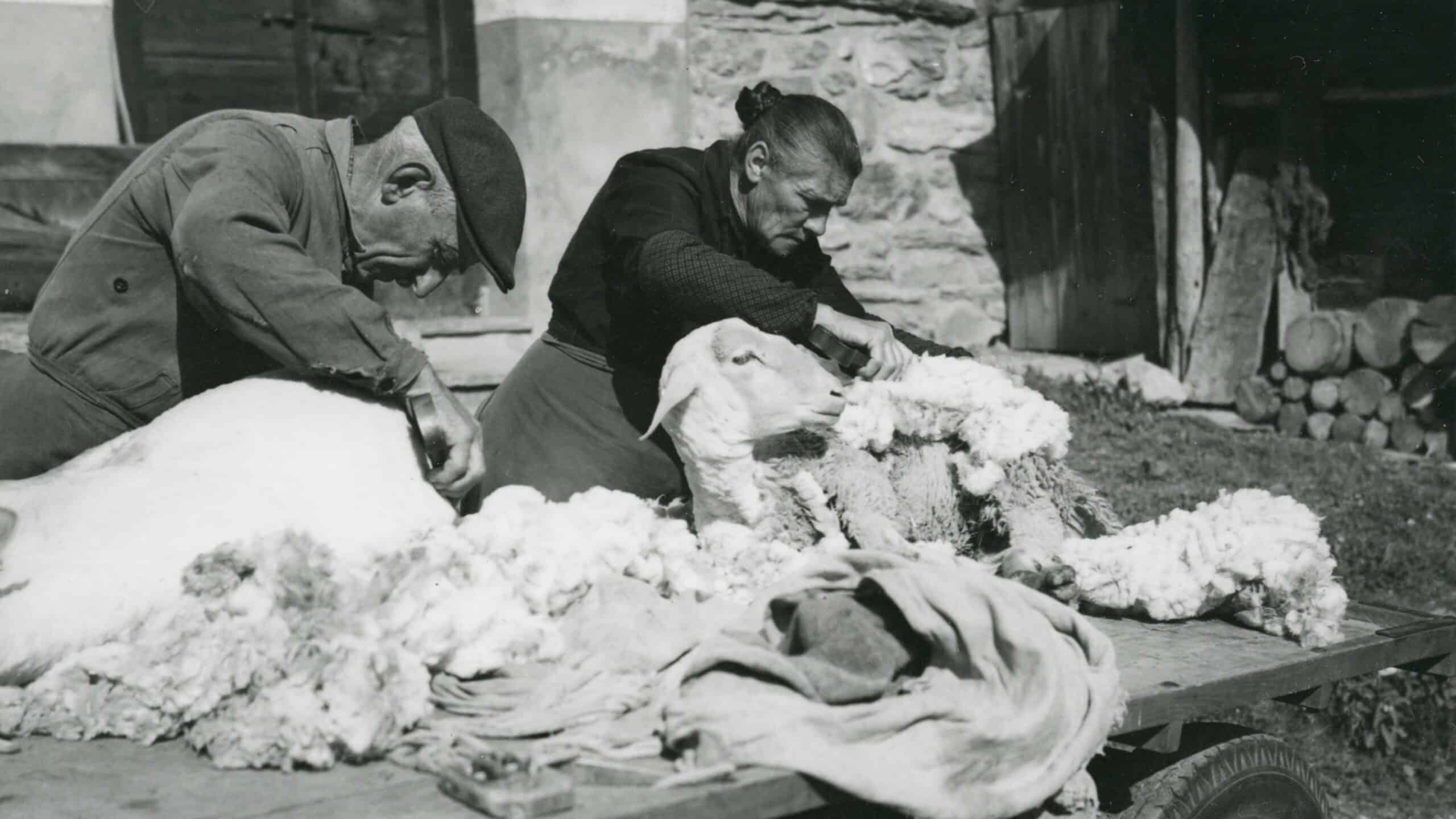
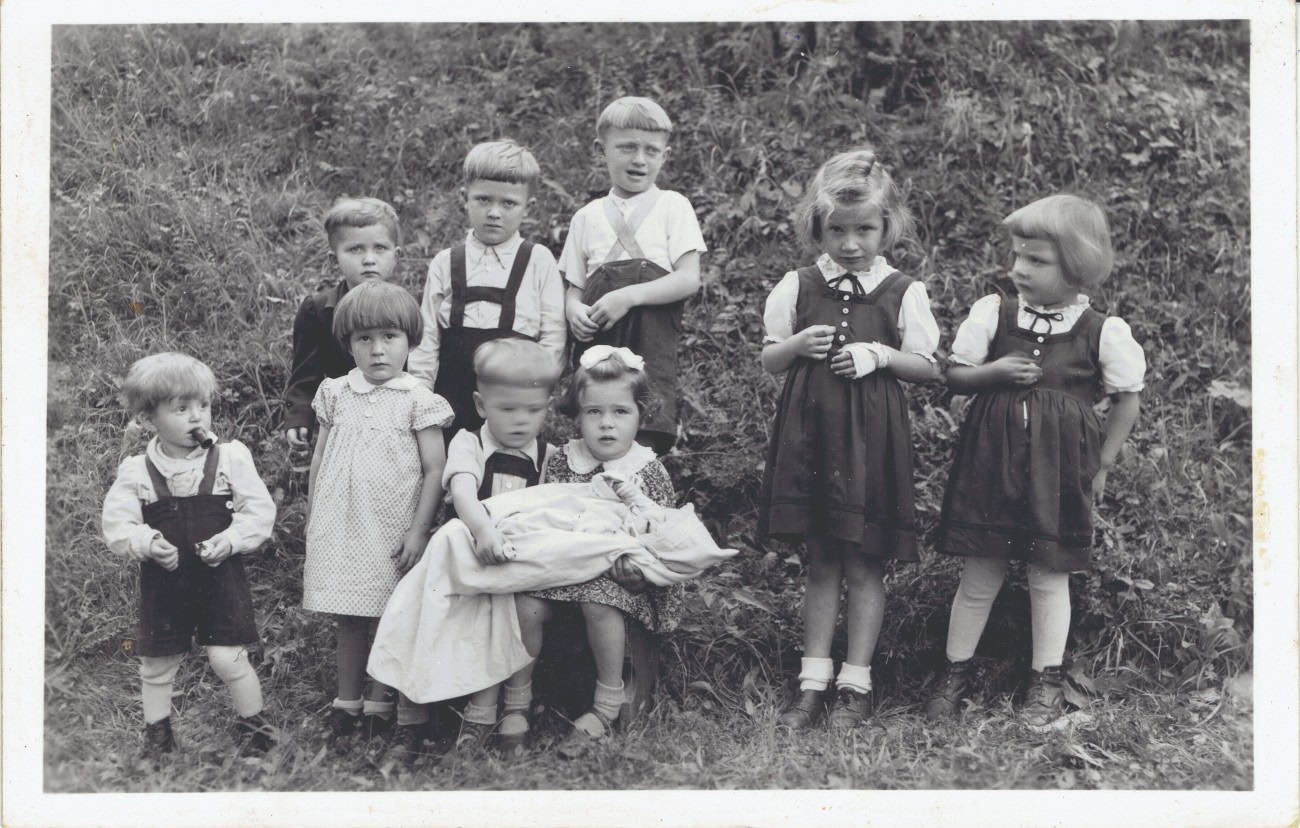
- Inspiring culture to commence the project, 2022Courtesy of Archivio fotografico Valposchiavo | www.istoria.ch
- Traditional historic attire in Slovenia, Community call, Slovenia, 2024AlpTextyles | Courtesy of Rokodelski Center Duo Škofja Loka
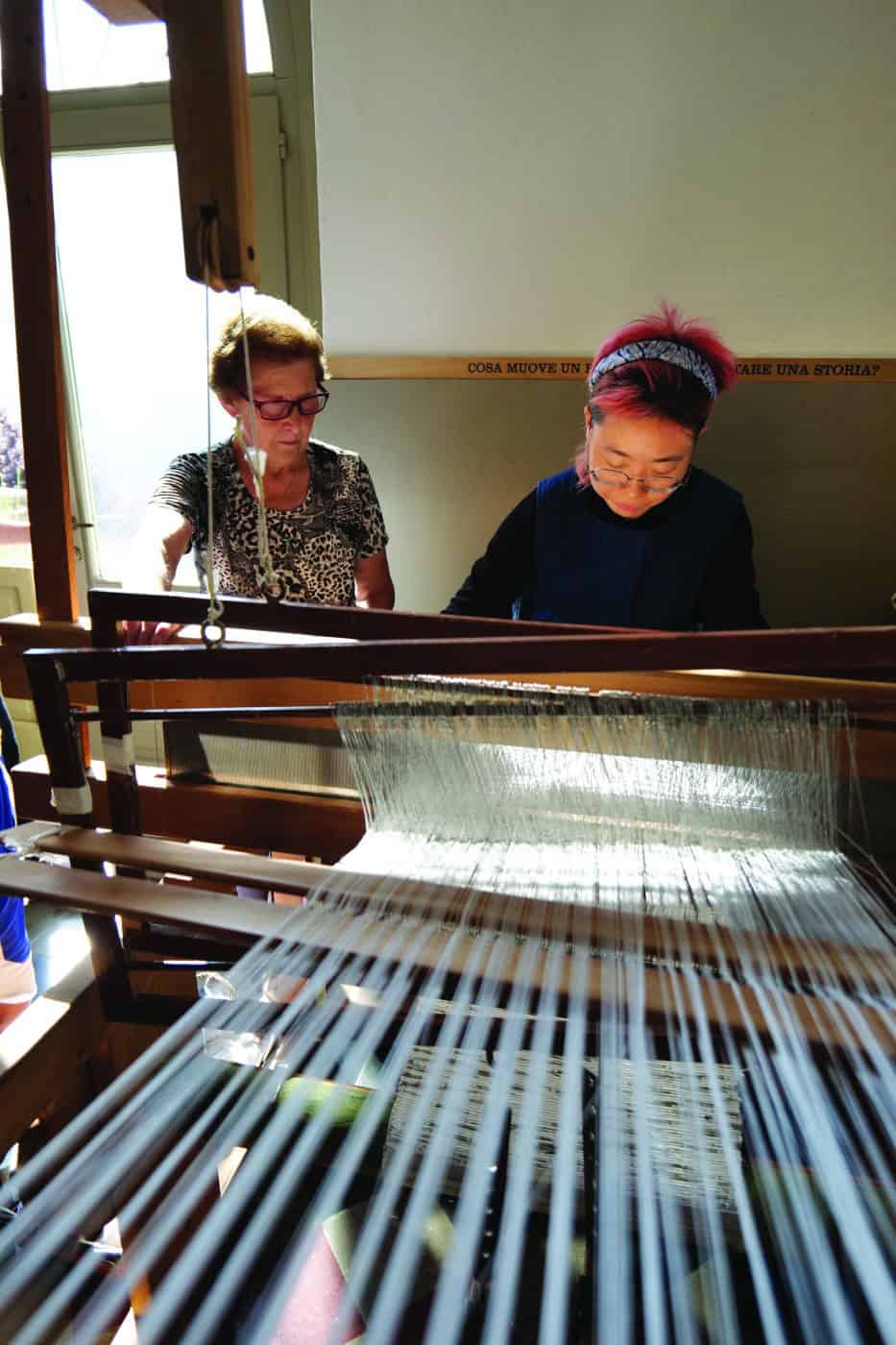
- AlpTextyles’ Alpine Icon Summer School, Italy, 2024AlpTextyles | Courtesy of Regione Lombardia
- The Wool Library / Sample cardsCourtesy of FibershedDACH with AlpTextyles
- The Wool Library at Milano Unica, 41st edition, Italy, 2025AlpTextyles
- The Wool Library at Milano Unica, 41st edition, Italy, 2025AlpTextyles
- The Wool Library at the Conference at Confindustria Moda, Italy, 2025AlpTextyles
Downloads
-
This handbook is a synthesized guide to the project — an overview of its conceptual foundation, work plan, and partners, the collaborative process and the other guiding principles, the outputs, interaction with other European strategies and projects, and long-term objectives.Download
-
On January 23, 2023, the twelve partner organizations gathered in Ljubljana for the project’s public kick-off before European institutions. Following up, the first noon-to-noon work session focused on the preliminary work on WP1 and the communication strategy.Download
-
I PANI DELLE ALPI Every year, there is a special cross-border festival where 100+ communities across the Alps celebrate the traditional black rye bread making by lighting up their local haven simultaneously. On October 14th, 2023 Poschiavo (CH) participates to the 8th edition with the support of AlpTextyles. The idea was to tell the story of Casa Tomé as the bearer of the bread and textile local heritage, connecting the ancient home with the Musei Valposchiavo through a hanging thread of wool. The focus was the coperta poschiavina, with a call to action to those who still have one to bring it to Casa Tomé for entering it into the local archives — and continue the safeguarding. Plus, a series of communication materials, including exhibition panels, posters, and gadgets (bookmarks and postcards).Download
-
THE LIVING TEXTILE HERITAGE OF THE ALPS On March 12th, 2024 “The Living Textile Heritage of the Alps” event marked a significant milestone: it celebrated AlpTextyles’ first year of dedicated research work and findings about the Alpine textile market and value chains. The event was an immersive experience with networking opportunities and creative thinking, featuring keynotes, roundtables, and an exhibition. Participants engaged with leading experts on a variety of topics, exploring the mappings of once-missing steps of the value chains and the growing revalorization of local resources at the cultural, industrial, and policy-making levels. All keynotes are available on AlpTextyles’ YouTube channel.Download
-
ALPINE THREADS The exhibition celebrates AlpTextyles’ research findings, inspired by the unwavering bond between textile craftsmanship and artistic expression. Each of four 10-meter-long banners, printed on a special ecological material that simulates fabric, is dedicated to the research work of a partner. “Alpine Threads” was conceived as a living exhibition to grow alongside the project, following its developments and traveling to the project events. In October 2025, the fifth banner with AlpTextyles’ full story and results was revealed at the Final Event in Lyon.Download
-
TAKEAWAYS FROM A MULTI-LAYERED RESEARCH DAY The report gathers the keynotes and main takeaways from all speakers of “The Living Textile Heritage of the Alps.” The high-profile line-up includes representatives from EU institutions (DG Department of Growth of the European Commission, EURATEX – European Textile and Apparel Confederation), international organizations (WIPO – World Intellectual Property Organization, IWTO — International Wool Textile Organization), and cultural associations (European Fashion Heritage Association, Musée des Tissus et des Arts Décoratifs), as well a number of project partners.Download
-
REDISCOVER THE PATH OF WOOL The cultural transhumance was conceived as a grassroots event involving all the stakeholders that contribute to the sustainability of the wool supply chain — from shepherds to local associations that have reactivated traditional artisanal skills and restored value to wool, innovating products and highlighting their sustainability and circularity to consumers. AlpTextyles brought together the pastoral world and communities for a day-long journey. The event featured a walk with a flock from morning till dusk along the shepherd’s path, allowing participants to meet firsthand the people involved in the wool supply chain of Valle Camonica, and produced various communication materials: a program/diary for participants to fill in and bring home, posters, a flag, and a video documentary — available on AlpTextyles’ YouTube channel.Download
-
CONSUMER INSIGHTS: CIRCULARITY, SUSTAINABILITY, AND MADE IN THE ALPS Consumers can drive the market to support circular, sustainable value chains in the Alpine textile sector, disrupted by globalization. While people do not tend to immediately associate the Alps and textile products, the “place brand” is strongly positive. Critical views against the current globalized textile chains and a willingness to buy local, artisanal, and environmentally friendly products are widespread phenomena, providing an encouraging outlook for the promotion of Alpine textile products.Download
-
COMMUNICATING “MADE IN THE ALPS” As the Alps are associated with nature, heritage, tradition, adventure, exploration, performance, and luxury, brands strategically use geographic locations to infuse their products with symbolic meanings. This paper examines how brands connect themselves to the Alps in their marketing communications, showing that some brands emphasize the Alps as a place of production, while others depict Alpine landscapes as a site of consumption.Download
-
ALPINE TEXTILE MAPPING. ECONOMY, INSTITUTIONS, AND LABELS The alpine textile sector is comparably strong, especially in Northern Italy, in certain regions of Switzerland and Austria, and in some parts of Northern Bavaria. However, it does not receive enough support in terms of institutional regulations, labels, and certifications. Alpine wool encounters financing issues connected to not being classified as an agricultural product, and is negatively impacted by environmental classifications. Meeting these challenges could unlock the potential of a strongly promotable sector.Download
-
MAPPING ALPINE WOOL. PRODUCTION NETWORK, VALUE CREATION, AND FOOTPRINT Due to global concentration processes and the increasing importance of synthetic fibers, the wool sector is weakening, both in the Alps and worldwide. However, Alpine wool, if adequately supported, has great economic potential. Up-to-date marketing strategies, improved networking, technical innovations such as sustainable production processes, and pilot actions to create inspiration can strengthen the sector.Download
-
ALPTEXTYLES: BEAUTY UNVEILED Istituto Marangoni delves into the open questions on the relations between the Alps and contemporary creativity, threading a visual journey that connects it to traditions of the past, and challenges of the future. Unveiling the essence of the Alps in reference to the fields of fashion, and design, it offers a stimulus for creative and innovative visions. Visual research on aesthetic values can also facilitate innovation and experimentation with new codes and evocative languages.Download
-
ALPINE TEXTILE HERITAGE. AN OVERVIEW Knowledge of the textile heritage and production history in the Alps is fragmented at the local, regional, and national levels. ZRC SAZU has researched the production and use of textiles in traditions and current practices in the Alpine region, focusing on wool, linen, and silk, as well as aspects of aesthetics and costumes. The research also shows how resource sensitivity rooted in local customs can inspire current circular practice, highlighting key milestones and traditional aspects of textile production to promote sustainability across the industry.Download
-
MAPPING CONSUMER PERCEPTIONS OF TEXTILES “MADE IN THE ALPS” emlyon lifestyle center at emlyon business school focuses on consumer communication strategies to justify premium prices, fostering appreciation for sustainable Alpine textile products. “Made in the Alps” can benefit from an added symbolic value, but there is a gap in consumer perception: the positive Alpine image, tied to nature and artisanal know-how, is more linked to tourism consumption than local production. Moreover, except for traditional attire, textiles are absent in consumer perception, which align with brands’ emphasis on sports and luxury.Download
-
MAPPING VALUE CHAINS OF THE TEXTILE INDUSTRY IN THE ALPS As per Alpine textile production, FAU’s work underlines the coexistence of two distinct value chains differing in scale and product segments: while the global part features highly standardized fibers (i.e., Merino wool), the regional part emphasizes the revaluation of wool for local production. Additionally, the research highlights the gap between Alpine textile institutions and Alpine certifications and labels.Download
-
ELEVATING VISION BY TRADITION: ALPINE BEAUTY UNVEILED How do contemporary designers turn the mountains’ aesthetic elements into original interpretations for new products? The work by Istituto Marangoni unravels how the perception of the Alps has changed throughout the centuries, from a dangerous and inhospitable place populated by beasts and demons to a landscape for the sublime and spiritual elevation — a beauty that allows textile heritage to communicate resilience, transparency, and celebration.Download
-
RESOURCES TURNED INTO WASTE? FROM THE PAST TO THE FUTURE OF WOOL, FLAX, AND SILK IN THE ALPS ZRC SAZU’s research untangles the rich textile traditions and innovation in the Alps, revealing the intricate relationships between natural and social dynamics. Combing through Alpine textile history from prehistory to contemporary times, the work stresses how the intangible cultural heritage of local textile communities reflects their cultural, artistic, economic, and educational values. In this sense, including textile practices on national and UNESCO lists is pivotal to safeguarding them and the liveliness of the communities.Download
-
“COLLABORATIVE SOLUTIONS FOR A HERITAGE & CONSUMER SENSITIVE RE-LOCALIZATION OF SUSTAINABLE, CIRCULAR, AND INNOVATIVE ALPINE TEXTILE VALUE CHAINS” Every year, the International Wool Textile Organisation (IWTO) gathers the global wool textile industry at their annual Wool Round Table, where an inspiring network of experts, entrepreneurs, and visionaries build an invaluable opportunity for exchange. AlpTextyles participated with a presentation by project partners Cassiano Luminati (Polo Poschiavo), Markus Lambracht (FAU Erlangen-Nürnberg), and Diego Rinallo, Ph.D. (emlyon business school). Available on AlpTextyles YouTube channel, it was an incredible platform to present our research results and upcoming tools, while also discussing the broader relevance of regional initiatives in shaping the future of the wool industry.Download
-
Based on the key findings from academic consumer research, AlpTextyles Narrative Labels present the stories behind Alpine textiles—connecting producers, fibers, landscapes, and traditions. They sit as complementary tools to legally-required ones for producers to adopt to promote transparency and storytelling reveal the cultural and ecological value in every thread. They are freely available for download on Canva in English, French, German, Italian, and Slovene.Download
-
Alongside the Narrative Labels, AlpTextyles developed a practical Guidelines document to support SMEs, organizations, craftspeople, and anyone interested in adopting this tool in using and customizing the labels to best fit their needs. They include printing technical specifications, graphic design hints, and examples of content that can be produced. The Guidelines are available in English, French, German, Italian, and Slovene.Download
-
WOVEN TO WEAR A special series of capsule collections born within AlpTextyles with the support of Istituto Marangoni, Stand Montafon, and Regione Lombardia. Created by young designers in collaboration with Alpine communities and artisans — the custodians of traditional know-how and living heritage — these collections embody a dialogue between past and future. Through a shared creative methodology, each designer explores, challenges, and reinterprets centuries-old techniques and local materials with a contemporary eye. The result is a set of original pieces, many of which made with AlpTextyles’ original cross-border fabric, where heritage finds new forms of expression. It also features dedicated focuses to the two summer schools run by AlpTextyles and the Milano Unica textile trade fair.Download
-
WOVEN TO WEAR The stories of three capsule collections are brought to life through a dedicated video series. Each video follows the journey from initial concept and design to creation, production, and public presentation, offering an intimate look at the creative and technical processes behind the collections. Through these visual narratives, viewers gain insight into the inspirations, challenges, and craftsmanship that shape each piece, highlighting the innovative vision, dedication, and sense of team-work of the young designers.Download
-
INTRECCI DI COMUNITÀ: VERSO UN FUTURO SOSTENIBILE “Community intertwinings: towards a sustainable future” is the three-day festival launched by Regione Lombardia in May 2025 as a celebration of the textile knowledge of the Alps and the communities that sustain it. Inspired by the Cultural transhumance format, the event was dedicated to artisans, shepherds, associations, and organizations committed to preserving these traditions; to international networks focused on wool; to the world of weaving and cross-border textile culture, and to transhumance as a living cultural practice. The brochure retraces the highlights of each day, from the opening art installations to the textile conversations of day 2 and the transhumance of the final day.Download
-
DIGITIZING AND MAKING ACCESSIBLE THE ALPINE TEXTILE HERITAGE: CHALLENGES & SOLUTIONS The report explores how digital technologies can become pivotal tools in preserving and promoting textile heritage, ensuring its accessibility to both younger generations and professionals in the field. Drawing from pilot projects and case studies, the work outlines the practical steps, challenges, and strategies involved in the digitization of textile collections — addressing crucial issues such as intellectual property and rights management. Beyond documenting methods and tools, it proposes a replicable framework for institutions seeking to merge tradition with innovation, ensuring that textile heritage remains a living, accessible resource in the digital age.Download
-
SAFEGUARDING TRADITIONAL TEXTILE KNOWLEDGE IN THE ALPINE CONTEXT: FINDINGS FROM A FIELD EXPERIENCE IN VALLE CAMONICA This study examines the safeguarding of traditional textile knowledge in the Alpine context, based on fieldwork in Valle Camonica, Italy. It explores the intersections of intellectual property law and intangible cultural heritage, and reviews legal tools, regional craft legislation, documentation, labeling, and ethical protocols for protection. Field findings highlight local perceptions of protection, community practices that root knowledge in the territory, and differing development trajectories. Case studies from Malonno and Monno in Vallecamonica illustrate competency mapping and the co-creation of ethical codes to support sustainable preservation of Alpine textile traditions.Download
-
LA TUTELA DEI SAPERI TESSILI TRADIZIONALI NEL CONTESTO ALPINO: RESTITUZIONE DI UN’ESPERIENZA SUL CAMPO IN VALLE CAMONICA Questo report esamina la salvaguardia delle conoscenze tessili tradizionali nel contesto alpino, basandosi sul lavoro sul campo nella Valle Camonica, Italia. Analizza i punti di contatto tra il diritto di proprietà intellettuale e il patrimonio culturale immateriale, e passa in rassegna strumenti legali, legislazione regionale sull’artigianato, pratiche di documentazione, etichettatura e protocolli etici per la protezione. I risultati del lavoro sul campo evidenziano le percezioni locali della protezione, le pratiche comunitarie che radicano la conoscenza nel territorio e le diverse traiettorie di sviluppo. I casi studio di Malonno e Monno in Valle Camonica illustrano la mappatura delle competenze e la co-creazione di codici etici a supporto della conservazione sostenibile delle tradizioni tessili alpine.Download
-
BUSINESS PLAN E PIANO ECONOMICO FINANZIARIO (3-5 ANNI) PER LA LANA BERGAMASCA Questo documento presenta un modello di valorizzazione della lana bergamasca, una risorsa alpina con caratteristiche ecologiche, culturali e territoriali uniche. Basato su un approccio partecipativo e multi-stakeholder, il progetto propone una filiera corta e sostenibile, radicata nel territorio, che coinvolge allevatori, artigiani, designer e comunità locali. L’obiettivo è trasformare la lana da sottoprodotto animale a leva di rigenerazione territoriale, puntando a sostenibilità economica, tracciabilità, narrazione autentica e innovazione sociale. Il modello prevede due fasi: il presidio del semilavorato e, in futuro, l’integrazione verticale verso prodotti finiti, replicabile anche in altri contesti alpini.Download
-
BUSINESS, MANAGEMENT, AND GOVERNANCE PLAN As an excerpt from the corresponding Italian report, this document presents a model for enhancing the value of Bergamasca wool, an Alpine resource with unique ecological, cultural, and territorial characteristics. Based on a participatory, multi-stakeholder approach, the project proposes a short, sustainable supply chain rooted in the local area and involving breeders, artisans, designers, and local communities. The goal is to transform wool from a marginal animal by-product into a driver of territorial regeneration, focusing on economic sustainability, traceability, authentic storytelling, and social innovation. The model is structured in two phases: 1. Securing and managing the semi-processed wool, and 2. Future vertical integration toward finished products, with the potential to be replicated in other Alpine contexts.Download
-
ALPINE THREADS BETWEEN TRADITION AND INNOVATION In July 2025, as part of its dissemination activities, AlpTextyles took part in Milano Unica, one of the leading international textile fairs. The project’s stand was conceived as a journey through Alpine fibers, stories, and futures — an immersive experience that went far beyond a traditional textile showcase. Designed as a multi-layered narrative, the space traced the evolution of Alpine textile heritage: from long-standing craftsmanship and material traditions to their digital, sustainable, and circular transformations. Visitors explored a curated sequence of thematic areas, from the material roots of the Wool Library and the Living Exhibition to the Metaverse, three digitized textile collections, and the physical fashion pieces and artifacts created by young designers using our cross-border Alpine fabric. Among the communication materials, the Scrapbook offers a visual and narrative recap of the two-day event, capturing its atmosphere, key moments, and the project’s forward-looking vision at the intersection of heritage and innovation.Download
-
ALPINE THREADS BETWEEN TRADITION AND INNOVATION This video captures AlpTextyles’ presence at Milano Unica 2025, showcasing an immersive journey through Alpine fibers, stories, and sustainable futures. From the material roots of the Wool Library and the Living Exhibition to the Metaverse, digitized textile archives, and the creations of young designers, the footage highlights the full breadth of the project’s multi-layered stand. Through motion, brief interviews, and atmosphere, the video brings to life the evolution of AlpTextyles and its take on Alpine textile heritage — revealing how tradition, craftsmanship, and innovation come together across both physical and digital realms. It offers a dynamic recap of the two-day event, reflecting AlpTextyles’ forward-looking vision and the vibrant cross-border community behind it.Download
-
ALPINE ICON The 2024 edition of the summer school, Alpine Icon, was dedicated to rediscovering and reinventing the iconography of the Alps, exploring new ways in which symbols of textile heritage can be detected and repurposed for the contemporary world. The gallery offers a visual recap of the students and artisans at work during the course. In addition to the course-related artifacts, for the end of the experience students also produced an embroidered patch, reinterpreting the theme of the edition: an object to be treasured, a sign of recognition of one’s individuality but also of belonging to a new collective tradition.Download
-
ALPINE ICON STUDENTS’ ARTIFACTS The artifacts created by the students of Regione Lombardia’s 2024 Summer School found an ideal stage at the AlpTextyles stand during Milano Unica 2025, one of the leading international textile trade fairs. Positioned between the young designers’ corner, the Wool Library, and the Living Exhibition, their works introduced a vibrant, exploratory flair to the 120-square-meter immersive environment. Blending fresh creative perspectives with Alpine textile heritage, these student pieces acted as a bridge between tradition and contemporary interpretation. Their presence enriched the stand’s multilayered narrative, highlighting how new generations are reimagining regional materials, techniques, and stories for the future of textile design.Download
-
DEVELOPING HERITAGE-SENSITIVE & CIRCULAR CROSS-BORDER INDUSTRIAL TEXTILE PRODUCTS: CHALLENGES & SOLUTIONS This pilot explored the potential of heritage-sensitive and circular Alpine wool products. Alpine wool, despite its ecological and cultural value, is often undervalued in contemporary textile chains. The pilot focused on making it legible, usable, and credible for industrial actors—not by competing on volume, but by highlighting its unique material properties, regional identity, and circular potential. The main outcome is the Wools of the Alps / Wool Library, a resource documenting and showcasing the diversity of six native Alpine sheep breeds across six countries. Through testing and experimentation in spinning, weaving, knitting, felting, and padding, the pilot demonstrated the wide range of applications for Alpine wool — from knitwear and woven textiles to insulation and non-woven products.Download
-
UNA MONTAGNA INDOSSO: THE COLLECTION This report documents “Una Montagna Indosso,” a collection by Francesco Ferrero with Regione Lombardia and Associazione Codadilana that celebrates wool in mountain clothing, tracing its path from traditional shepherding and domestic knitting to contemporary design. Rooted in Valle Camonica’s cultural, natural, and artisanal heritage, the project explores local raw materials and traditional processes, reinterpreting them for present-day use. The collection fosters a sustainable, collaborative system connecting shepherds, artisans, and local stakeholders while linking the valley to wider Alpine networks. Both research and its tangible outcome, “Una Montagna Indosso” highlights wool’s versatility and cultural value, framing its use as an act of sustainability and reconnection with place, identity, and everyday life.Download
Project calendar