Overview
To tackle food waste, for instance in the hospitality sector, there is a great potential for resource related to food overproduction or packaging. The overall objective of CEFoodCycle project was the implementation of Circular Economy Hubs in the food sector in five alpine pilot regions to identify potentials for food waste and reduction of CO₂ equivalents. The involved actors benefited from know-how transfer, networking as well as the use of a digital, intelligent decision support system based on environmental indicators. The activities aimed at directly and indirectly involved stakeholders in food cycles such as manufacturing companies, trading companies, the hotel industry, but also energy providers. The project enabled different stakeholders to take into account resource and emission savings and strengthen sustainable and circular economic competitiveness in the Alps.
⸺
Decision Support Tool: FoodCycle.ai

The FoodCycle.ai decision support tool is now available to the public. This online tool helps users identify and evaluate options for reducing food waste and surplus. By providing structured recommendations and relevant partners, the tool supports practical decision-making for businesses, communities, and policymakers working towards a more circular food system. > Check out FoodCycle.ai
Education Materials
 Another milestone in the CEFoodCycle project: the launch of our Education Materials section on the FoodCycle.ai website. This dedicated resource hub brings together a carefully curated selection of videos, case studies, reports, and teaching materials — all designed to inspire meaningful discussions, spark creativity, and drive concrete action towards a circular economy in the food sector. > Browse Education Material
Project presentation video
Circular Food Hubs
We are delighted of the work produced by of our five Circular Food Hubs. The Circular Food Hubs existed as role models for regional circularity. They operated as transnational and interdisciplinary network in five Alpine Space regions:
- Cicular Food Hub Salzburg-Bavaria (Austria/Germany)
- Circular Food Hub Alto Adige (Italy)
- Circular Food Hub Lamoro (Italy)
- Circular Food Hub France (France)
- Circular Food Hub Gorenjska (Slovenia)
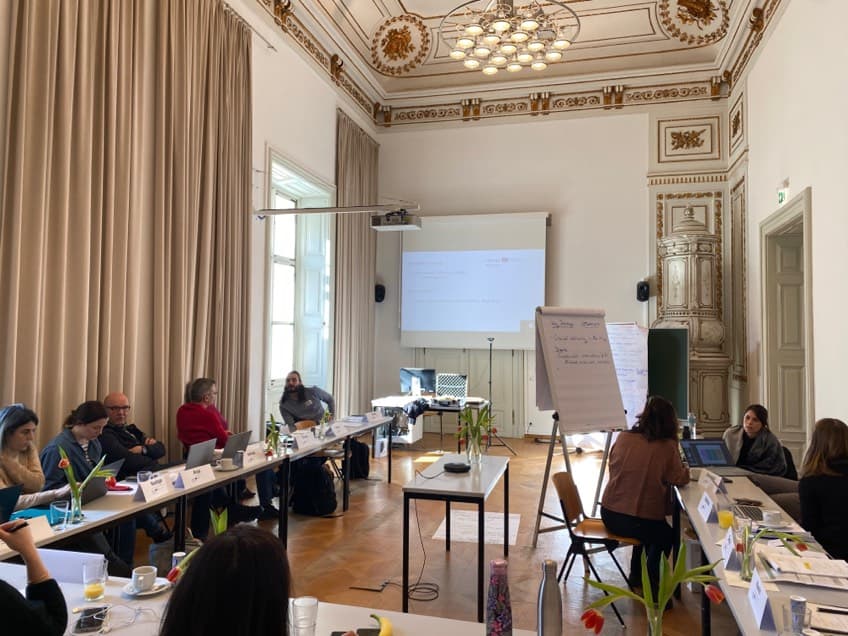
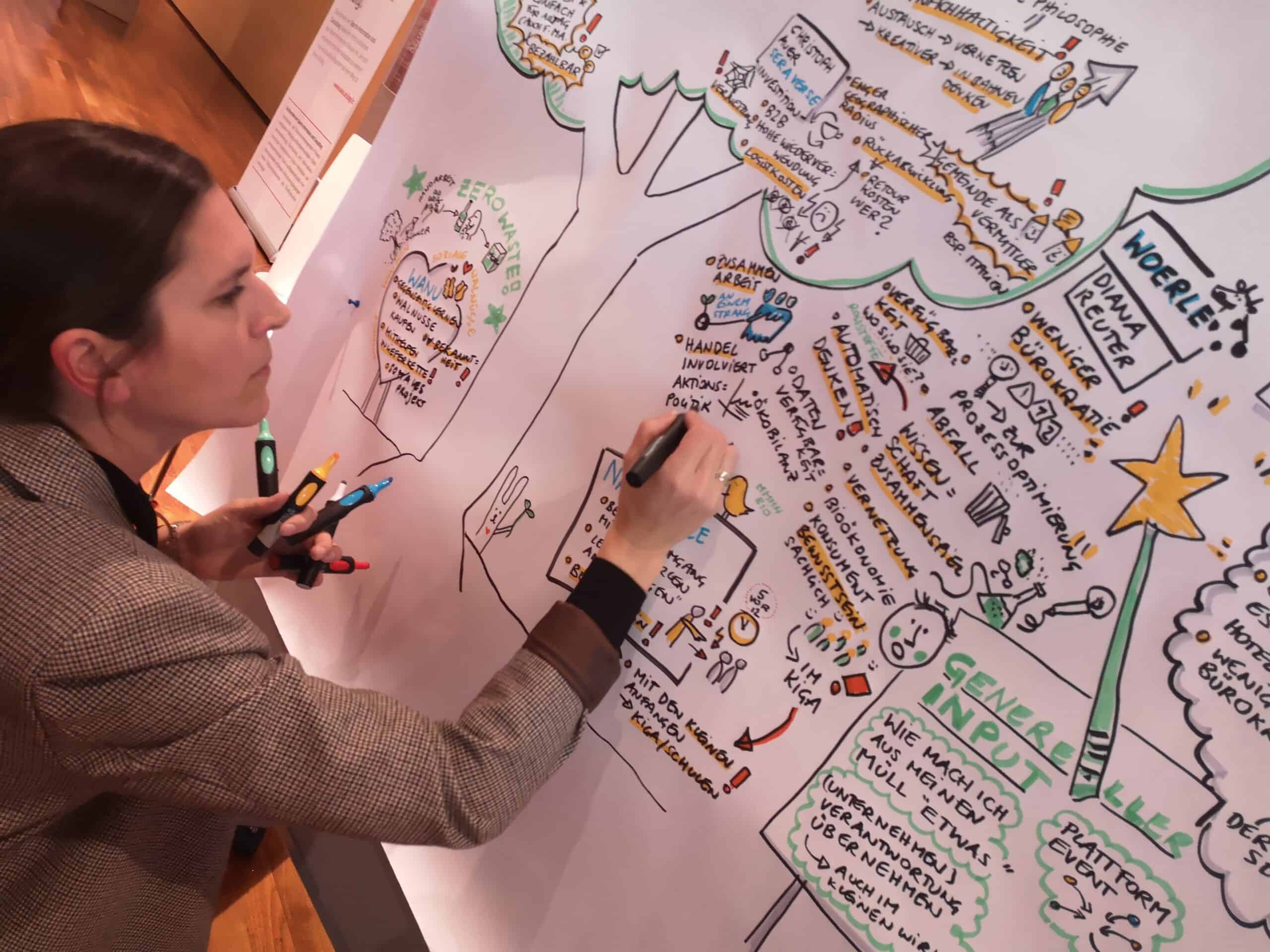
Circular Food Hubs has acquired, educated and supervised stakeholders in the defined food streams to close food cycles and facilitate sustainable decision making. Activities such as workshops or hackathons enhance awareness among stakeholders to reduce and avoid food waste and to find innovative closed food cycle solutions. Further information can be found on the regional websites of the Circular Food Hubs.
CEFoodCycle Final Event: Circular Solutions
Factsheet
- 2021 – 2027
- Carbon neutral and resource sensitive Alpine region
- SO 2.2 - Promoting the transition to a circular and resource efficient economy
-
- AG6 Natural resources
- 11/2022
- 10/2025
- 2.386.438 EUR
- 1.789.828 EUR
Partners
- Lead partner
- Austria
- Salzburg (AT32)
- Puch bei Hallein
- Eva Lienbacher
- eva.lienbacher@fh-salzburg.ac.at
- Austria
- Wien (AT13)
- Vienna
- Markus Meissner
- office@ecology.at
- Slovenia
- Vzhodna Slovenija (SI03)
- Ptuj
- Darko Ferčej
- darko@ezavod.si
- France
- Provence-Alpes-Côte d’Azur (FRL0)
- Nice
- Laurent SOULIER
- finpub.europe@cote-azur.cci.fr
- Slovenia
- Zahodna Slovenija (SI04)
- Kranj
- Helena Cvenkel
- helena.cvenkel@bsc-kranj.si
- France
- Provence-Alpes-Côte d’Azur (FRL0)
- Marseille
- Karim El Arnaouty
- k.elarnaouty@avitem.org
- Italy
- Piemonte (ITC1)
- ASTI
- Sonia Abluton
- sonia@lamoro.it
- Italy
- Provincia Autonoma di Bolzano/Bozen (ITH1)
- Bolzano
- Manuela Irsara
- Manuela.irsara@idm-suedtirol.com
- Germany
- Oberbayern (DE21)
- München
- Susanne Wigger-Spintig
- Susanne.spintig@hm.edu
- Germany
- Schwaben (DE27)
- Augsburg
- Anja Beckord
- Anja.Beckord@umweltcluster.net
- 47.72412113.086338
- 48.200280816.3453075
- 46.41779384999999515.874825928236131
- 43.704157.275177637275622
- 46.246576514.3644724
- 43.30567315.444226820336164
- 44.90223978.2071723
- 46.497845311.3534085
- 48.1535903511.553143192240475
- 48.4005549510.933246443146322
Outcomes
-
Alpine-wide methodology of LCA indicators in defined food streams
DownloadConsolidation of already existing LCAs to track ecological and C02 implications of food production, distribution and waste, leading to the development of a comprehensive and replicable LCA methodology to assess food streams in defined food product categories. Regional specifics are considered, stakeholders inside and outside the respective food streams identified in order to close food cycles. Provides the baseline for AS common methodology implementation for piloting closed food cycles. -
Establishment of Circular Food Hubs
WebsiteWe are delighted that our five Circular Food Hubs are up and running. The Circular Food Hubs are role models for regional circularity. They operate as transnational and interdisciplinary network in five Alpine Space regions:- Cicular Food Hub Salzburg-Bavaria (Austria/Germany)
- Circular Food Hub Alto Adige (Italy)
- Circular Food Hub Lamoro (Italy)
- Circular Food Hub France (France)
- Circular Food Hub Gorenjska (Slovenia)
-
FoodCycle.ai: B2B decision-support tool for food waste revalorization
WebsiteThis online tool helps users identify and evaluate options for reducing food waste and surplus. By providing structured recommendations and relevant partners, the tool supports practical decision-making for businesses, communities, and policymakers working towards a more circular food system. -
Circular Economy Pilot Actions
DownloadAs part of the CEFoodCycle project, six pilot activities were implemented to promote collaboration and drive innovation. Using participatory approaches such as workshops and innovation labs key stakeholders along the identified food stream were brought together. These interactive formats enabled participants to build connections, exchange valuable insights, and identify key pressure points for developing circular business solutions. Also, an analysis of the participating businesses’ models revealed essential (digital) information needs. Findings are now informing the ongoing development of the digital tool FoodCycle.ai, enhancing its capacity to support circular economy practices in the food sector. > Further information -
Policy Recommendations
Promotion of the use of regional products and waste reduction through capitalization, awareness raising and networking for CE-based solutions and the role of digitization tested in CEFoodCycle pilots. Suggestion of policies for political framing approaches at regional and national levels, based on the results of project pilots, to contribute to a just transition towards circular economy for all stakeholders along the cross-regional food chain. -
CEFoodCycle Network Established
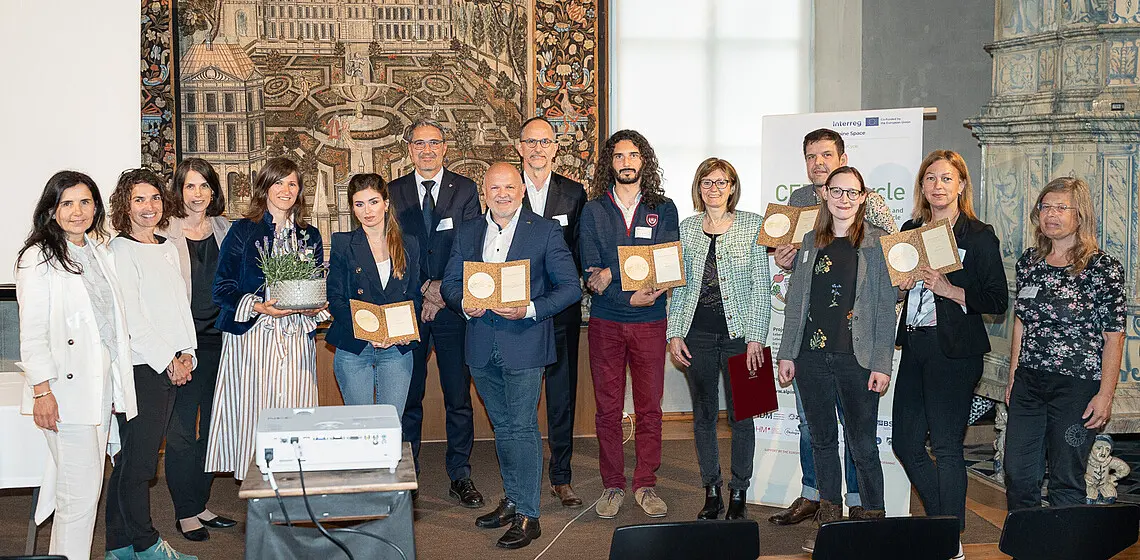
DownloadParticipatory approaches embedded throughout the CEFoodCycle project ensure that results remain sustainable beyond its completion. By engaging stakeholders along the entire food value chain (e.g. farmers, businesses, municipalities) each Circular Food Hub applies a bottom-up model to tackle circular economy challenges and food waste. This collaborative process builds ownership and strengthens local capacity for long-term impact. Sharing experiences and know-how across hubs fosters mutual learning among communities and policymakers. Practical examples include community workshops, surplus food redistribution pilots, and policy dialogues that emerged from hub activities. Regional highlights were the project closure events (e.g. in Salzburg). To sustain momentum, stakeholders have committed through public pledges, join them here:



Pilots
-
FlyUpCycle: Creating a closed food cycle with the star of insect farming – the black soldier fly / Gorenjska (SI)
The FlyUpCycle pilot demonstrated an effective way of converting organic food waste into high-protein animal feed using black soldier fly (BSF) larvae. Focused on reptiles and fish, this pilot addressed food waste by valorising surplus bread, spent grain, and vegetable residues through insect bioconversion. Its main objectives were to develop a scalable circular model, reduce food waste, and promote sustainable supply chains through participatory stakeholder engagement. Activities included testing BSF farming techniques, delivering training sessions on circular economy principles, hosting stakeholder workshops and webinars, and preparing a policy brief to support regulatory change. Local stakeholders included bakeries, breweries, vegetable farms, pet shops, terrariums, and a BSF technology provider. E-zavod coordinated the pilot, supported by BSC Kranj and expert input from Austrian and Italian partners.
-
Upcycling HORECA sector waste into high-value products / Gorenjska (SI)
SkinCycle explored innovative circular solutions by converting food production by-products into high-value cosmetic ingredients. The pilot focused on transforming apple pomace into biodegradable leather alternatives and repurposing spent coffee grounds into natural exfoliants to replace microplastics in cosmetics. The primary aim was to reduce resource waste while stimulating local entrepreneurship and promoting sustainable materials. The pilot addressed both environmental sustainability and added economic value by developing prototypes and testing feasibility. Activities included stakeholder mapping, collaborative design workshops, technical assessments, and testing in cooperation with local food producers, cosmetic artisans, and sustainability experts. Key stakeholders included apple processors, coffee roasters, natural cosmetics developers, and circular economy consultants.
-
Empowering urban hospitality to close the bio-waste loop / Nice (FR)
Originally planned as a pilot testing a bio-waste collection system using electric cargo bikes for cafés, hotels, and restaurants in the city centre of Nice, the BioCycle pilot faced logistical and regulatory barriers that limited full implementation. As a result, the pilot pivoted toward raising awareness about upcoming environmental legislation and promoting sorting and recycling practices among cafés, hotels and restaurants. The objective was to build readiness and encourage sustainable food waste management despite the infrastructural challenges. Activities included informational meetings, educational webinars, development of microlearning materials, and capacity-building sessions for hospitality providers. Stakeholders included local food businesses, environmental authorities, and awareness-raising organisations.
-
Giving bakery surpluses a second life through smart redistribution / Salzburg (AT)
The BreadCycle pilot addressed the challenge of surplus and substandard baked goods in Salzburg, where a regional system for redistribution had not yet been established. Conducted in cooperation with the bakery chain Resch&Frisch, the pilot focused on food reuse, especially for human consumption. The project aimed to test redistribution mechanisms for fresh bakery surpluses, analyse sorting data, and build collaborations with local social institutions. Activities included waste audits, stakeholder mapping, development of redistribution logistics, and testing the foodcycle.ai digital tool. Main stakeholders included Resch&Frisch, food banks, social supermarkets, charities, and research partners from FH Salzburg and Österreichisches Ökologieinstitutit. -
From bean to beauty: turning coffee grounds into natural cosmetics / South Tyrol (IT)
The CoffeeCycle pilot project is a regional up-cycling model to develop sustainable and innovative products from coffee waste. The coffee roasting company Caroma focuses on analysing and understanding the by-products in order to add value to them. Based on the ingredients and best practices, the output could be either a fertilizer for mushrooms, fire bricks, cosmetic line. The aim was to reduce resource waste, add value to by-products such as coffee grounds, silver hats, jute bags etc., and support Caroma's brand identity as a sustainability pioneer. Activities included stakeholder co-creation workshops, business model development, laboratory testing of ingredients and preparatory work for a local cosmetics line. Stakeholders included Caroma, hospitality providers, natural cosmetics manufacturers, researchers from Laimburg Research Centre and marketing experts. -
From waste to nourishment: an innovative circular approach / Piemonte (IT)
The EggCycle pilot was implemented in the Piemonte region to promote a closed-loop food system where unsellable food is used to rear black soldier fly larvae, which are then processed into insect meal as a sustainable protein-rich chicken feed. This innovative approach aimed to enhance the nutritional quality of eggs, reduce reliance on imported soymeal, and minimize food and resource waste. The pilot sought to improve animal welfare through natural feeding, and to raise awareness among consumers about the traceability and benefits of circular farming. Activities included establishing local Bugsfarms for insect rearing, designing the full feed cycle, developing business models, and building a participatory agro-industrial supply chain. Educational outreach and consumer awareness were essential parts of the pilot, alongside strong collaboration with research institutions and farmers. Stakeholders included BEF Biosystem and Fantolino, agricultural by-product suppliers, the University of Gastronomic Sciences of Pollenzo, and egg producers.
Videos
Gallery
Downloads
-
Within the CEFoodCycle project, key data foundations, tools, and practical solutions were developed to support the transition towards a circular and sustainable food system in the Alpine region. Consolidated Alpine-wide LCA datasets, five Circular Food Hubs, and six pilot actions demonstrated how food waste can be reduced and food residues reused and valorised across different stages of the food system, while strengthening stakeholder capacity and collaboration. These results culminated in the development of FoodCycle.ai, a user-centred decision-support tool that increases transparency, supports sustainable decision-making, and provides a scalable basis for long-term impact.Download
-
REPORT: This review provides a concise introduction and overview on Life Cycle Analysis (LCA) Studies on food waste and food products. The respective methodologies are explored and compared. (part of Output 1.1)Download
-
REPORT: To assess the different practices and contexts within agricultural systems, relevant for environmental footprinting, a comparison of national and regional data was conducted as part of the project CEFoodCycle. While previous studies have highlighted the global significance of food waste and the multiple benefits of transitioning to a Circular Economy, there is a lack of detailed analysis focusing on how regional variations in the food value chain impact LCA metrics within the Alpine region. Part 1 focuses on Agriculture. (part of Output 1.1)Download
-
REPORT: To assess the different practices and contexts within agricultural systems, relevant for environmental footprinting, a comparison of national and regional data was conducted as part of the project CEFoodCycle. While previous studies have highlighted the global significance of food waste and the multiple benefits of transitioning to a Circular Economy, there is a lack of detailed analysis focusing on how regional variations in the food value chain impact LCA metrics within the Alpine region. Part 2 focuses on Processing and Retail. (part of Output 1.1)Download
-
REPORT: This whitepaper is written with the intent to convey key insights into strategies to minimise food waste and to understand the key stake-holders in the food value stream in the participating countries. Based on a desk research phase between January and November 2023, some key figures are presented regarding the food market structure in the Alpine Region. Furthermore, best practices of companies that use food waste as a resource are presented and circular food hubs shortly introduced.Download
-
REPORT: The survey conducted among establishments in the coffee-hotel-restaurant (CHR) sector between February 26 and March 15, 2024, aimed to provide more accurate estimates of biowaste production by enhancing the understanding of operational activities. It also sought to highlight notable practices in biowaste management and recovery, as well as to identify the challenges and constraints associated with implementing biowaste recovery initiatives.Download
-
REPORT: This report presents policy recommendations developed within the CEFoodCycle project to accelerate the transition toward a circular economy in the food sector.Download
-
REPORT: This catalogue summarises the development of the Circular Food Hubs, outlining their business models, shared challenges, and key success factors to support the replication of circular, region-specific food systems across Europe.Download
-
BROCHURE: This brochure showcases 35 best practice examples of food companies embracing circular principles across the Alpine space region. It especially highlights the five winners of the CEFoodCycle Award 2024, a transnational award honouring especially innovative circular food initiatives.Download
-
EDUCATION MATERIAL: These circular economy icons, cards and best practice cards, developed as part of the CEFoodCycle project, serve as versatile educational tools for workshops and training sessions in the field of circular economy, particularly in the food system. They can be used to create cards or visual aids representing specific topics (e.g., legal frameworks, technological barriers) or stakeholders (e.g., farmers, manufacturing companies). These materials are ideal for interactive activities such as role-playing exercises, discussions on implementation challenges, and brainstorming solutions, fostering a deeper understanding of the complexities and opportunities within circular economy systems. (part of Output 1.2 & Output 3.3)Download
-
PRESENTATION: This presentation looks at artificial intelligence and circular innovation and shows the status quo of B2B platforms in agri food settings and their regions of operation. as of: December 2023 (part of Output 2.1)Download
-
REPORT: This report presents insights from the user-centered evaluation of FoodCycle.ai. Based on cross-industry testing webinars involving stakeholders from business, civil society, research, and public administration, the report highlights key findings, strengths, and improvement potentials, offering valuable lessons for the digital transformation of sustainable food value chains.Download
-
MINI-REPORT Pilot “Bread-cycle” (Austria): Implemented with Resch&Frisch, the Bread-cycle pilot examined practical circular solutions for handling surplus bread through redistribution and reuse. The initiative increased internal awareness, piloted collaboration and logistics workflows, and identified key barriers and success factors in surplus management. The results provide transferable insights for advancing and scaling circular practices in the bakery sector and the wider food industryDownload
-
REPORT: This report consolidates the monitoring frameworks, methodologies, and findings from CEFoodCycle pilot actions aimed at developing regional closed food cycles across the Alpine Space. It assesses stakeholder engagement, implementation progress, waste reduction, and scalability, highlighting common challenges, success factors, and region-specific innovations. The outcomes provide evidence-based insights and recommendations to support replication, policy alignment, and the scaling of circular economy practices in the food sector.Download
-
REPORT: The document summarizes regional pilots from the CEFoodCycle project, all aiming to reduce food waste and create circular food systems. It outlines various local solutions, such as product upcycling, insect-based valorization, redistribution, and sustainable logistics. The report highlights shared methods, challenges, and best practices across regions, showing that circular food systems are achievable and scalable.Download
-
REPORT: The document outlines business models developed for sustaining the FoodCycle.ai tool across five Alpine countries, focusing on circular economy strategies and alignment with EU Green Deal goals. It compares national scenarios for the tool’s future, ranging from discontinuation to further enhancement. The report identifies cross-country patterns, governance needs, and risks, concluding with recommendations for long-term viability, multi‑stakeholder governance, and scalable digital circularity solutions.Download
-
MINI REPORT: The document presents findings from interviews with European multi‑sided platforms that trade food waste and by‑products, analysing their business models and practices. Overall, it shows how such platforms act as digital enablers of circular economy principles.Download
-
BEHAVIOURAL STUDY: Adopting new practices, however commendable, remains a complex task when the environment does not facilitate their implementation. Locally in Alpes-Maritimes, the perception that there is a lack of a clear, attractive and structured system for the collection and recovery of bio-waste, combined with land constraints and a shortage of space to store containers, limits restaurateurs’ ability to commit fully. This study constitutes an initial targeted observation to tackle the behavioural changes required.Download
More
Submission Form
Information Sheet
Project calendar